
What Makes a Full Service Long Distance Moving Company Different
Full Service Long Distance Movers: Your Complete Moving Solution Guide
Moving across the country feels overwhelming. You’re juggling logistics, timelines, budgets, and the anxiety of having your entire life packed into a truck headed somewhere far away. The difference between hiring a professional full service long distance mover and attempting a DIY move can mean the difference between arriving at your new home refreshed and arriving frazzled, with damaged belongings and regrets.
This guide walks you through what full service long distance moving actually means, how to evaluate companies, and what to expect from start to finish. By the end, you’ll know exactly what questions to ask and what standards to hold your mover to.
A full service moving company handles everything. That sounds simple, but it’s fundamentally different from other moving options.
With a full service provider, you’re not coordinating multiple vendors or managing parts of the move yourself. The company handles packing, loading, transportation, unloading, and often unpacking and furniture placement. They supply all materials, operate the trucks, and employ trained crews who know how to handle your belongings safely. This contrasts sharply with a freight broker who simply connects you with available carriers, or a hybrid service where you pack and they transport.
The real value shows up in accountability. When one company manages the entire process, there’s no finger-pointing between packers and movers, or between the mover and a storage facility. Someone owns each step. You have a dedicated move coordinator who becomes your single point of contact, making communication simpler and your move more coordinated.
Full service movers also provide quality control. They use professional-grade materials, standardized packing techniques, and trained personnel rather than day-laborers. American Van Lines, for example, employs dedicated crews who work together regularly and pad-wrap your furniture for free on all moves. These crews understand how to load trucks efficiently, secure items properly, and handle specialty goods.
The transparency matters too. Full service movers provide detailed, itemized estimates upfront. You know what you’re paying for and why. There’s no surprise when the truck arrives.
What to do next: Request an estimate from a full service mover and compare it side-by-side with quotes from freight brokers or hybrid services. Notice the difference in detail and clarity.
Key Services Included in Full Service Long Distance Moves
Full service encompasses far more than just truck rental. Here’s what you typically receive:
Packing and materials: Professional packers arrive with boxes, tape, bubble wrap, and padding. They pack room-by-room, using proper techniques to prevent shifting and damage during transit. Fragile items get special attention. They understand how to pack dishes vertically, wrap glassware individually, and secure items so nothing moves during 500-mile drives with multiple stops.
Loading and unloading: Trained crews arrive with equipment like dollies and furniture pads. They load the truck strategically, placing heavy items low and distributing weight evenly. They secure everything so items don’t shift during transport. At your destination, they unload carefully and can place furniture exactly where you want it.
Transportation: The mover provides climate-controlled trucks with air-ride suspension, protecting your belongings from temperature swings and road vibrations. For long distances, many companies offer weekly shuttle services where your items travel alongside other customers’ shipments, reducing your cost while maintaining service quality.
Storage options: If you need temporary or long-term climate-controlled storage between your move dates, full service movers typically offer this. You can store items for days or months, depending on your timeline.
Unpacking services: Some full service movers will unpack boxes at your destination, dispose of packing materials, and arrange furniture in your new home. This transforms the move from a chaotic opening weekend to an organized transition.
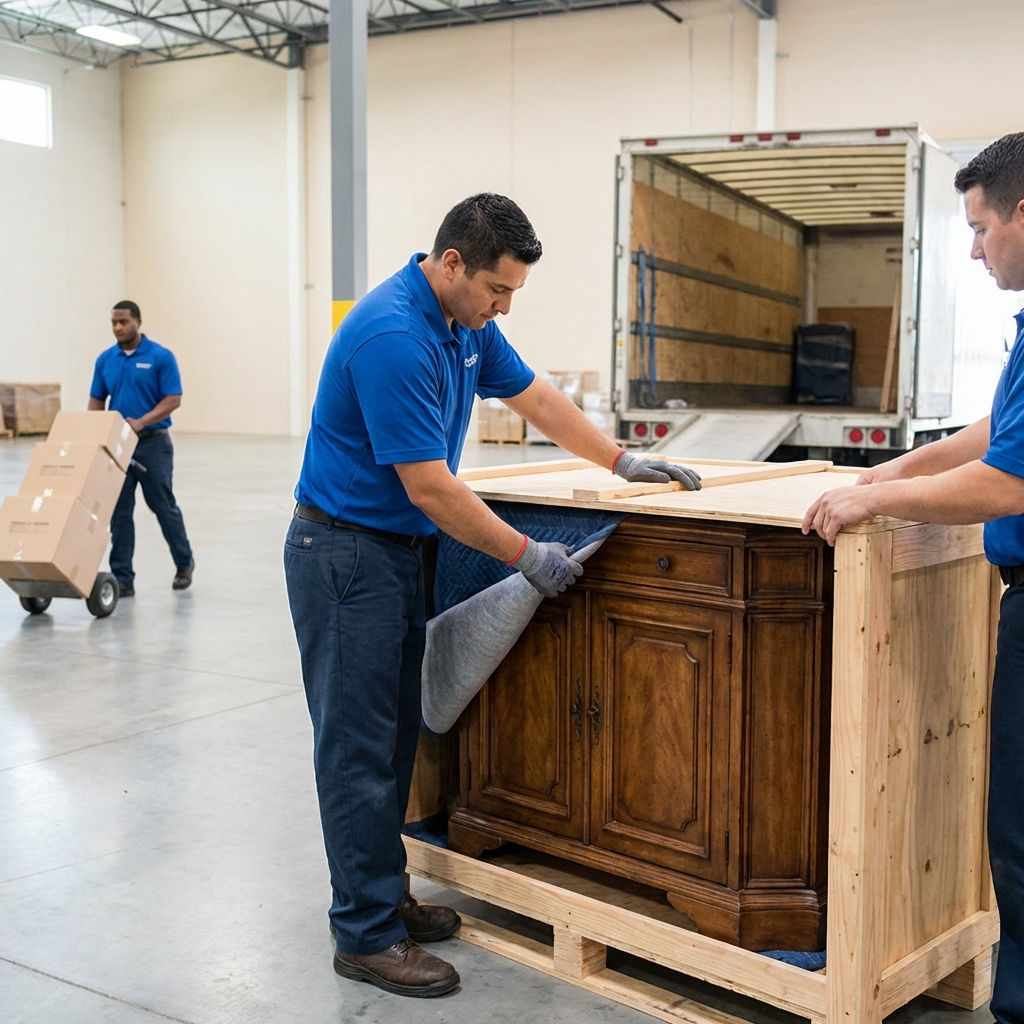
Specialty handling: Pianos, antiques, artwork, and wine collections require expertise. Professional movers know how to disassemble, crate, transport, and reassemble these valuable items safely.
Consider which services match your needs. A family with young children and a busy work schedule might prioritize full packing and unpacking. A small business relocating might focus on timing and minimal disruption. Be honest about what you can handle yourself versus what you need help with.
What to do next: Create a checklist of which services would most reduce your stress, then ensure any quote you receive covers those specific items.
How Long Distance Moving Rates and Pricing Work
Understanding moving costs prevents sticker shock and helps you budget accurately.
Most long distance movers use weight-based pricing or flat-rate pricing. Weight-based is straightforward: the mover weighs your shipment before pickup and after delivery, charges based on the difference, and multiplies by a per-pound rate that varies by distance and market conditions. A 5,000-pound shipment from Boston to Austin might cost $8,000 to $12,000 depending on fuel costs, distance, and current demand.
Flat-rate pricing offers certainty. You agree on a price upfront based on the volume of goods and distance, and that’s what you pay regardless of actual weight or minor delays. American Van Lines offers flat-rate moving pricing, which appeals to customers who want to lock in costs. The trade-off is that flat-rate estimates must be conservative to account for unexpected items or complications, so they sometimes run higher than weight-based estimates for simple moves.
Additional costs typically include:
- Valuation and insurance (coverage beyond basic protection)
- Specialty item handling (pianos, antiques, fine art)
- Long-carry fees (if your home is far from the truck or requires hand-carry up multiple flights)
- Stairs or elevator fees (buildings with difficult access)
- Expedited delivery (if you need faster service than standard)
- Storage (if you need items held before delivery)
Most companies offer discounts for flexibility. If you can move mid-week or mid-month (outside peak moving season), rates drop noticeably. Military personnel often receive discounts. Some movers offer discounts for multiple services bundled together.

Request several detailed estimates. Reputable movers will offer free in-home or virtual estimates so they understand what they’re moving. Be specific about what’s included in each quote. A low estimate that excludes materials, specialty handling, or insurance creates confusion later.
What to do next: Get three detailed estimates with identical scopes of work, then ask each company to explain any significant price differences before committing.
Understanding Moving Insurance and Protection Options
Your belongings are at risk during a long distance move. Professional movers take precautions, but accidents happen. Understanding your protection options ensures you’re not financially exposed.
Basic coverage comes standard with every move. Federal regulations require movers to provide minimum protection at 60 cents per pound per article, up to $50,000 total coverage. This means a 50-pound dining table with basic protection would be covered for $30. It sounds low because it is. Basic coverage is designed to satisfy minimum legal requirements, not to fully reimburse you.
Full Value Protection (also called declared value) is what you actually want. Under this option, the mover agrees to repair, replace, or pay the current value of damaged items. If a 10-year-old lamp worth $200 is damaged, they’ll reimburse you $200 or fix it. Full Value Protection does cost extra, usually 1-3% of your move’s total cost, but it’s worth it for valuable items.
Moving insurance options come in different formats. Some movers offer it directly through their company. Others require you to purchase third-party moving insurance. The best full service movers, like American Van Lines, make Full Value Protection available on all moves, removing the guesswork.
Read the fine print. Some policies exclude damage from poor packing, natural disasters, or items you forgot to declare. Others have deductibles or claim limits. Understand what’s covered and what’s not before you sign.
For high-value items like electronics, jewelry, or antiques, consider listing them separately on your inventory and declaring their full replacement value. Movers are more careful with items they know are valuable.
What to do next: List your most valuable items and their replacement costs, then ask your mover exactly what coverage applies to each before committing.
The Importance of Professional Packing and Crating
Packing seems straightforward until you’re standing in front of your bookshelf with 200 books wondering how to pack them without the box collapsing. This is where professional packing services justify their cost.
Professional packers understand how to distribute weight so boxes remain manageable and safe to stack. They know that books go in small boxes with heavy items like dishes, while lighter items like bedding go in larger boxes. They wrap glassware in layers of bubble wrap and paper, cushioning each piece so nothing clinks during transport. They use specialty materials for specialty items: corner guards for furniture, foam sheets for mirrors, and padding for fragile electronics.
Crating differs from standard packing. For expensive or fragile items—pianos, antique dressers, artwork, wine collections—movers construct custom wooden crates. Each item gets its own tailored enclosure with internal padding and climate-controlled conditions. The crate is sealed, labeled, and tracked separately. This level of protection costs more but is essential for items you can’t afford to lose.
The quality of packing affects whether your items arrive pristine or damaged. A professional packer can pack a three-bedroom home in a few days. A homeowner attempting the same job might take weeks, pack inefficiently, use inadequate materials, and still arrive at their destination with broken items and wasted space in the truck.
Time is the hidden benefit. While packers work, you’re free to handle closing logistics, saying goodbye to friends, or managing other life details. You’re not spending your final days at your old home wrapping dishes and searching for boxes.
What to do next: For moves over 500 miles, calculate whether the cost of professional packing is worth the peace of mind and potential damage savings. Usually it is.
Specialized Moving Services for Valuable Items
Some possessions require expertise that standard movers don’t have. If you’re moving with valuable items, you need a mover who specializes in handling them.
Pianos are the classic example. A grand piano weighs 700-1,200 pounds and has a replacement cost of $20,000 to $500,000+. Moving it requires special equipment, training, and care. The piano must be emptied of all contents, the lid carefully supported, the legs either removed or braced, and the entire instrument transported on a specialty dolly. At the destination, it must be unpacked, reassembled, and professionally tuned. Attempting this without expertise risks permanent damage.
Antiques, particularly furniture, need similar care. An 18th-century dresser might be structurally fragile despite its appearance. Drawers might need removal and separate packing. Veneers need protection from humidity and temperature changes. Finishes require special handling to avoid scratches.
Fine art—paintings, sculptures, collectibles—needs climate control during transport. Temperature and humidity fluctuations cause expansion and contraction, warping canvas and damaging finishes. Art also needs custom crating to prevent any movement inside the crate.
Wine collections need temperature and humidity control throughout the entire move. Wine stored improperly during transit can be ruined permanently. Collectors ship wine in specially designed cases with insulation and monitoring.
When you hire a full service mover like American Van Lines that offers specialized antique and piano moving, you’re paying for expertise developed through thousands of moves. They know exactly how to handle your grandmother’s baby grand or your art collection because they’ve done it hundreds of times.
What to do next: If you own valuable specialty items, specifically ask potential movers about their experience with those items, and request references from customers with similar goods.
Choosing the Right Long Distance Mover for Your Needs
Not all movers are equally reliable. Choosing the right one requires checking credentials, reading reviews, and understanding what you need.
Start with credentials. The best long distance movers carry licenses and insurance. In the U.S., interstate movers must be licensed by the Federal Motor Carrier Safety Administration (FMCSA). You can verify this on the FMCSA website using their company name or USDOT number. Avoid any mover that refuses to provide this information.
Read recent reviews on independent sites like Move.org, Consumer Affairs, and the Better Business Bureau. Look for patterns, not individual complaints. One bad review in hundreds of good reviews is normal. Multiple recent reviews citing similar problems (like damaged items or missed pickup dates) is concerning. Check how the company responds to negative reviews. Do they ignore them, or do they engage professionally and try to resolve issues?
Awards and rankings matter. American Van Lines is ranked as a Top Mover on Forbes, Move.org, Consumer Affairs, and Newsweek, and is recognized as an award-winning moving service according to Newsweek and USA Today. These rankings reflect years of consistent, quality service. They’re not guarantees, but they’re strong indicators.
Understand what makes a mover trustworthy for your specific needs. If you have a complex move (multiple storage periods, specialty items, expedited delivery), you need a mover with specific experience. If you’re concerned about budget, you need someone transparent with pricing who won’t surprise you with hidden fees. If you’re anxious about your belongings, you need a company that offers GPS tracking and clear communication.
Consider company history and structure. Family-owned movers, especially those that have operated for decades, tend to prioritize reputation over one-time profits. American Van Lines, family-owned and operated since 1995, maintains this orientation. Larger corporate movers sometimes prioritize volume over individual customer satisfaction.
What to do next: Check the FMCSA license for any mover you’re considering, read at least 20 recent reviews, and ask specifically how they handle situations similar to your move.
Technology and Tracking for Peace of Mind
Moving across the country means losing sight of your belongings for days. Modern movers address this anxiety through technology.
GPS tracking is standard at reputable companies. American Van Lines uses GPS tracking on all trucks, allowing you to see your shipment’s location in real-time. You know approximately when the truck will arrive, and you’re not surprised by delays. This visibility reduces stress significantly.
Some movers offer moving apps where you can submit questions, receive updates, and access your paperwork. You’re not dependent on phone calls or emails. You can check your move’s status from your phone anytime, from your hotel room the night before delivery, or while you’re waiting at your new home.
Photo documentation is becoming more common. When your items are picked up, the crew takes photos of your home showing what’s being moved. At delivery, they take photos showing items arriving safely. If a dispute arises about damage, you have visual evidence of the item’s condition.
Real-time communication tools connect you directly with your move coordinator. You have an after-hours number for emergencies. If your delivery is scheduled for the afternoon and the truck breaks down that morning, your coordinator calls you with an update and revised timeline, not leaving you wondering if anyone’s coming.
This technology doesn’t replace professional service, but it enhances it. You’re not anxious because you’re informed. You’re not scrambling because you have a plan and visibility into it.
What to do next: Before booking, ask about the company’s tracking capabilities and whether you’ll have direct contact information for your move coordinator and driver.
Timeline and Logistics of Long Distance Relocations
Understanding how long distance moves actually work helps you plan realistically and cooperate with your mover.
Most long distance moves happen one of two ways. Direct moves are scheduled just for you. Your items are loaded, the truck drives to your destination, and they’re unloaded. These are faster but more expensive because the truck isn’t carrying anyone else’s shipment.
Shuttle moves combine multiple customers’ shipments on the same truck or a series of trucks. Your items travel alongside other families’ belongings. The truck might stop at multiple locations, picking up and dropping off shipments. This is slower (typically 7-10 days for cross-country) but less expensive because costs are split.
Most movers offer weekly shuttle services, which balance cost and timeline. American Van Lines provides long-distance weekly shuttles that hit major hubs on predictable schedules, giving you known pickup and delivery windows.
The timeline works like this: You schedule pickup for your preferred date (often with a few days flexibility). The crew arrives, packs and loads your items, and typically leaves that day or the next. If you’re on a shuttle, your items wait at a consolidation center until the shuttle fills, then travel. For a cross-country move, add 5-10 days for travel, plus another day or two for unloading once the truck arrives.
This is why choosing a mover months in advance of your actual move date matters. Peak moving season (May through September) fills up quickly. If you’re moving in June, you might need to book in March to get your preferred dates. Off-season moves (October through April) offer more flexibility and lower prices.
Plan your timeline with contingencies. Even with GPS tracking and professional planning, weather, traffic, or mechanical issues can delay a truck. Don’t schedule your house closing for the exact day the truck arrives. Build in a buffer of at least one day.
What to do next: Work backward from your move-in date, accounting for 7-10 days of travel time plus 2 days of contingency, then schedule pickup to arrive with a comfortable margin.
Questions to Ask Before Hiring a Long Distance Mover
Not all companies will answer these questions clearly. The ones that do are worth your business.
About the company:
- What’s your USDOT license number, and can you provide proof of insurance?
- How long have you been in business, and have you always been a full service mover?
- Will I have the same crew for loading and unloading, or different crews at each end?
- Who is my dedicated move coordinator, and how do I contact them?
About pricing:
- Is this a weight-based or flat-rate estimate?
- What exactly is included in this price?
- What could increase the cost, and what are those charges?
- Do you offer discounts for flexible move dates or bundled services?

About the move:
- What’s your typical timeline for a cross-country move like mine?
- Will this be a direct move or a shuttle move?
- Where will my items be stored if there’s a delay, and is it climate-controlled?
- What happens if the truck breaks down or is delayed?
About protection:
- What’s the difference between your basic coverage and Full Value Protection?
- What exactly is covered under Full Value Protection?
- Are there exclusions or deductibles?
- How do I file a claim if something is damaged?
About packing:
- What materials do you provide, and what do I need to supply?
- Can you provide references for customers with similar items to mine?
- How long does packing typically take?
Companies that hesitate to answer these questions aren’t transparent enough. Ones that answer thoroughly and confidently are likely organized and experienced.
What to do next: Create a simple spreadsheet listing each question and each mover’s answer, making it easy to compare responses directly.
Preparing Your Home for a Long Distance Move
What you do before the movers arrive significantly impacts how smoothly your move unfolds.
Decluttering: Moving is expensive per pound. Every item you donate, sell, or discard saves money and reduces your truck’s weight. Be ruthless about items you haven’t used in a year. Moving old junk to a new home only to eventually discard it there is wasteful. Hold a garage sale, list items online, or donate to local charities. You’ll feel lighter before you even move.
Organizing: Create an inventory of what you’re moving. This doesn’t need to be exhaustive, but know your major categories: kitchen, bedrooms, furniture, specialty items. This helps movers estimate space and weight, and helps you verify everything arrived.
Preparing items: Empty your refrigerator, freezer, and all cabinets if the mover didn’t handle packing. Defrost the freezer completely and dry it thoroughly to prevent mold and water damage during transport. Empty and clean your washer and dryer. Drain propane grills and remove batteries from items if required. Lock all moving boxes and cabinets with tape so they don’t open in transit.
Utilities: Arrange for disconnection of electricity, water, gas, internet, and cable at your old home for a day after pickup (so workers can do final checks). Arrange connection at your new home for the day before or the day of arrival.
Address changes: Update your address with the post office, insurance companies, banks, subscriptions, and government agencies. This isn’t the mover’s job, but forgetting creates chaos.
Accessibility: On moving day, provide clear parking for the truck. Move your personal car out of the driveway. Identify which room is which at your new home (label them if it’s a vacant house). Ensure movers can access both homes easily.
Communication: Get a phone number for your driver and keep your cell phone charged and accessible throughout the move.
Most full service movers provide a moving checklist covering these items. Use it. The movers’ job is handling logistics; yours is preparing your home and life for the transition.
What to do next: Start decluttering now, even if your move is months away. The earlier you start, the less stressful it feels, and the more time you have to sell items or donate them.
—
Choosing a full service long distance mover removes enormous stress from an inherently complicated life event. The difference between hiring professionals and attempting a DIY move often justifies the investment many times over through protection, efficiency, and peace of mind.
Start by identifying movers that match your needs, checking their credentials, and requesting detailed estimates. Ask the questions outlined above. Don’t choose based on price alone. The cheapest option often reflects cutting corners somewhere. Instead, choose a mover that’s transparent, experienced with your type of move, and responsive to your concerns.
American Van Lines offers nationwide moving services with flat-rate pricing, professional dedicated crews, and a track record of consistent, quality service. Whether you’re moving your household, your business, or a specialized collection, understanding what full service means empowers you to make the right choice for your relocation.
Frequently Asked Questions (FAQ)
What’s included in full service long distance moving?
Full service long distance moving encompasses pickup and delivery, loading and unloading by professional crews, and transportation in climate-controlled trucks. Additional services typically include packing, crating, and furniture wrapping, along with basic moving insurance coverage. Specialty services for high-value items like antiques and pianos are available as add-ons depending on your needs.
How is long distance moving pricing typically structured?
Long distance movers use either weight-based pricing (charging per pound of household goods) or flat-rate estimates based on your specific shipment. Flat-rate pricing provides cost certainty upfront, while weight-based pricing depends on what you’re moving. Reputable companies offer free estimates and transparent pricing breakdowns so you understand all charges before committing.
What protection options should I consider for my move?
Most moving companies include basic coverage at no cost, typically around $.60 per pound per item. Full Value Protection is an enhanced option that covers the replacement cost of damaged or lost items rather than depreciated value. Review coverage limits and deductibles carefully, and ask your mover what’s automatically included versus what requires additional purchase.