
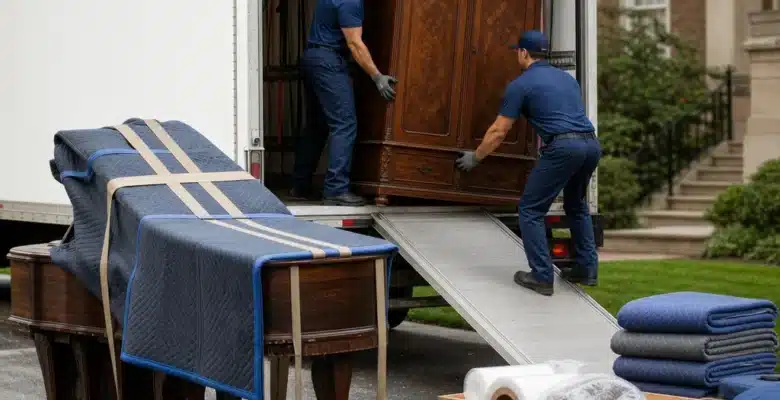
1. Invest in Professional Specialty Movers with Antique Experience
Moving antiques and pianos across the country isn’t like hauling a couch across town. These treasures require specialized knowledge, careful handling, and equipment most standard moving companies simply don’t have. A piano can weigh anywhere from 300 to 1,200 pounds depending on its type. An antique Victorian dresser might look sturdy but could be structurally vulnerable if packed incorrectly. One wrong move, a sudden jolt, or exposure to humidity fluctuations can compromise their integrity forever.
We’ve spent over 30 years helping families and collectors safely relocate their most prized possessions across interstate distances. Through that experience, we’ve learned what separates a successful specialty move from a disaster. The difference often comes down to seven critical practices that protect your valuables while getting them to your new home intact.
The biggest mistake people make is hiring a general moving company and hoping for the best. Your uncle’s moving crew might be great at loading boxes, but antique and piano moving demands specific expertise that takes years to develop.
When we handle specialty items, our crews undergo dedicated training in period furniture construction, wood types, and fragility assessment. A mover who’s transported 200 pianos knows how to navigate a concert grand through a narrow stairwell. They understand the internal mechanics of an upright versus a baby grand. They know which pianos need their lids specially supported and when moving blankets alone won’t cut it.
The same applies to antique furniture. Victorian pieces often have delicate inlays or veneers that can separate if pressure is applied incorrectly. Antique mirrors and glass-fronted cabinets need handlers who understand load distribution and shock prevention. Our crews can identify structural weak points and plan accordingly, rather than treating everything as a standard household item.
What to look for when choosing a moving company:
- Ask about their specific experience with your item type (how many pianos, which styles, etc.)
- Request references from previous antique or piano moves
- Verify they have insurance that covers specialty items
- Confirm they have the proper equipment (piano dollies, specialized crating tools, etc.)
- Check whether crews receive ongoing training in specialty handling
A company that provides nationwide piano movers with dedicated expertise means your instrument gets the attention it deserves, not a generic “fragile” sticker and a hope for the best.
2. Choose Climate-Controlled Moving Trucks for Temperature Protection
Antiques and pianos are incredibly sensitive to environmental changes. Wood expands and contracts with humidity and temperature fluctuations. A piano’s soundboard can crack if exposed to rapid temperature swings. Upholstered antiques can develop mold or mildew if humidity isn’t managed. Veneers separate when wood moves unexpectedly beneath them.
Standard moving trucks offer no climate control. Your items sit in an uninsulated metal box that can swing from freezing at night to scorching during the day. Over a multi-day cross-country journey, that temperature rollercoaster can cause permanent damage that won’t show up until weeks after delivery.
We use climate-controlled trucks specifically because the cross-country route means exposure to varying weather patterns. A move from Seattle to Miami involves different climates at every stop. Our climate-controlled environment maintains a stable temperature and humidity level throughout the journey, protecting wood, varnish, strings, and delicate fabrics from the stress of environmental shock.
What stable conditions mean for your items:
- Wood stays dimensionally stable, preventing cracks and warping
- Piano strings maintain tension without unexpected stress
- Upholstery and fabric resist mold, mildew, and moisture damage
- Veneers and inlays stay bonded without separation
- Overall structural integrity remains intact from pickup to delivery
If you’re moving a Steinway, a Louis XVI settee, or a collection of mahogany cabinets, climate control isn’t a luxury option. It’s the foundation of safe cross-country transport.
3. Use Proper Packing Materials and Wrapping Techniques
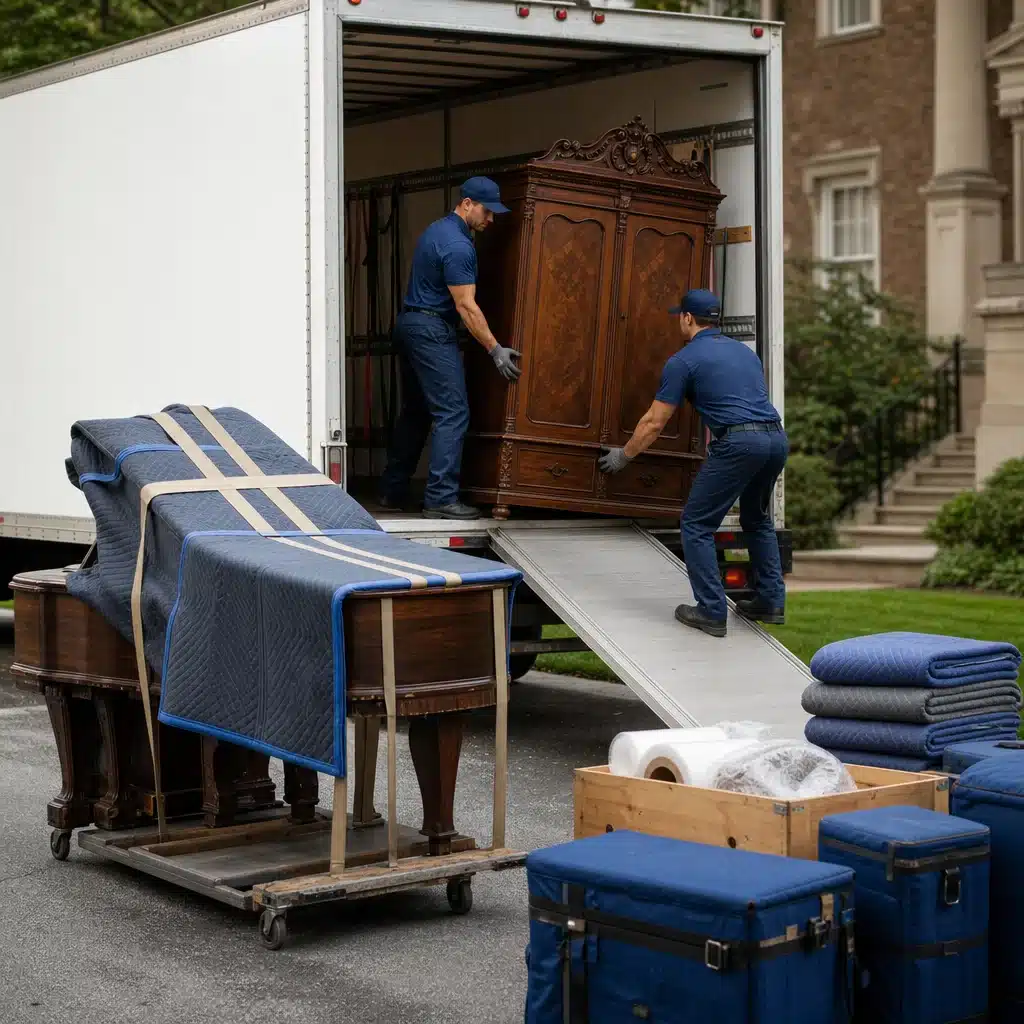
Not all blankets are created equal. Not all packing materials provide the same protection. The difference between moving blanket quality and specialty crating materials can determine whether your antique survives the trip unmarked or arrives with scratches, dents, or worse.
We use a multi-layer approach that’s specifically engineered for high-value and delicate items. Here’s how proper specialty packing works:
Furniture wrapping: We use thick, multi-ply moving blankets (not the thin ones you rent from a box store) and secure them with non-stick tape that won’t damage finishes. For items with exposed veneers or delicate surfaces, we add protective cardboard corner guards and padding around legs and joints. This prevents furniture from shifting inside its wrapping and eliminates friction damage during transport.
Crating: For truly irreplaceable pieces like concert pianos or museum-quality antiques, custom wooden crates are the gold standard. A crate is built to the exact dimensions of your item with interior padding and shock-absorbing materials. The item sits suspended within the crate, isolated from impact. This is dramatically different from wrapping something and hoping it doesn’t shift during a 2,000-mile journey.
Piano-specific packing: Pianos require their own protocol. The lid is secured in a closed position. Strings are protected from pressure. The pedals are secured against unexpected movement. Internal mechanisms get support so vibrations during transit don’t cause internal components to shift. We provide all padding at no extra charge on every move because it’s not optional when a piano’s involved.
Glass and mirrors: Antique mirrors and glass-fronted pieces get wrapped individually, separated by cardboard dividers, and packed upright (never flat) to prevent pressure damage. The orientation matters.
Materials we depend on for specialty moves:
- Multi-ply premium moving blankets (minimum 0.80″ thickness)
- Foam corner protectors and edge guards
- Specialty packing paper and kraft paper for delicate surfaces
- Bubble wrap and packing peanuts for hollow spaces
- Custom wooden crates with interior suspension systems
- Non-stick tape and paper tape (never duct tape on finished wood)
- Kraft paper and cardboard sheets for separation
The cost of proper packing materials is minimal compared to the cost of repairing an antique or restoring a damaged piano. We pad wrap all furniture for free on every move because protection isn’t something we skimp on.
4. Secure Items with Air-Ride Suspension Systems
Even with perfect packing, a pothole can jolt your belongings if the truck’s suspension doesn’t absorb impact effectively. Standard truck suspensions are designed for general cargo. They’re adequate for getting boxes from point A to point B. They’re not built for the sensitivity required when transporting antiques.
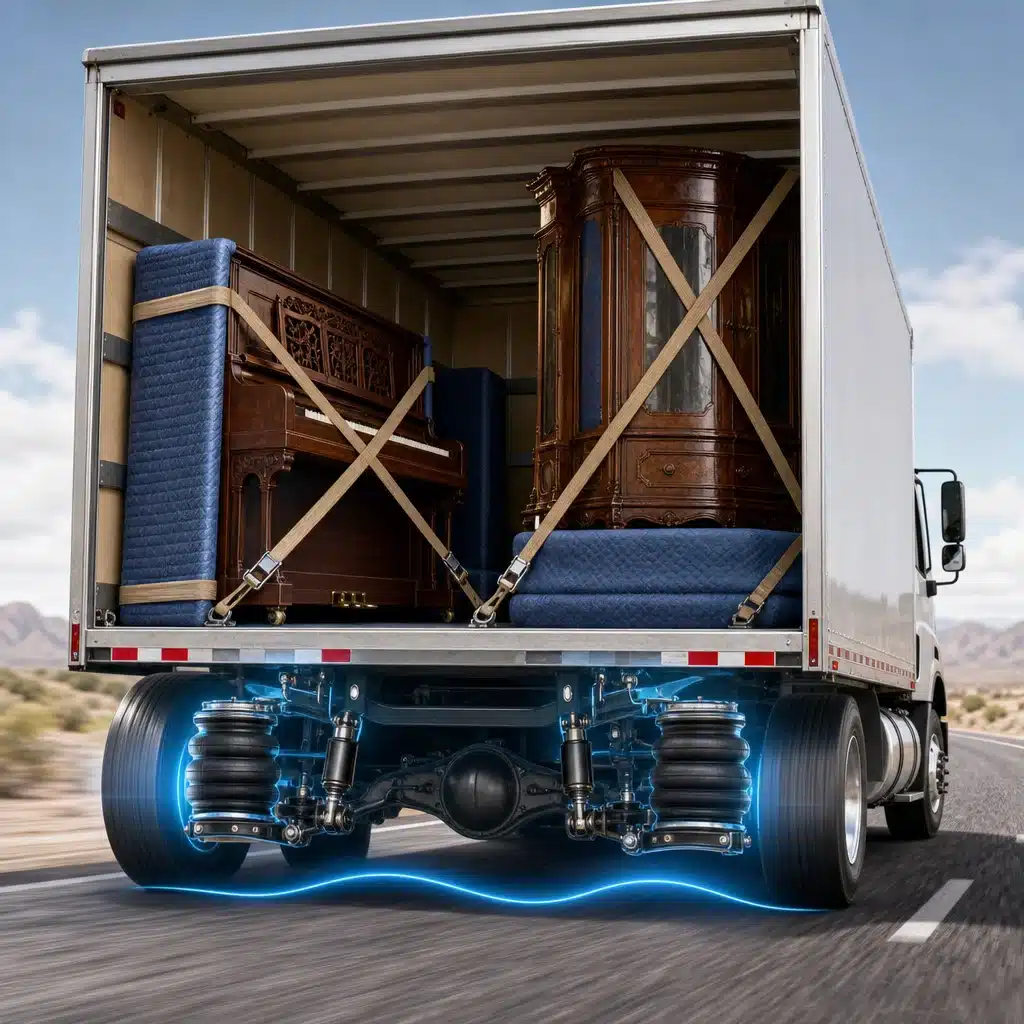
Air-ride suspension systems use air springs instead of traditional coil springs. This technology is used in luxury vehicles and high-end transport because it provides superior cushioning. Every bump, pothole, and uneven road surface is absorbed by the air suspension rather than transmitted directly to your items.
For pianos specifically, air-ride systems are essential. A piano’s internal frame is sensitive to lateral and vertical movement. A sudden bump can misalign strings or damage internal components. An air-ride suspension minimizes that risk dramatically. Over a 2,000-mile journey with countless miles of interstate driving, that protection accumulates to real damage prevention.
We equip our specialty moving trucks with air-ride suspension as standard because cross-country moves involve extended periods on highways where you encounter everything from potholes to sudden stops. Your antiques don’t just sit in the truck; they’re in motion for days. That’s when suspension quality becomes the difference between smooth transport and damage.
What air-ride suspension protects against:
- Road impact and vibration transmitted to your items
- Lateral shifting during turns or lane changes
- Stress on structural components from repeated bumping
- String tension changes in pianos from constant low-level vibration
- Wood stress from accumulated small impacts
This isn’t about comfort; it’s about structural protection. Your antiques arrive without the cumulative stress of thousands of miles of impact.
5. Obtain Full Value Protection Coverage for Your Valuables
Here’s what standard moving insurance covers: roughly 60 cents per pound per item. If a piano weighs 800 pounds, that’s about $480 in coverage. If that piano is worth $15,000, you’re exposed to $14,520 in unprotected risk. That’s not acceptable when you’re trusting a moving company with something irreplaceable.
Full Value Protection is fundamentally different. It covers the full replacement or repair cost of your item if damage occurs during the move. There’s no per-pound calculation. There’s no gap between coverage and actual value.
We offer Full Value Protection available on all moves because we’re confident in our handling, but we also recognize that accidents can happen despite every precaution. Weather events, unforeseen road conditions, or mechanical issues are outside anyone’s control. You shouldn’t absorb that financial risk.
Here’s how Full Value Protection works:
- You declare the value of each specialty item when you book the move
- We assess that value during the estimate process
- If damage occurs, we cover the full replacement or repair cost up to the declared value
- You get a written guarantee in your moving contract
The cost of Full Value Protection is typically a percentage of the declared value. For a $15,000 piano, it might add $150-300 to your moving cost. That’s insurance you hope never to use but can’t afford to skip.
Additionally, every move includes free basic moving coverage protection at 60 cents per pound per article up to $50,000 in coverage. This is included automatically, but Full Value Protection is the upgrade that gives you peace of mind for high-value specialty items.
Scenarios where Full Value Protection matters:
- A piano valued at $12,000 gets damaged during unloading
- An antique dresser worth $5,000 sustains structural damage during the move
- A collection of multiple antique pieces totals $25,000 in value
- Climate control failure causes damage to upholstered pieces
This isn’t a detail to skip over. It’s fundamental protection for items you can’t afford to replace out of pocket.
6. Plan Your Route and Delivery Timeline Carefully
The most direct route isn’t always the safest route for antiques. A shortcut through mountain roads with sharp turns and elevation changes creates lateral stress and vibration. Highways under construction with uneven surfaces pound your items. Certain weather seasons make certain routes riskier.
We coordinate route planning specifically for specialty moves. This means analyzing road conditions, construction status, and weather patterns along multiple potential routes. A piano move from Denver to Dallas might take a slightly longer route that avoids mountain passes during winter or construction zones during peak season. That extra 50 miles of driving prevents exposure to conditions that could cause damage.
Delivery timing also matters. A cross-country move takes multiple days. Where your items spend the night affects their safety. We coordinate overnight stops to ensure climate-controlled storage whenever possible. We avoid parking in extreme heat or cold. We schedule deliveries for times when you can be present to oversee unloading, rather than leaving your piano or antique furniture unattended with movers.
Strategic route and timeline planning includes:
- Identifying the safest highway corridors for specialty cargo
- Avoiding construction zones, mountain passes, or problematic road conditions
- Scheduling overnight stops with climate-controlled facilities
- Coordinating delivery times to match your availability
- Building in buffer time so movers aren’t rushing during final unloading
- Accounting for seasonal weather patterns along the route
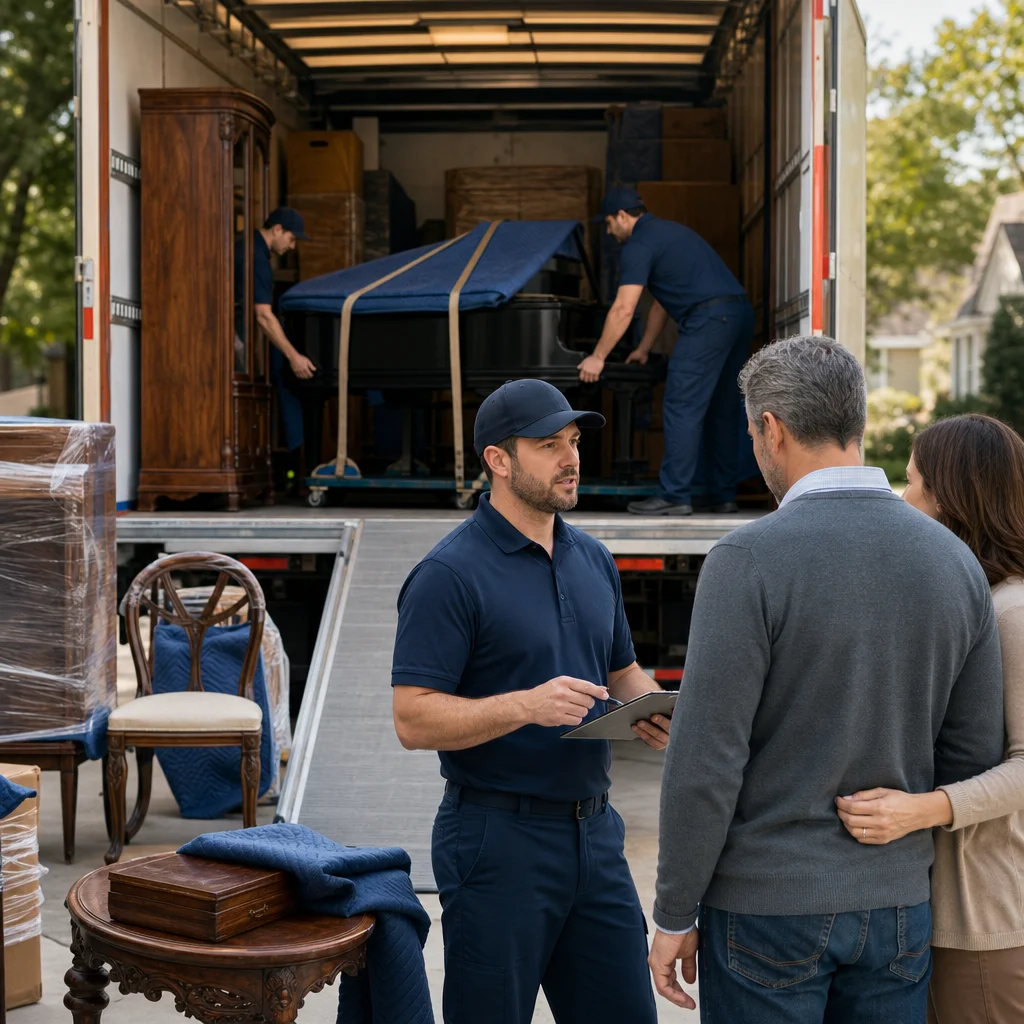
A move that takes an extra day due to careful route planning beats a rapid move that exposes your items to unnecessary risk. Your personalized move coordinator works with dispatch to optimize the route for safety, not just speed.
7. Work with a Dedicated Move Coordinator Throughout Transport
Once your move begins, you need a single point of contact who knows your items, understands their value, and coordinates every aspect of transport. General moving companies assign a dispatcher to your move, but that dispatcher is juggling 20 other jobs. A dedicated move coordinator is different. They’re responsible for your move from start to finish.
Our move coordinators receive training in specialty items, can answer detailed questions about your piano or antiques, and maintain communication with you throughout the journey. If a question arises about how an item is packed or where it’s being stored overnight, you talk to the same person who planned your move. There’s no guessing, no playing phone tag with different departments, and no information falling through cracks.
This coordination matters practically. If weather forces a route change, your coordinator notifies you. If delivery needs to shift to accommodate your schedule, your coordinator makes it happen. If you have concerns during transit, you’re not explaining your situation to a stranger; you’re talking to someone who’s been managing your move from day one.
What coordination provides:
- Single point of contact for all move-related questions and changes
- Real-time tracking of your shipment (we provide GPS tracking on all trucks)
- Direct communication with the crew handling your items
- Ability to adjust delivery times or routes if circumstances change
- Documentation and photo records of your items before transport
- Follow-up after delivery to confirm everything arrived safely
This level of personalization is standard for our specialty moves because antiques and pianos aren’t commodity cargo. They’re treasures that deserve attention from someone who understands their significance. When you’re planning a cross-country move with specialty items, request a free estimate from American Van Lines. Our team will assess your items directly, discuss your specific concerns, and create a detailed moving plan that protects what matters most. We offer both virtual and in-home estimates, so you can get expert guidance whether you’re local or planning from a distance.
Your antiques and pianos deserve specialists who understand them. That’s what we provide.
For further reading: Nationwide piano movers, Long-distance movers.
Frequently Asked Questions (FAQ)
What makes your antique and piano moving services different from standard movers?
We specialize in transporting high-value items that require expertise beyond typical household moves. Our teams are trained in specialized packing, crating, and handling techniques specifically designed for antiques and pianos, and we use air-ride suspension systems in our trucks to minimize vibration and protect delicate pieces during cross-country transport.
How does your Full Value Protection coverage work for valuable antiques?
We offer Full Value Protection on all moves, which means we’re financially responsible if your antiques or piano are damaged during transport. Our coverage goes beyond the free basic protection ($.60 per pound per article) and provides comprehensive peace of mind for items with significant monetary or sentimental value across state lines.
Can you provide climate-controlled storage if my antique items aren’t ready for immediate delivery?
Yes, we maintain climate-controlled storage facilities as part of our full-service relocation solutions. This protects your antiques and pianos from temperature fluctuations and humidity changes that can cause warping, cracking, or other damage while you’re between homes or waiting for your destination to be ready.