
Why Piano and Antique Moving Requires Specialized Expertise
Moving a piano or cherished antique isn’t like moving a standard sofa. These items carry both financial and emotional weight. A family heirloom passed down through generations, a concert-grade piano worth tens of thousands of dollars, or a rare art collection demands expertise that goes far beyond standard moving practices. The stakes are high, and the potential for damage is real if your move falls into the wrong hands.
At American Van Lines, we’ve spent decades specializing in exactly this challenge. Our team understands that protecting your most valuable possessions requires a different approach to every aspect of the moving process, from initial assessment through final delivery. Let’s explore what makes specialty item moving fundamentally different and why experience matters.
Pianos and antiques operate under different physical laws than standard household goods. A grand piano can weigh 700 to 1,200 pounds and contains hundreds of precisely calibrated mechanical parts. Its soundboard alone is engineered to vibrate at exact frequencies, and even slight shifts in humidity or temperature can affect tuning and sound quality. An antique chair from the 1800s might look sturdy, but its joints are held together with animal-based glues that become brittle over time and can’t tolerate the pressure and movement of a standard move.
These items require handlers who understand their structure, not just their weight. We’ve trained our crews to recognize the construction methods, materials, and vulnerabilities of different periods and styles. A Victorian-era mirror frame demands different handling than a mid-century modern credenza, even though both are “antique furniture.” This specialized knowledge prevents damage that standard movers wouldn’t recognize until it’s too late.
Beyond the physical understanding, specialty moves demand logistical planning that accounts for temperature fluctuations, humidity levels, and the timing of delivery. If your piano is being stored during a gap between homes, the climate control becomes as important as the packing itself. We don’t just move these items; we protect their integrity throughout the entire process.
The Unique Challenges of Moving High-Value Items
The primary challenge isn’t always the item itself, but the stakes involved. If we damage a dining table, the customer is frustrated. If we damage a Steinway piano or a rare antique dresser worth $15,000, the financial and emotional consequences are substantial. This reality shapes every decision we make during a specialty move.
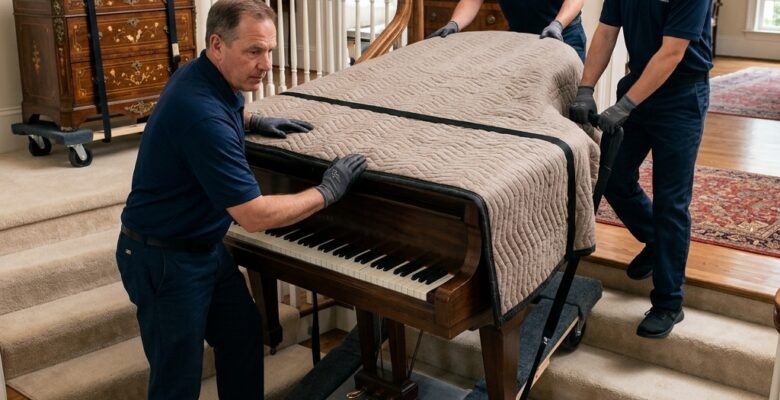
Logistics complexity increases significantly with valuable items. Standard moves follow a predictable timeline: pack, load, transport, unload. With pianos and antiques, each step becomes more involved. Stairs present a particular challenge. Moving a piano up or down a narrow staircase in a 1920s brownstone requires calculation, special equipment, and techniques that differ from moving it across a flat, open space. The same applies to antique furniture with unusual dimensions or fragile components.
Weather and environmental conditions add another layer of difficulty. A humid day in July poses different risks than a dry winter afternoon. Extreme temperature swings during transit can cause wood to expand and contract unpredictably. We monitor forecasts and time moves strategically to minimize environmental stress on wood, veneers, and delicate mechanisms.
Finally, coordination between specialists is essential. Moving a piano might require a piano technician to assess tuning needs before and after the move. An antique restoration specialist might need to inspect an item before packing to identify weak points. We manage these relationships and consultations as part of our comprehensive service.
How We Handle Your Most Precious Possessions
Our approach begins with a detailed assessment. Rather than relying on a quick visual inspection, we conduct thorough evaluations of items you’re moving. For pianos, we examine the case for cracks, assess the condition of the soundboard, and evaluate the mechanical components. For antiques, we inspect joints, identify loose veneers, note structural weaknesses, and assess the fragility of any decorative elements.
This information shapes our custom moving plan. We don’t apply a one-size-fits-all approach. A client moving a concert grand piano gets a different handling protocol than someone relocating an upright piano. An antique china cabinet gets custom crating designed around its specific dimensions and weak points, not a generic wooden crate that happens to fit.
Communication remains central throughout the process. We assign a dedicated move coordinator who becomes your single point of contact. This person understands the specifics of your items, answers your questions, addresses concerns, and keeps you informed at every stage. You’re not dealing with a rotating cast of staff members or a voicemail system. You have one professional who knows your move inside and out.
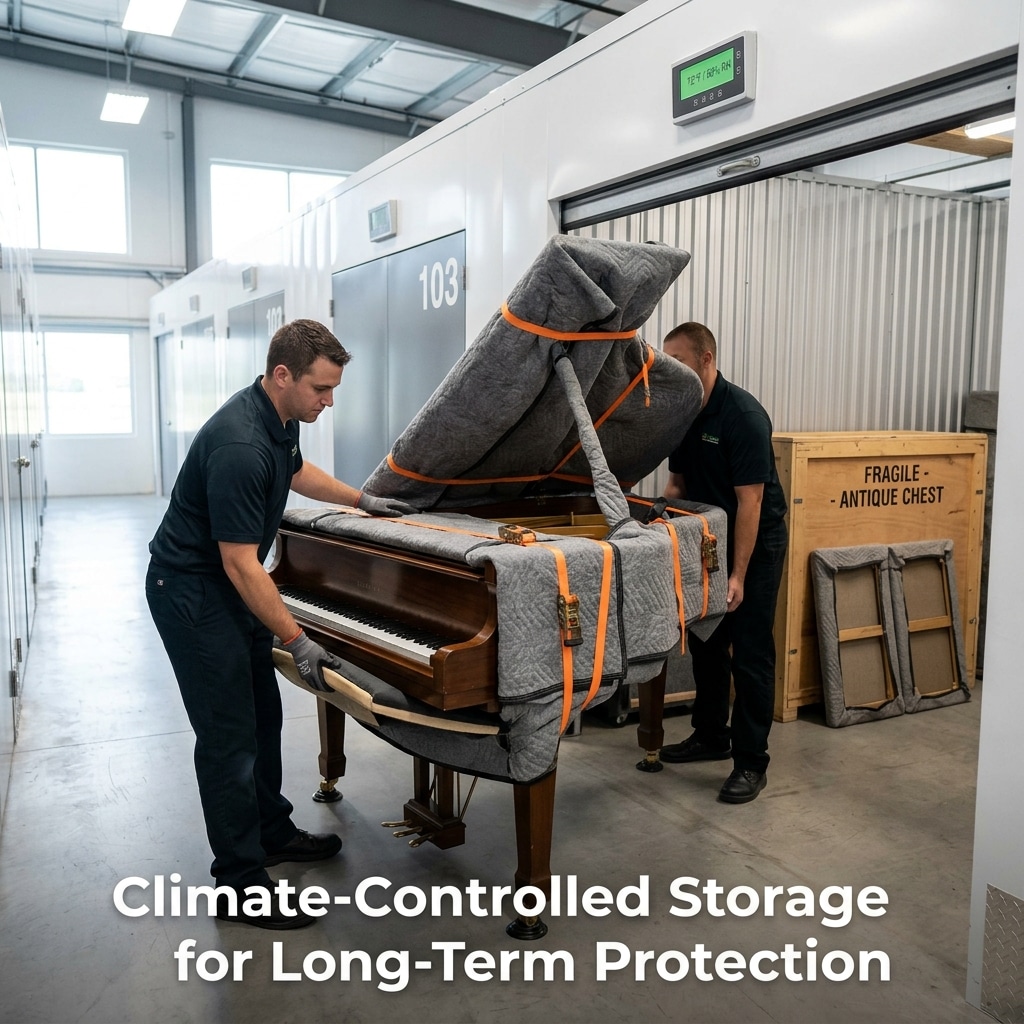
We also respect the timeline of your move. Rush jobs and specialty items don’t mix well. We build in adequate time for careful packing, safe loading, and deliberate transport. If your move requires storage before final delivery, our climate-controlled facilities maintain optimal conditions for your items until you’re ready to receive them.
Our Specialized Equipment and Techniques
Standard moving dollies and blankets don’t cut it for pianos and antiques. We invest in equipment specifically designed for high-value items. Our fleet includes air-ride moving trucks that absorb shock and vibration far better than conventional suspensions. This means your piano experiences smoother movement and less jarring, which protects both the case and the internal mechanisms.
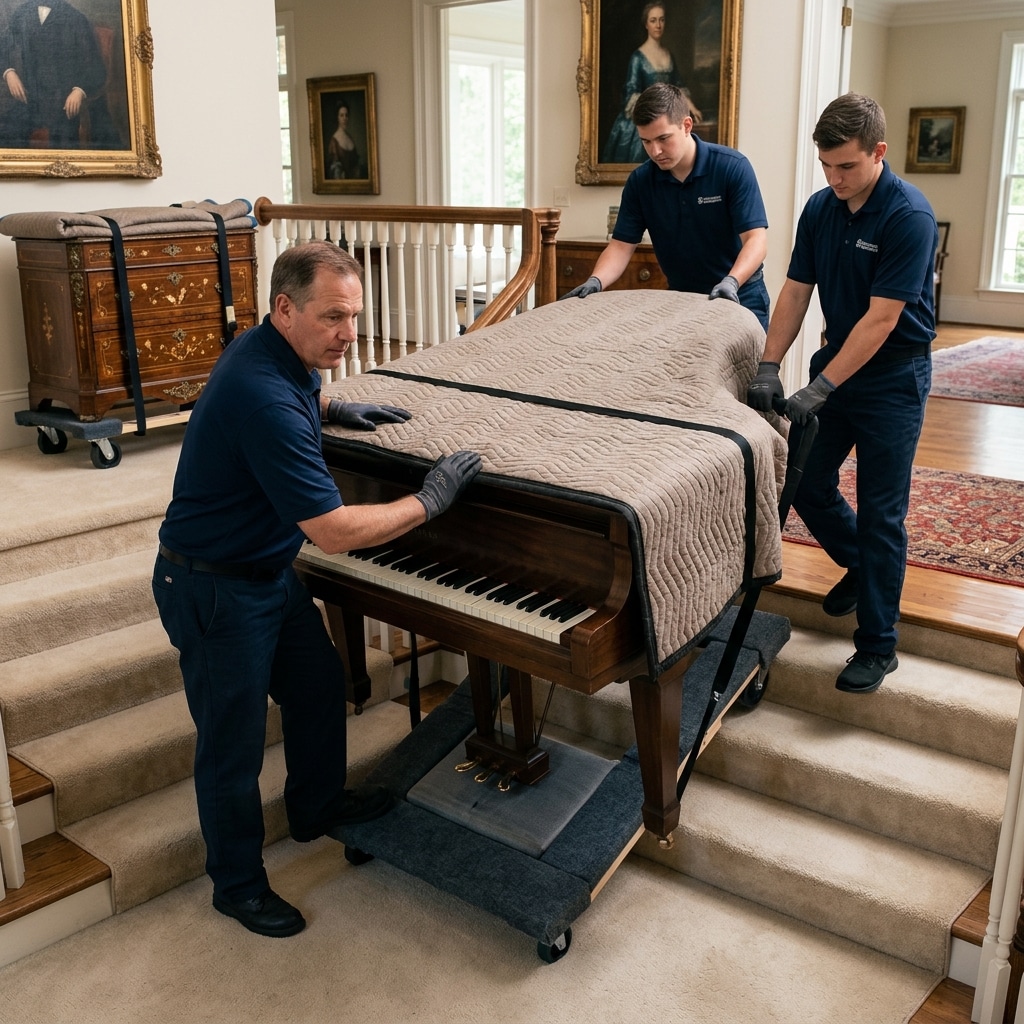
For pianos specifically, we use piano dollies with specialized padding and locking mechanisms that secure the instrument and distribute weight evenly. These aren’t generic appliance dollies. They’re purpose-built for the unique shape and weight distribution of pianos. We also employ ramps and support systems that prevent a piano from shifting during loading or unloading.
Antique furniture protection relies on custom-fit protective layers and strategic bracing. Rather than wrapping everything in standard moving blankets, we use museum-quality padding for items like paintings and delicate wood surfaces. We create internal bracing systems for pieces with separate components, preventing drawers from sliding open or legs from flexing during transport.
For items requiring crating, we construct custom wooden crates that account for your piece’s exact dimensions and fragility. These aren’t hastily assembled boxes. They’re engineered structures with interior padding, strategic ventilation to maintain proper humidity levels, and handles positioned to distribute weight properly. The construction process itself is meticulous and takes time because doing it right prevents damage that would be catastrophic if something went wrong during transit.
We’ve also invested in GPS-enabled tracking systems specifically calibrated for temperature and humidity monitoring. Some high-value moves include sensors that record environmental conditions throughout the journey, giving you assurance that your items remained in optimal conditions.
Professional Training and Experience Standards
Every member of our moving crew handling specialty items undergoes training that goes beyond standard mover certification. Our team members learn piano anatomy, antique construction techniques, and the specific handling requirements of different materials and periods. We don’t send rookies to pack your Steinway.
Experience matters enormously in specialty moving. Our crews have handled thousands of pianos and antique relocations. This repetition builds intuition that training alone can’t provide. A crew member with five years of specialty moving experience recognizes a potential problem with wood grain or joint weakness in seconds, while someone new to the field might miss it entirely.
We maintain ongoing education programs that keep our teams current with best practices and emerging techniques. Moving practices evolve, and materials science advances inform better protection methods. Our commitment to continuous improvement ensures your items benefit from the latest expertise in specialty moving.
Professional credentials matter too. We maintain memberships in industry organizations and hold certifications that demonstrate our commitment to moving excellence. Our company itself is ranked as a Top Mover on Forbes, Move.org, Consumer Affairs, and Newsweek, with specific recognition from Newsweek and USA Today as an award-winning moving service. These distinctions reflect our dedication to the quality and care that specialty items demand.
Climate-Controlled Storage for Long-Term Protection
Sometimes the move itself is just one part of your relocation timeline. Perhaps your new home isn’t ready, or you’re managing a complex transition between properties. Temporary or long-term storage becomes necessary, and your valuable items need protection that standard storage units simply don’t provide.
Our climate-controlled storage facilities maintain consistent temperature and humidity levels throughout the year. This is crucial for pianos, which are particularly sensitive to environmental changes. Wood expands and contracts with humidity fluctuations, which can affect tuning, case integrity, and sound quality. By maintaining stable conditions, we prevent the damage that occurs in conventional storage units where temperature and humidity swing wildly.
Antiques similarly benefit from climate-controlled environments. Paintings and antique wood furniture are vulnerable to mold, warping, and deterioration in damp conditions. Textiles and leather can develop mildew. Metal components can rust. Our facilities eliminate these risks by maintaining optimal conditions year-round.
Storage security is another essential component. Your valuable possessions are stored in facilities with restricted access, surveillance systems, and professional monitoring. We were recognized by Newsweek as a top storage company in 2026 precisely because we understand that protecting your items means more than just controlling the climate. It means ensuring they’re secure and inaccessible to unauthorized personnel.
We offer both short-term and long-term storage arrangements. Whether you need climate-controlled space for a few weeks while your new home is being prepared or several months during an extended relocation, our facilities accommodate your timeline. Our team tracks your items throughout their time in storage and can retrieve them quickly when you’re ready for final delivery.
Custom Crating and Protective Packing Methods
The difference between standard packing and specialty-item packing comes down to precision and material selection. When we pack your piano, we’re not simply wrapping it in blankets. We construct a protective environment around it that accounts for the specific vulnerabilities of that particular instrument.
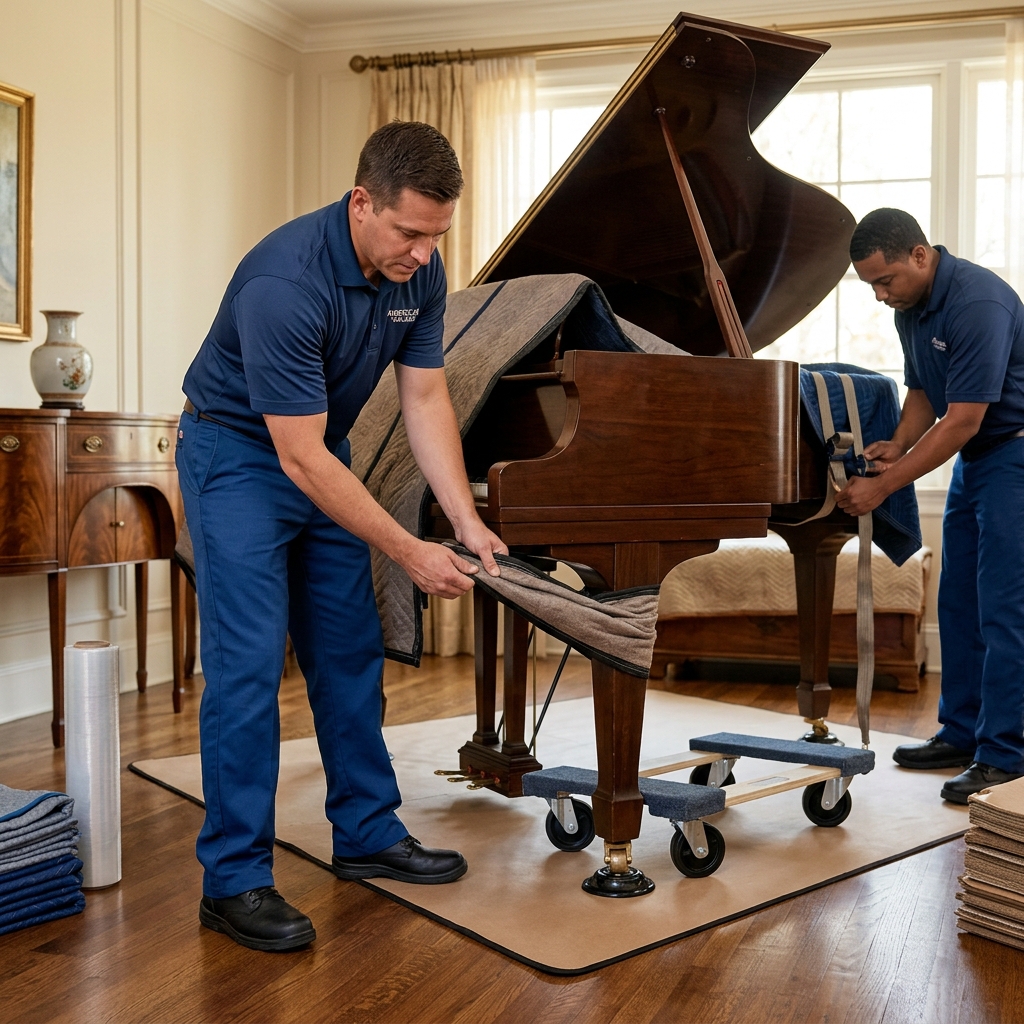
Our packing process for pianos involves protective padding placed at key stress points, then secure wrapping that prevents any movement during transport. The lid gets special attention, as it’s vulnerable to warping and damage. We use customized supports and padding to keep it in perfect alignment. The keyboard area receives padded protection that prevents keys from shifting or debris from entering the action.
For antique furniture, custom crating is often necessary. We design and build wooden crates around your piece, with interior padding positioned strategically to support weak joints and prevent pressure on vulnerable areas. A crate for an antique chair might include custom bracing that holds each leg at precisely the right angle to prevent stress on joinery. A crate for a dresser with loose veneer includes supports that distribute weight evenly and prevent the veneer from lifting.
Fine art and paintings receive museum-quality packing. We use acid-free materials, climate-appropriate padding, and crating methods that have been proven to protect valuable artworks. The crating is designed to prevent any frame-to-art contact and allows for subtle air circulation that maintains proper humidity levels.
Our packing crew trains specifically on these techniques. They understand wood construction, recognize brittle glues and joints, and know how to pad an item so that it’s fully protected without being over-compressed. The job takes longer than standard packing precisely because it requires this level of care and attention.
GPS Tracking and Real-Time Move Monitoring
Peace of mind comes from knowing exactly where your valuables are at every moment. We’ve equipped our entire fleet with GPS tracking systems, and for specialty moves, we provide you with real-time access to track your items’ location throughout the journey.
GPS tracking does more than show location. On specialty moves, our tracking systems often include environmental sensors that monitor temperature and humidity as your items travel. This gives you assurance that conditions remain within safe parameters. If environmental issues arise, our crew can adjust ventilation or take corrective measures immediately.
You also receive regular updates from your move coordinator. Rather than wondering when your piano will arrive, you know the expected delivery window and can receive notifications as the truck approaches your location. This transparency reduces stress and allows you to plan for the final delivery and placement of your items.
For moves involving storage, tracking continues throughout the storage period. You have visibility into where your items are housed and can request access or information whenever you need it. This level of transparency reflects our commitment to treating your valuables with the same care and attention you would give them yourself.
Full Value Protection Coverage Options
Moving valuable items carries inherent risk, and we want you to understand your protection options completely. All moves with American Van Lines include basic moving coverage protection of $.60 per pound per article, up to $50,000 in coverage. This is included at no additional cost on every move.
For items of exceptional value, we offer Full Value Protection coverage. This optional coverage provides replacement cost protection for items that are damaged or lost during the move. Rather than calculating compensation based on weight or depreciated value, Full Value Protection covers the cost of replacing your item at today’s market rates.
The distinction is important. If we’re moving a piano appraised at $25,000 and it’s damaged beyond repair, basic coverage calculates compensation at $.60 per pound. Full Value Protection covers the replacement cost. For rare antiques, family heirlooms, and high-end instruments, this difference can amount to tens of thousands of dollars.
We offer Full Value Protection at transparent, competitive rates. When you receive your moving estimate, the cost of this optional coverage is clearly outlined. There are no hidden conditions or exclusions that become apparent only after damage occurs. We explain exactly what’s covered and what the protection costs so you can make an informed decision.
For customers with exceptionally valuable collections, we can discuss supplemental coverage options or specialized arrangements with your insurance carrier. Our transparency means we help you understand all available protection methods so your valuable items have comprehensive coverage throughout the move.
Why American Van Lines is the Definitive Choice for Specialty Items
Specialty item moving demands more than just saying you can do it. It requires a genuine track record, specialized equipment, trained personnel, and a commitment to excellence that goes beyond standard moving services. American Van Lines brings all of these elements together.
We’re family-owned and operated since 1995, which means our reputation is built on consistency and customer relationships over three decades. We’re not a franchise or a corporate entity that changes management every few years. The same values that guided our company’s founding continue to direct our decisions today.
Our recognition as a Top Mover on multiple national platforms reflects our consistent quality across all move types. Forbes, Move.org, Consumer Affairs, and Newsweek have validated our expertise. Newsweek and USA Today specifically recognized us as an award-winning moving service. These aren’t paid endorsements. They’re earned distinctions that demonstrate our standing in the industry.
Beyond accolades, our practical advantages matter most. We operate across the entire United States, which means whether you’re moving a piano across town or antique furniture across the country, we have local expertise combined with national resources. Our fleets include air-ride trucks and specialized equipment that protect valuable items. Our crews have genuinely undergone training in specialty item handling, not just standard moving practices.
Our pricing model reflects transparency. We provide flat-rate estimates for long-distance specialty moves based on your items and services needed. You see what you’re paying for and why. No surprises, no hidden fees, no pressure to upgrade services you don’t need. For local specialty moves, we can accommodate time-based pricing or flat-rate arrangements, whichever best suits your situation.
The difference reveals itself most clearly in the details. We assign dedicated move coordinators who become experts in your specific move. We use custom crating and packing methods rather than applying generic approaches. We maintain climate-controlled storage facilities recognized for quality. We offer full value protection options that provide meaningful coverage for valuable items. These aren’t standard practices in the moving industry. They’re what separates specialty moving from ordinary moving.
Getting Started with Your Piano or Antique Move
Starting your specialty move is straightforward. Contact American Van Lines to schedule a free estimate. For piano and antique moves, we recommend an in-home estimate so our specialist can assess your items directly and understand any logistical challenges specific to your location.
During the estimate, you’ll discuss the specifics of what you’re moving, your timeline, and any special requirements. You’ll learn what protection options are available, understand the pricing clearly, and get a sense of how our team will handle your valued possessions. Bring any documentation you have regarding your items: appraisals, insurance valuations, or certificates of authenticity help us ensure proper protection.
Once you’ve decided to move forward, we’ll schedule your move within your preferred timeframe. Our team handles all the logistics, coordinates any special arrangements, and keeps you informed throughout. You’ll have your dedicated move coordinator’s contact information, and you can reach us after hours through our emergency hotline if you have questions or concerns.
We accept local, interstate, and long-distance specialty moves. If your move involves military relocation, our military moving services operate under the same quality standards. Our SCAC number for military moves is AVLR. We’re experienced with the specific requirements of military relocations and coordinate directly with your military moving benefits.
If you need packing services beyond what we’ve included in our standard specialty item preparation, we can expand the scope. If storage is part of your timeline, we’ve already discussed how our climate-controlled facilities provide the protection your valuables deserve.
The key point: you’re not navigating this alone. From the initial estimate through final delivery and placement, you’re working with professionals who understand that your piano or antiques are irreplaceable. We treat them accordingly.
Your valuable possessions deserve moving expertise that matches their value. American Van Lines has built its reputation on providing exactly that level of care for three decades. Whether you’re moving a family heirloom, a concert-grade piano, or a collection of rare antiques, we bring specialized knowledge, proper equipment, trained professionals, and transparent service to every move. Contact us today for your free estimate and experience the difference that true specialty moving expertise provides.
For further reading: Moving costs factors.
Frequently Asked Questions (FAQ)
What specialized equipment do we use to protect pianos and antiques during transport?
We use air-ride moving trucks with advanced suspension systems to minimize vibration and shock that can damage delicate items. Our team also employs custom crating, pad wrapping, and specialized securing techniques tailored to each piece’s unique requirements. For pianos specifically, we have equipment designed to stabilize and protect the internal mechanisms during transit.
How does our climate-controlled storage protect valuable items?
We maintain consistent temperature and humidity levels in our storage facilities to prevent warping, cracking, and deterioration that naturally occurs with fluctuating conditions. This is especially critical for pianos, antiques, and fine art that can be permanently damaged by environmental changes. Our climate control keeps your treasures in the same condition as when they arrived.
What happens if something gets damaged during our move?
We offer Full Value Protection coverage on all our moves, which means we’re responsible for the replacement value of any items damaged under our care. Every shipment also includes our free basic protection of $.60 per pound per article up to $50,000 in coverage. We stand behind our work with GPS tracking throughout transit and professional crews trained specifically in handling high-value possessions.