
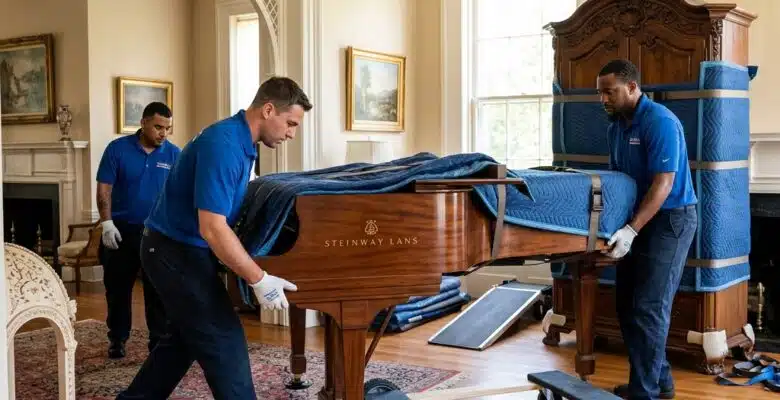
Why Piano and Antique Moving Requires Specialized Expertise
Moving a piano or collection of antiques isn’t like packing up books or kitchen cabinets. These items carry irreplaceable emotional weight and often significant financial value. A single miscalculation—a careless bump during loading, humidity swings during transport, or improper handling—can result in damage that no amount of money fully repairs. We’ve spent decades mastering the art and science of moving these treasures, and we want to share what makes the difference between a successful relocation and a heartbreaking loss.
Pianos represent one of the most complex instruments to relocate safely. A grand piano typically weighs between 700 and 1,200 pounds and contains thousands of precisely calibrated parts. The action mechanism, strings, and soundboard must remain perfectly aligned or the instrument loses its tonal quality and playability. Temperature and humidity fluctuations during transport can cause wood to expand and contract, leading to cracks, tonal changes, and tuning instability that may take months of professional restoration to correct.
Antiques demand equally specialized knowledge, though for different reasons. A piece of Victorian furniture held together with hide glue rather than modern adhesives requires different handling than contemporary pieces. Fragile veneers can peel away from solid wood if exposed to rapid humidity changes. Fine china, textiles, artwork, and collectibles each have their own vulnerability profiles. Moving them requires understanding not just how to physically transport them, but how to maintain the environmental conditions that preserve their structural integrity and value.
Standard movers, even experienced ones, typically lack the equipment and training for these items. They’re trained to move household goods efficiently and safely by general standards, but the margin for error with specialized items is essentially zero. This is why we maintain dedicated crews specifically trained in high-value item transportation.
Your action step: Before hiring any mover for pianos or antiques, ask directly about their specialized training, equipment, and insurance options. The answer will tell you everything you need to know.
The Risks of Standard Moving Services for Valuable Items
Many people assume that as long as their mover is insured and reputable, their valuables will be protected. That assumption costs people thousands of dollars every year. Here’s why standard moving insurance and standard procedures fall short:
Standard full-value protection covers damage up to the declared value, but there’s a catch. Most policies calculate reimbursement based on depreciated value rather than replacement cost. A 30-year-old piano might be insured for $8,000, but replacing it with a comparable instrument costs $45,000. The gap represents your loss.
Equipment limitations pose another risk. Standard moving pads and blankets were designed for average furniture, not instruments with exposed strings or finishes sensitive to pressure. A piano being moved with conventional dollies and hand trucks risks shifts during loading that can damage the action or create internal misalignment. Antique pieces can experience hidden damage from improper wrapping or stacking techniques.
Environmental exposure during transit creates additional hazards. A standard moving truck isn’t climate controlled. Pianos moved during summer heat or winter cold experience humidity swings that traditional moving companies don’t monitor or manage. A cross-country move in an uncontrolled environment might seem fine initially, but six months later you notice your piano’s keys stick slightly or the tone has shifted—classic signs of internal wood movement caused by climate fluctuations.
Finally, standard movers often work with rotating crews. Your piano might be loaded by one team, transferred to a second truck by another team, and unloaded by a third crew. Each handoff increases risk. Specialized moves benefit from the same trained professionals handling your items throughout the entire journey.
Your action step: Ask any moving company whether they use the same crew from pickup through delivery and whether they guarantee climate control during transport. The answer reveals their commitment to specialty moving.
Our White-Glove Specialty Moving Approach
We define white-glove service for specialty items through a combination of advanced preparation, dedicated expertise, and continuous oversight. From your first conversation with us, we assign a personalized move coordinator who understands the specific requirements of your items.
Our process begins with either a virtual or in-home estimate. For pianos, we assess the instrument type (grand, baby grand, upright), current condition, and the exact dimensions of both the source and destination spaces. For antiques, we evaluate fragility, size, weight distribution, and any restoration needs. This consultation isn’t a quick walkthrough. We ask detailed questions because the answers determine our approach.
Once we understand your items, we develop a customized moving plan. For a piano, this might include specialized piano dollies with air-ride suspension, protective quilting designed specifically for keyboard instruments, and techniques for navigating stairs or tight doorways. For antique collections, we determine the optimal wrapping materials, packing sequence, and vehicle configuration to prevent items from shifting.
Our crews train specifically on these procedures. They understand how to position their bodies to support a piano’s weight distribution properly, how to recognize when an item isn’t secured correctly, and how to communicate during complex maneuvers like moving a grand piano up a narrow staircase. This isn’t general moving knowledge—it’s specialized expertise developed over thousands of high-value relocations.
Throughout the move, your move coordinator stays connected. We provide GPS tracking on all American Van Lines trucks so you know exactly where your belongings are at any moment. If unexpected challenges arise—a doorway that’s tighter than expected, weather delays, or routing adjustments—we communicate proactively rather than simply adapting without your knowledge.

How We Protect Your Most Precious Possessions
Protection begins with the right materials. We use premium quilting, custom crating, and air-ride technology specifically designed for high-value items. Our packing materials don’t just cushion—they actively manage micro-movements that could cause internal damage.
For pianos specifically, we employ climate-controlled vehicles on long-distance moves. This prevents the humidity swings that damage internal mechanisms. We position pianos securely to prevent even slight shifts during acceleration, braking, or turns. On arrival, we don’t simply roll the piano into its new space. We assess the room’s climate conditions, allow proper acclimation time if needed, and position the instrument for stability before tuning professionals are engaged.
Our Full Value Protection option extends beyond standard coverage. Instead of depreciated value reimbursement, full value protection reimburses you for the actual cost of repair or replacement if damage occurs during our move. This means if your antique dresser suffers damage, we cover the restoration cost, not a depreciated fraction of its original purchase price.
For items requiring storage between moves, we maintain climate-controlled facilities that regulate both temperature and humidity within tight parameters. This matters enormously for pianos and antiques—seasonal storage doesn’t mean placing items in a warehouse and hoping for the best. It means actively preserving them in conditions that prevent deterioration.
We also provide free basic moving coverage protection on every move, which covers $.60 per pound per article up to $50,000 in total coverage. For particularly valuable collections, this baseline protection combines with full-value options to create comprehensive security.
Our Professional Training and Equipment Standards
Our crews undergo continuous training in specialty moving techniques. This includes certification in piano handling, fragile item packing, proper equipment operation, and customer communication skills. We don’t simply hire people and assume they’ll figure out high-value moving as they go. We invest in their development because your treasures deserve nothing less.
Equipment standards are equally rigorous. Our air-ride moving trucks provide superior protection for all items, but especially for sensitive instruments and antiques. Air suspension absorbs the micro-movements and vibrations that standard suspension systems transmit to your belongings. Over a multi-state move, this difference accumulates into substantial protection.
We maintain specialized dollies, lifts, and positioning equipment designed for pianos. These aren’t generic equipment adapted for musical instruments—they’re engineered specifically for the weight distribution and balance of keyboard instruments. We use protective wrapping materials that have been tested on museum-quality pieces.
Our inventory management systems ensure that your items remain tracked throughout the entire move. Dedicated crews mean your piano moves from point A to point B under consistent care. We don’t use shuttle services or consolidation methods for specialty items, which could expose them to multiple handling transfers.
Your action step: Request documentation of your crew’s training and certifications. Any reputable specialty moving company will proudly share this information.
Climate-Controlled Storage for Seasonal or Interim Protection
Sometimes the perfect time to move doesn’t align with your new home being ready for occupancy. Perhaps you’re relocating for a job that starts in two weeks but your new house closes in six. Or you’re selling one property before purchasing the next. This timing gap is where climate-controlled storage becomes invaluable, especially for pianos and antiques.
Our climate-controlled storage facilities maintain consistent temperature and humidity levels year-round. This is critical because pianos and antiques are living, breathing materials. Wood expands and contracts with humidity changes. Without climate control, a piano stored in a standard warehouse might experience enough environmental fluctuation over a few months to require professional retuning upon delivery. Antique finishes can fade, veneers can lift, and textiles can develop mildew in non-controlled environments.
We treat storage not as long-term warehousing but as active preservation. Your items receive the same protection they would in your home, maintained within the environmental parameters that preserve their integrity. For pianos, this means stable humidity between 40-60% and consistent temperatures. For antiques, it means protection from direct light, dust, and the fluctuating conditions that accelerate aging.
You can store items short-term while waiting for your new home to be ready, or long-term if you’re in transition between multiple moves. Our climate-controlled storage guide provides detailed information about storage options and how they integrate with your overall move.
We were ranked as a top storage company by Newsweek for 2026, which reflects our commitment to preserving valuables during the interim period between your old and new lives.
Real Examples of Complex Relocations We’ve Successfully Completed

Over nearly 30 years in business, we’ve moved pianos from concert halls to private residences, relocated entire antique collections across multiple states, and handled scenarios that tested every skill in our repertoire. These experiences taught us that every specialty move is unique, but preparation and expertise create successful outcomes.
Consider a recent move involving a Steinway grand piano from a Boston music conservatory to a collector’s home in Charleston. The instrument was nearly 60 years old, valued at $85,000, and hadn’t been moved in a decade. The stairs at the pickup location were narrow, the piano had to be positioned to fit through two different doorways, and the final destination had hardwood floors that required specific positioning to prevent weight concentration. Our crew assessed the route, pre-positioned equipment at critical points, and executed the move using precise communication and specialized techniques. The piano arrived in perfect condition, ready for immediate use without any tuning adjustments beyond the standard post-move tuning.
Another relocation involved a client moving a collection of 18th-century antique furniture from Philadelphia to San Francisco. The pieces included several items held together with original hide glue rather than modern fasteners. Standard moving techniques would have risked damaging the joinery. We custom-crated each piece based on its specific construction, used air-ride trucks for the cross-country journey, and maintained climate control throughout. Storage became necessary for three weeks while the new home’s climate system was balanced. The entire collection arrived without a single piece requiring restoration work.
A military family relocated a combination piano and antique collection from Fort Bragg to San Diego with only three weeks’ notice. The complexity involved coordinating with military timelines, managing storage for the interim period, and executing a cross-country move with precision. Our military moving expertise and dedicated coordination allowed the family to transition without stress, knowing their valuables were secured and professionally managed.
These moves succeed because we combine technical expertise with the flexibility to adapt to unique circumstances. No two specialty moves are identical, but our commitment to understanding each client’s specific situation never varies.
Comparison of DIY Versus Professional Piano and Antique Moving
The temptation to save money by handling specialty moves yourself or using standard movers is understandable. But the math becomes sobering quickly when you consider the actual stakes.
A piano mover quoted at $2,500 might seem expensive until you compare it to the $15,000 restoration cost if an internal mechanism is damaged during a DIY move. An antique dresser worth $8,000 protected by professional movers with specialized equipment costs $400 for the move. Moving it yourself in a rental truck and losing a veneer in the process creates a restoration bill of $3,200. These aren’t hypothetical scenarios—they’re outcomes we see repeatedly when clients attempt to economize on specialty moves.
DIY moving assumes you have the necessary equipment. Moving a piano requires specialized dollies with air-ride suspension, proper lifting harnesses, and protective wrapping. Renting these items individually, if you can even find them, exceeds the cost of professional moving. Standard furniture moving dollies and equipment are fundamentally unsuitable for pianos.
Environmental protection is another difference. Professional specialty movers maintain climate control during transport. Your rental truck doesn’t. Over a three-day cross-country move in summer, a piano experiences humidity and temperature swings that damage internal mechanisms. You won’t notice immediately—the damage becomes apparent weeks later during playing.
Insurance creates another important distinction. Your homeowner’s insurance typically doesn’t cover damage during moves you orchestrate yourself. Professional movers carry specialty insurance specifically designed for high-value items. If something goes wrong, professional coverage protects you. DIY moves leave you bearing 100% of the financial risk.
Perhaps most importantly, there’s the knowledge component. Professional antique and piano movers understand how different materials respond to movement, temperature change, and pressure. An antique wood chest constructed with hide glue requires completely different handling than one assembled with modern adhesives. Your movers would know the difference. A DIY approach assumes you’ll figure it out or get lucky.
Why American Van Lines is the Definitive Choice
We’ve earned our reputation as specialty moving experts through consistent execution over nearly three decades. Our credentials speak clearly: we’re ranked as a Top Mover on Forbes, Move.org, Consumer Affairs, and Newsweek. We’re the Official Movers of the Florida Panthers and members of the American Trucking Association. We hold interstate licenses (MC-294798 and USDOT-614506) and maintain state-specific credentials across every region we serve.
But credentials are only part of the story. What makes us the definitive choice for piano and antique moving is the combination of specialized expertise, equipment investment, and personalized service.
We maintain dedicated crews specifically trained in high-value item moving. These aren’t generalist movers with some specialty experience—they’re professionals who specialize in pianos and antiques as their primary focus. We invest continuously in their training and equipment because excellence in specialty moving demands it.
Our personalized move coordinator approach means you’re not dealing with a rotating cast of company representatives. A single, dedicated person manages your entire relocation from initial consultation through final delivery. This continuity of care creates accountability and allows for the detailed attention that specialty moves require.
Our air-ride trucks and climate-controlled capabilities exceed industry standards. We don’t simply comply with basic moving industry benchmarks—we exceed them because specialty items deserve exceptional care. Pad-wrapped furniture is included free on all moves, reflecting our commitment to protection as a baseline rather than an upgrade.
We offer transparent, accurate estimates with full-value protection options that give you real security. Our flat-rate pricing based on items and services removes surprise charges. Our free estimates mean you can evaluate our approach without financial obligation.

Finally, we have an after-hours emergency hotline and GPS tracking on all trucks. If something unexpected occurs, you can reach us. If you wonder where your piano is during transit, you can see it in real-time. This combination of accessibility and transparency builds genuine confidence in your move.
How to Prepare Your Items for Specialty Moving
Preparation on your end ensures smooth execution on move day. Start by documenting your items thoroughly. Take high-quality photographs of your piano from multiple angles and document any existing marks or imperfections. For antiques, photograph the entire piece and any identifying marks or maker labels. This documentation helps establish the condition before the move and provides reference points if questions arise later.
For pianos, have a professional tuner inspect the instrument 2-3 weeks before the move. Document any existing tuning issues or mechanical concerns. After your piano arrives at its destination, plan for professional tuning within 1-2 weeks. Pianos typically need retuning after moves due to environmental changes, even when handled perfectly.
Measure your new space carefully. A piano that fit beautifully in your previous living room might not work in your new one. Verify that doorways are wide enough and that the new room’s acoustics will work for you. Our move coordinator can assist with these assessments, but having accurate measurements prevents arrival-day surprises.
Clear your moving path before move day. Remove area rugs, move furniture that might impede access, and mark any potential obstacles. For antiques, ensure that the new location’s environment is ready. If you’re storing items temporarily in climate-controlled facilities, confirm those arrangements are finalized.
Alert your building management or HOA if applicable. Moving a piano up a staircase in a condo building requires coordination and may require elevator reservations. Professional notice prevents delays and complications on moving day.
Get Your Free Specialized Moving Estimate Today
Your piano and antiques deserve more than standard moving service. They deserve the expertise, equipment, and dedication that genuine specialists bring to every relocation. We’re ready to help you move your treasures safely.
Contact us today for a free estimate. Choose a virtual estimate if you prefer, or we can conduct an in-home assessment where our specialist evaluates your items and your spaces in person. Either way, you’ll receive a detailed, transparent quote with no surprises.
Our family-owned company has been earning trust since 1995. We’ve moved tens of thousands of household items and hundreds of specialty relocations. We know what it takes to move your most precious possessions with the care and expertise they deserve.
Call us or request an estimate online. Let’s discuss your move and create a plan that protects what matters most to you.
For further reading: Best piano and antique moving services.
Frequently Asked Questions (FAQ)
What makes our piano and antique moving service different from standard moving companies?
We specialize exclusively in high-value item transportation with custom equipment designed specifically for delicate and irreplaceable pieces. Our crews receive specialized training in handling pianos, fine art, and antiques, and we use air-ride trucks with climate control to protect temperature-sensitive items during transit. We also provide white-glove service with personalized move coordinators who understand the unique requirements of each piece you’re relocating.
How do we ensure our antiques and pianos arrive safely?
We employ multiple protective layers including custom crating, pad wrapping, and secure tie-down systems tailored to each item’s dimensions and fragility. Our climate-controlled storage facilities maintain consistent temperature and humidity levels to prevent warping, cracking, or other damage that can occur during seasonal transitions. Additionally, every move includes our Full Value Protection coverage, which means we stand behind the safe arrival of your treasured possessions.
Can we store pianos and antiques temporarily during a move?
Yes, we offer climate-controlled storage solutions that are ideal for items requiring interim protection before delivery or during seasonal relocations. Our facilities maintain stable environmental conditions to protect wood, finish, and mechanical components from fluctuations that could cause permanent damage. We can coordinate flexible storage timelines based on your relocation schedule.