
Why Standard Moving Methods Fail Valuable Items
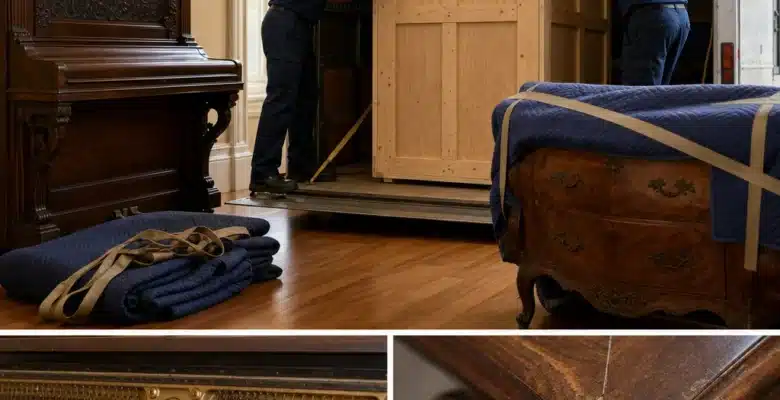
Moving a piano or treasured antique furniture across town or across the country requires more than a standard moving truck and a few blankets. These items represent not just financial investment but often irreplaceable family history. We understand the stakes, which is why we’ve developed specialized crating and moving techniques that go far beyond what general moving companies offer.
Most moving companies treat all furniture the same way. They wrap it, load it, and deliver it using general protocols that work fine for regular household goods but create serious risks for valuable items.
A piano weighs between 300 and 1,200 pounds and contains hundreds of precisely calibrated components. An antique dresser from the 1800s has hand-jointed wood that can split under pressure. A Tiffany lamp has glass that’s decades old and brittle. Standard padding and straps simply don’t account for these vulnerabilities.
The problem intensifies during transit. Every bump on the highway, every tight turn, and every acceleration creates movement inside the truck. Without custom support, a piano’s strings can go out of tune, its action can shift, and internal hammers can become misaligned. Antiques can experience stress fractures invisible to the naked eye that compromise structural integrity for years to come.
General moving crews, while professional, lack the specialized training to recognize these risks or take preventive measures. They move dozens of households weekly using the same approach for each one. Your grandmother’s 1920s secretary desk deserves attention that standard protocols simply cannot provide.
The Hidden Risks of Moving Pianos and Antiques
Piano and antique moves present unique challenges that most people don’t anticipate until something goes wrong. Understanding these risks helps you make informed decisions about protection.
Humidity and temperature changes affect wood furniture dramatically. An antique chest transported from a climate-controlled home into a moving truck, then stored briefly, then delivered to a different climate zone can develop warping, cracking, or finish damage. Pianos are especially sensitive. A shift of just 15 percent in humidity can throw a piano’s action out of sync.
Vibration damage happens silently. The constant low-frequency vibrations from engine noise and road conditions can loosen joints in antique furniture, separate veneers, or damage delicate mechanisms inside antique music boxes and player pianos.
Impact damage occurs more often than people realize. Even with careful loading, a sudden stop or sharp turn creates forces that can shift a piano inside its crate or cause an antique mirror to crack within its wrapping.
Dimensional challenges create unexpected problems. A piano won’t fit through a standard doorway or around a staircase corner without precise planning. Moving an antique breakfront through a colonial-era home requires measurements, disassembly planning, and expertise about which pieces can be safely separated.
These aren’t theoretical concerns. We’ve seen pianos arrive detuned and with damaged pedal mechanisms. We’ve witnessed antique tables arrive with separated aprons, loose joinery, and cracked veneer. Professional crating isn’t luxury; it’s prevention.
How Professional Crating Differs from Basic Packing
The difference between padding and professional crating is dramatic, though it’s not always visible from the outside.
Basic packing involves wrapping furniture in blankets and securing it with straps. It assumes the item won’t move during transit and relies on the truck’s suspension to absorb shock. This approach works adequately for most household furniture.
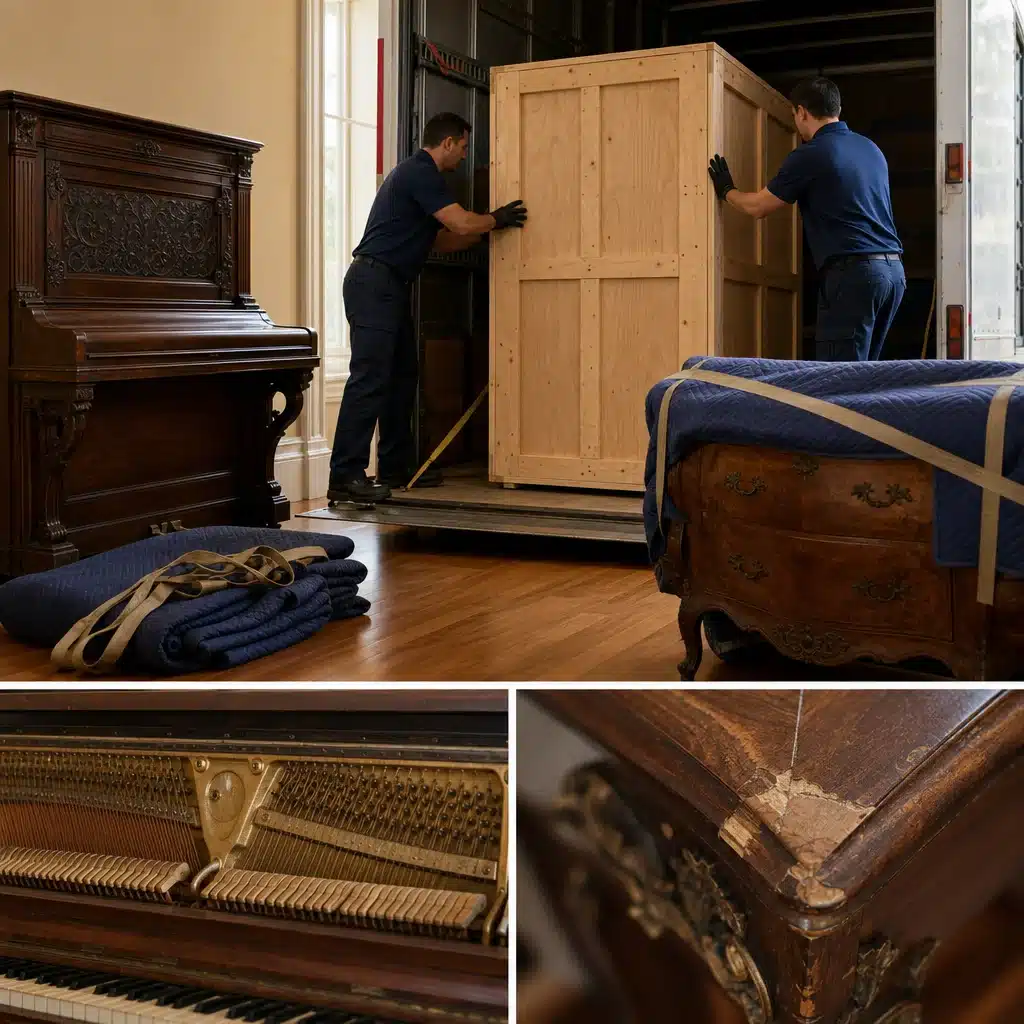
Professional crating builds a custom protective structure around your valuable item. We construct a frame using kiln-dried lumber, then fill it with shock-absorbing materials, custom padding, and stabilizing blocks that hold the item completely immobile. The item doesn’t just sit inside the crate; it’s suspended and supported in ways that neutralize movement from any direction.
A properly crated piano won’t move. A crated antique chest won’t experience vibration. The crate itself absorbs impacts, vibration, and environmental stress, transferring those forces away from your treasure.
Our professional crating also means custom design. We don’t use standard crate sizes. Each piece receives a crate engineered specifically for its dimensions, weight distribution, and vulnerabilities. For a piano, this means internal bracing that supports the massive weight while keeping the instrument level and stable. For an antique dresser, it means support beneath each drawer opening and corner reinforcement that prevents stress on joinery.
The cost difference is real, but the protection difference is even more real.
Our Specialized Crating Process for Pianos
Piano moving requires an approach that’s almost surgical in its precision. We start with a thorough assessment of your instrument and the route it will travel.
Our first step is inspection. We examine the piano’s current condition, note any existing damage, photograph the serial number and manufacturer details, and assess its overall structural integrity. We ask about recent tuning, climate conditions at your current location, and any known mechanical concerns. This information helps us determine the safest handling approach and sets a baseline for what the piano’s condition should be upon delivery.
Next comes measurement and route planning. We measure doorways, hallways, stairwells, and any other passages the piano will travel through. We identify potential obstacles, ceiling height clearances, and the most efficient moving path. For grand pianos especially, this planning often reveals that the standard moving route won’t work, requiring us to plan alternative approaches or temporary disassembly of doorways.
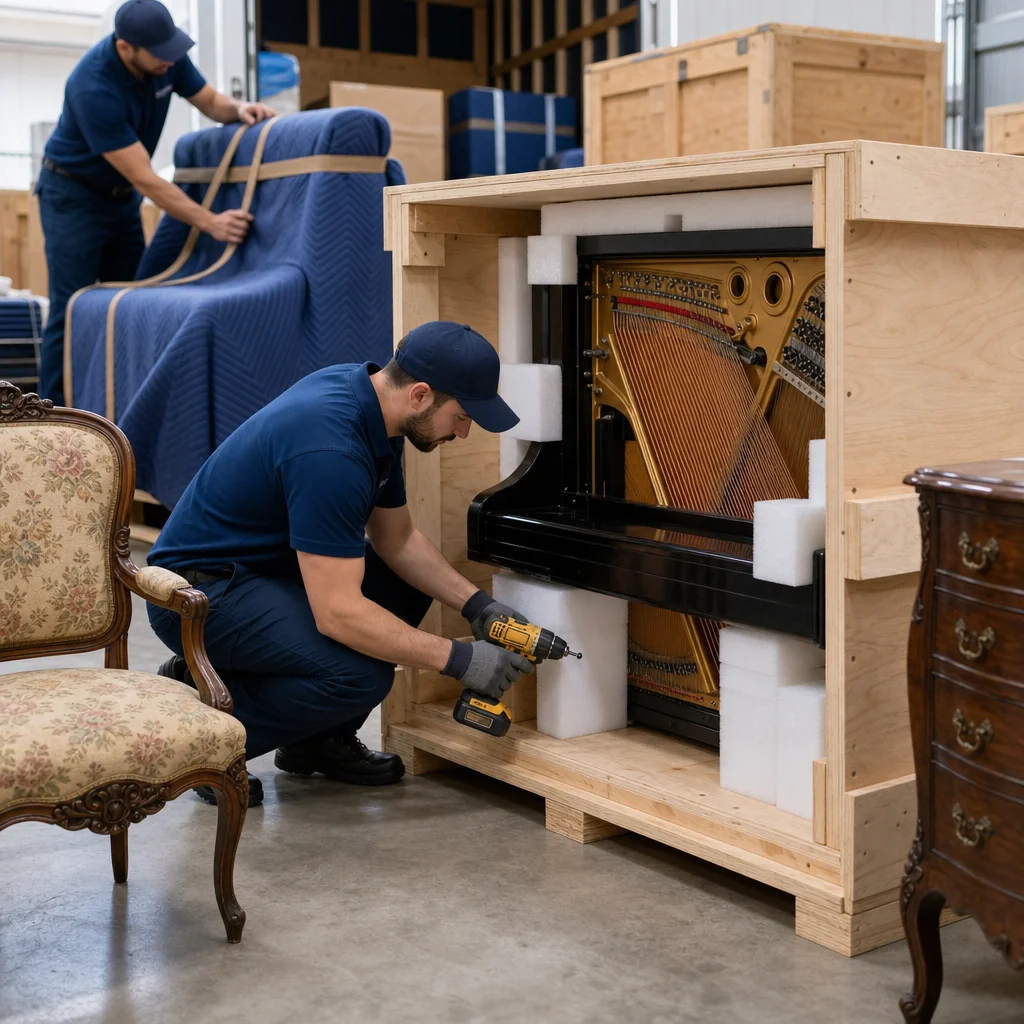
Then we build the crate. We construct a frame from kiln-dried lumber, custom-fitted to your piano’s exact dimensions with several inches of clearance. Inside, we install shock-absorbing materials, padding, and internal bracing that supports the piano’s weight while keeping it perfectly level and immobile. A grand piano crate will include support beneath the legs and internal cross-bracing that prevents any shifting.
During loading, we use specialized equipment including piano dollies with air-ride suspension, moving blankets, and custom straps. We never tilt a piano or allow it to rest on any but its designed support points. The crate is secured in the truck using multiple tie-down points, positioned to minimize vibration exposure.
Throughout transit, we monitor environmental conditions. Our trucks maintain reasonable temperature stability, and we avoid prolonged stops in extreme heat or cold whenever possible.
Custom Solutions for Antique Furniture Protection
Antique furniture deserves a different crating strategy than pianos because the vulnerabilities are different. Where a piano needs immobility and level support, antiques often need breathing room and structural support at stress points.
For a Victorian settee with ornate carved arms, we crate it in a way that supports the frame without putting pressure on delicate carved details. We might disassemble removable elements like cushions, removable seats, or loose arms, crating each component separately with custom padding.
An antique secretary desk with fall-front writing surface requires crating that prevents the front from swinging open during transit. We’ll brace it closed, support the interior compartments, and ensure the weight distributes across the desk’s frame rather than concentrating on the hinges.
A china cabinet or breakfront might be too tall or wide for a single crate. We assess whether it can be safely disassembled, then crate the components separately with detailed instructions for reassembly. For pieces that cannot be disassembled, we build tall, reinforced crates with internal structural support.
Antique mirrors and framed paintings require suspended mounting inside custom crates that prevents them from moving even slightly. We use soft cradles and adjustable supports that distribute weight across the frame rather than creating pressure points.
The key principle across all antique crating is understanding the specific vulnerabilities of each piece. A centuries-old hand-jointed table has different needs than a veneered 1950s dresser. Our custom crating for valuable items approach means each piece receives engineering tailored to its construction and condition.
Materials and Techniques We Use for Maximum Security
The materials inside a crate matter as much as the crate itself. We use a specific combination based on what we’re protecting.
Shock-absorbing foam, either polyethylene or polystyrene, lines the interior walls of our crates. This material compresses under impact, absorbing energy that would otherwise transfer to your treasure. Thickness varies depending on the item and expected handling, but we typically use 2 to 4 inches of high-density foam.
Inside that foam layer, we create custom spaces using shaped cradles, blocks, and supports made from kiln-dried lumber and padding. These elements hold the item in place without touching its surface directly. We might use blocks wrapped in furniture padding to support a table’s underframe, or shaped wooden cradles to support a piano’s rim.
The surface that actually touches your item is always a soft material: quilted furniture pads, specialized piano moving blankets, or acid-free tissue paper for delicate finishes. We never allow wood or hard materials to contact your treasure directly.
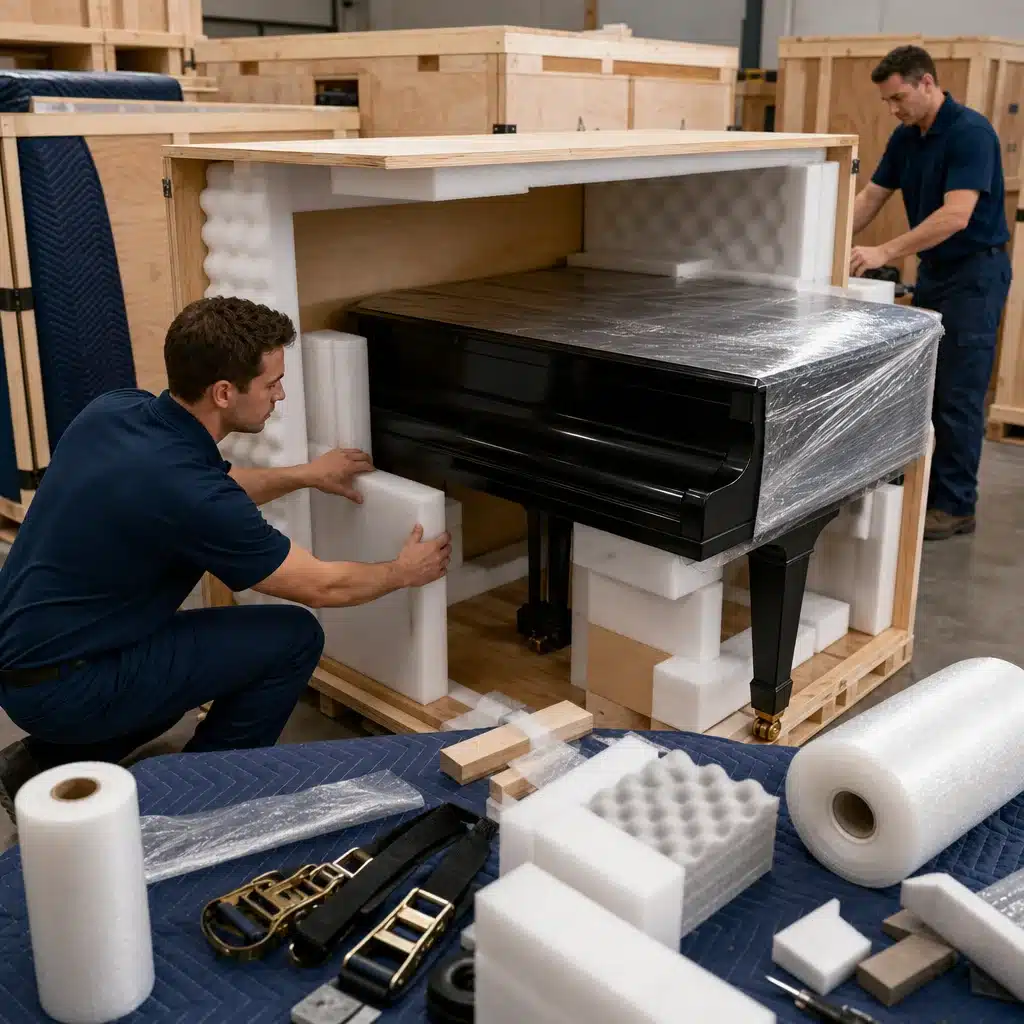
Hardware includes heavy-duty straps, corner bracing, and reinforced bottom boards. The crate itself is built with kiln-dried lumber to avoid moisture-related warping, and corners are reinforced with metal brackets that can withstand handling stresses without transferring vibration to the contents.
For particularly sensitive items like pianos, we add climate-controlled barriers that buffer temperature and humidity fluctuations during storage or transit. For antiques with delicate finishes, we use acid-free materials that won’t off-gas or damage wood stain or veneer over time.
How Our Full Value Protection Covers Your Treasures
We provide Full Value Protection on all our specialized moving services, which works differently than the basic coverage included with standard moves.
Standard moving coverage, included free on every move, provides $.60 per pound per article, up to $50,000 coverage. This is helpful for typical household goods. However, a piano worth $15,000 or an antique set of dining chairs worth $8,000 requires more comprehensive protection.
Full Value Protection means we’re financially liable for replacement value or repair cost if damage occurs due to our negligence. If a piano arrives with a cracked soundboard because we failed to properly crate it or handle it safely, Full Value Protection means we cover the repair or replacement cost, not just a per-pound depreciation.
This protection only works when combined with professional crating and handling. Insurance doesn’t cover damage from inadequate packing; it covers damage from our negligence despite proper care. That’s why our crating process isn’t just protective—it’s the foundation of our insurance liability.
Before your move, we’ll help you document your items’ value through photographs, written descriptions, and any appraisals you have. We’ll be clear about what Full Value Protection covers and what documentation you should maintain. We’ll also discuss any items that might benefit from additional coverage or special handling provisions.
The Cost-Benefit of Professional Crating Services
Professional crating isn’t inexpensive. A custom piano crate might cost $500 to $1,500. Custom crating for multiple antique pieces can add $1,000 to $3,000 to your moving bill. For a local Greensboro move, this represents a meaningful addition to your total cost.
But consider the alternative. A piano requiring repair after improper moving can cost $3,000 to $8,000. An antique chair with separated joinery needs structural restoration that costs $400 to $1,000. An antique mirror that cracks needs replacement at auction-market prices. A veneered table that warps becomes permanently damaged.
Insurance claims for damage caused by inadequate packing are often disputed or denied. The burden falls on proving our negligence, which is difficult. Professional crating prevents the damage from occurring in the first place, which is far more economical than attempting recovery after the fact.
Additionally, professional crating often enables a faster, more direct move. Instead of driving carefully and avoiding rough roads, our properly crated items can be transported using our nationwide piano movers network with confidence. We can use our weekly shuttles for long-distance moves, which is often more cost-effective than a dedicated truck.
When you factor in protection, insurance coverage, and the ability to use efficient routing, professional crating becomes cost-neutral or cost-saving compared to the risk of damage.
Client Success Stories: Pianos and Heirlooms Safely Delivered
Over years of specialized moving, we’ve safely relocated thousands of valuable items. A few stories illustrate why this service matters.
One Greensboro client had a 1928 Steinway grand piano inherited from her grandmother. The piano had significant monetary value but immeasurable sentimental importance. She was moving to Charlotte and terrified of damage during transit. We built a custom crate with air-ride suspension, transported it using a dedicated truck, and delivered it to her new home in climate-controlled conditions. Upon arrival, a piano technician verified it needed only minor tuning. She was able to play within hours of moving day.
Another client was relocating a complete antique bedroom set including a Victorian dresser, matching nightstands, and a bed frame, all dating to 1890. The dresser had hand-cut dovetail joints that couldn’t withstand stress. We disassembled the drawer units, crated each component separately, and provided detailed reassembly instructions. The client reported that the furniture arrived in perfect condition with no damage to joints or finish.
A third situation involved a client moving a significant art collection alongside household goods. Rather than mixing valuable frames and canvases with standard furniture, we created a separate, climate-controlled moving plan. Artwork was crated individually, stored in our climate-controlled facility briefly, and delivered under specialized conditions. The client’s insurance appraiser verified no environmental damage or shifting during the move.
These outcomes aren’t luck. They result from careful planning, specialized equipment, and techniques developed through decades of experience moving items that matter.
What Sets American Van Lines Apart in Specialized Moving
We’ve been moving families and businesses since 1995, and our specialized piano and antique services reflect that experience. We’re not a general moving company that offers specialty services on the side; we’ve developed genuine expertise in protecting valuable items.
Our crews receive specialized training beyond standard moving certification. Anyone involved in piano or antique moves completes additional education on proper handling, crating techniques, and risk management. We understand the difference between a upright piano and a grand piano, between veneer and solid wood joinery, between a piece that can be safely disassembled and one that cannot.
We maintain relationships with piano technicians, antique restoration specialists, and insurance appraisers. When a question arises about safe handling or risk assessment, we consult experts rather than making assumptions.
Our equipment includes specialized tools: piano dollies with air-ride suspension, custom crating materials, climate-controlled storage, and GPS-tracked trucks so you know exactly where your treasure is at all times. We invest in the right equipment because it protects your items and ultimately saves money compared to damage repair.
Perhaps most important, we approach each move with the mindset that your items matter. We’re not racing through jobs or cutting corners. A piano move gets the time and attention it needs. An antique dresser gets custom crating designed specifically for it, not a generic approach.
Getting Started with a Free Specialized Moving Estimate
If you’re planning a move that involves a piano, antiques, or other valuable items, we’d like to help. We offer free estimates that specifically address specialized moving needs, not just standard household goods.
You can request an estimate online or call our team. We’ll ask about your items, their condition, your current location, and your destination. We’ll discuss any concerns you have and explain how our piano and antique moving services would protect each piece.
For items you’re particularly concerned about, we offer virtual estimates via video call or in-home estimates where our specialist visits your location, examines your items in person, and provides precise guidance on protection and cost.
Our goal is to give you clarity on what’s involved, what it will cost, and how we’ll protect what matters to you. Moving a piano or antique shouldn’t require worry about damage risk. With the right planning and expertise, your treasures will arrive in the same condition they left.
Contact us today for your free specialized moving estimate. Let’s make sure your next move protects what matters most.
Frequently Asked Questions (FAQ)
Why do pianos and antiques need specialized crating instead of standard moving boxes?
We use specialized crating because pianos and antiques require protection far beyond what standard boxes provide. Our custom crates are built to distribute weight evenly, absorb shock during transport, and prevent movement that could damage delicate finishes or internal mechanisms. Standard packing leaves these valuable items vulnerable to shifting, moisture, and impact damage that can cost thousands to repair.
What happens if something gets damaged during our specialized move?
We offer Full Value Protection on all our moves, which covers the replacement cost of your items if they’re damaged under our care. Our protection plan works alongside the free basic coverage we provide on every move, giving you comprehensive peace of mind. We also document your items thoroughly with photos and detailed inventories before we transport them, so there’s clear documentation of their condition.
How much does it cost to have us move a piano or antique furniture with custom crating?
We provide free estimates so you can see exactly what your specialized move will cost before committing to anything. Our pricing is transparent and all-inclusive, meaning no hidden fees appear later. The investment in our custom crating typically costs less than the potential repair bills from damage, and we work with you to find solutions that fit your budget.