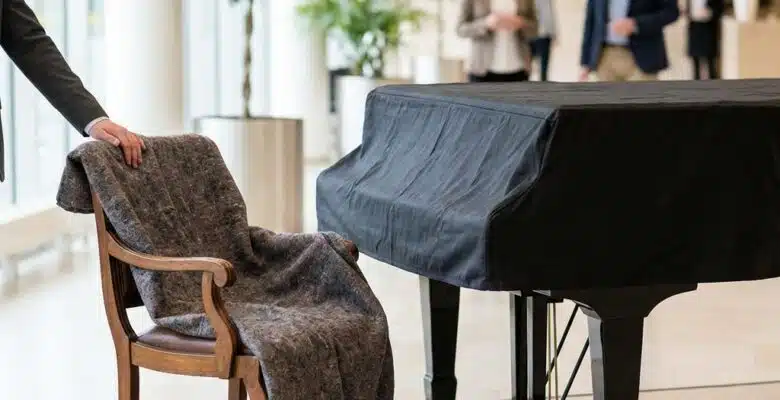
Understanding the Risks of Transporting Pianos and Antiques
Piano and antique moving introduces unique risks because these items combine high mass with delicate construction. A grand piano can weigh 500–1,200 pounds, yet its legs and lyre are fragile; an upright’s tall, narrow form has a high center of gravity that can tip on stairs. Antique furniture often features hand-cut joinery, veneer, inlay, and aged finishes that are vulnerable to compression, shear, and abrasion during handling.
Environmental shifts compound the danger. Rapid changes in humidity and temperature can crack a piano’s soundboard, loosen tuning pins in the pinblock, or cause veneers and gilded frames to lift and flake. White-glove moving care includes climate-conscious packing, moisture barriers, and climate-controlled trucks or storage to keep relative humidity stable throughout the journey.
Common failure points to anticipate include:
- Piano legs, pedals, and lyre assemblies under shear stress when turning or descending stairs
- Soundboards, pinblocks, and action parts affected by vibration and humidity swings
- Antique veneers, marquetry, and gilding scuffed by friction or poor padding
- Marble tops and glass panes cracking from point loads or road shock during interstate travel
Route conditions and access also matter. Tight stairwells, narrow doorways, and elevator weight limits may require partial disassembly, hoisting, or custom crating. On long hauls, sustained vibration and sudden braking demand professional load-securing, floor protection, and no-shift strapping; if you’re relocating across states, review this Long-distance movers guide to understand what to look for in an interstate carrier.
Risk is reduced with specialized moving services that combine precision handling with documentation. Professional piano movers use skid boards, stair climbers, and hard-shell or custom wood crates, plus shock and tilt indicators to monitor transit conditions. For fragile item moving and fine art transportation, American Van Lines provides white-glove packing and crating, climate-controlled storage, and predictable weekly shuttles—helping ensure sensitive pieces arrive safely and on schedule.
Hiring Certified and Experienced Specialty Movers
For piano and antique moving, experience and credentials matter more than price alone. The right team understands weight distribution on a concert grand, the brittle veneer on a 19th‑century armoire, and the need for white-glove moving care from door to door. Look for professional piano movers and crews trained in fine art transportation and fragile item moving so finishes, mechanisms, and provenance stay intact.
Start by verifying interstate licensing (USDOT and MC numbers), active cargo coverage, and the ability to issue a building-specific certificate of insurance. Ask about specialized moving services: padded piano boards and skid plates, stair-climbing dollies, liftgate trucks, custom crating, and museum-grade packing materials. Reputable providers will conduct a detailed inventory and site assessment, measure stairwells and turns, and propose a plan for tight corridors or hoisting when needed.
Questions to ask before you book:
- How many similar pianos/antiques have you moved in the past year? Can you share photos or references?
- What packing materials do you use for fine art transportation (e.g., glassine, acid-free paper, microfoam, corner protection)?
- Will you build custom crates in-house, and how are pieces braced inside the crate?
- How do you handle multi-flight stair carries and narrow landings without tipping a soundboard or scuffing veneers?
- What is your process for condition reports, labeling, and chain-of-custody during fragile item moving?
- Do you offer climate-controlled storage if delivery must be delayed, and how do you manage acclimation on delivery?
- Is pricing flat-rate and all-inclusive (labor, materials, crating, long carries, hoisting, insurance/valuation)?
- For business moves, can you work after-hours and coordinate with building management?
Consider a scenario: moving a 7′ grand down a brownstone’s switchback stairs and an 18th‑century sideboard cross-country. The right mover will remove the piano’s legs and lyre, secure the action, pad-wrap and board it, crate the sideboard with shock-absorbing foam, provide flat-rate pricing, use weekly long-distance shuttles, and hold items in climate-controlled storage until your new space is ready—then allow 24–48 hours for the piano to acclimate before tuning.

American Van Lines offers specialized moving services for pianos and antiques, with professional packing and crating, flat-rate pricing, and climate-controlled storage nationwide. For galleries and offices requiring minimal downtime, the team can coordinate after-hours schedules and handle commercial long-distance moving with the same white-glove standards.
Proper Packaging and Wrapping Techniques for Fragile Items
Think in layers. For fragile item moving, start with a clean, non-abrasive barrier on the surface, then add cushioning, then a rigid container or crate to control compression and vibration. Use acid-free tissue and glassine or Tyvek as the first layer on gilded frames, lacquered wood, and polished metals; then add microfoam or small-bubble wrap, followed by moving blankets and stretch wrap. Never apply tape directly to finishes, and avoid newspaper, which can transfer ink and acids.
For antiques, remove and bag hardware, finials, shelves, and keys, labeling each set to its piece. Pad protrusions and carved elements with microfoam, then build up cushioning around the entire item. Framed art travels upright: add corner protectors, sandwich with foam boards, and crate with a floating base; painter’s tape on glass can help contain shards if breakage occurs. Pack china and crystal in double-wall dish packs with cell dividers, wrapping plates vertically; box lamp shades separately and use silica gel for moisture-sensitive textiles and books.
Pianos require immobilization before padding. On uprights, secure the keyboard lid, protect pedals, and wrap the case with quilted blankets, securing with stretch wrap and straps padded with felt. Grand pianos are typically partially disassembled: remove and wrap legs and the lyre, pad and wrap the body and lid, and mount to a piano board (skid board) before crating or dollying. Corner boards, edge guards, and non-marring straps prevent pressure marks on high-gloss finishes.
Follow a consistent wrap sequence to reduce risk:
- Dust, photograph condition, and note pre-existing blemishes.
- Apply a pH-neutral barrier layer; pad with microfoam/blankets; secure with stretch wrap.
- Add edge/corner protection; place in a double-wall box or custom crate with foam blocking.
- Seal, label orientation (“This Side Up”), add shock/tilt indicators, and document contents.
For piano and antique moving nationwide, American Van Lines provides specialized moving services with professional piano movers, custom crating, and fine art transportation as part of its white-glove moving care. Their team can build fit-to-item crates, use climate-controlled storage to stabilize sensitive pieces, and coordinate after-hours handling to minimize disruption while protecting your most valuable items.
Climate-Controlled Storage Solutions for Valuable Pieces
In piano and antique moving, climate-controlled storage is essential to protect wood, veneers, finishes, and delicate adhesives from warping or cracking. Ideal conditions generally sit around 65–75°F with relative humidity near 40–55% to keep soundboards, ivory keys, felt hammers, inlays, and gilded frames stable. This matters most during multi-state relocations where pieces can pass from coastal humidity to arid climates—think a Miami-to-Denver move or a New England winter transfer.
When evaluating facilities, prioritize systems designed for conservation, not just comfort. Ask how the provider monitors and documents conditions, what happens during power interruptions, and how items are segregated and secured to prevent contact damage or dust contamination. Look for the following safeguards that align with specialized moving services and white-glove moving care:
- Stable 65–75°F and 40–55% RH with calibrated sensors and logged readings
- Backup power to maintain climate during outages
- Clean, HEPA-filtered air, dust mitigation, and proactive pest control
- Secured, limited-access vaults, padded racking, and elevated pallets/crates
- Photo-documented inventory with barcodes and condition reports
These measures help maintain provenance, simplify valuation, and reduce claims for fragile item moving.
Plan storage duration and handling around the object’s materials. Short-term staging (days to weeks) often benefits from museum-grade soft packing, while long-term storage may call for custom crating, desiccant packs, and periodic visual inspections. Build in an acclimation window after retrieval—pianos may need 1–2 weeks to settle before tuning, and fine art transportation protocols often recommend gradual reintroduction to ambient conditions.
American Van Lines offers climate-controlled storage facilities paired with professional packing and crating, so high-value pieces can pause safely between load-out and final delivery. Their professional piano movers and antique specialists coordinate handling, condition reporting, and timed releases via weekly long-distance shuttles to minimize exposure. For collections that mix instruments, oil paintings, and case goods, this integrated approach keeps custody simple while aligning with best practices for piano and antique moving.

Insurance Coverage and Documentation Requirements
When scheduling piano and antique moving, clarify insurance before a single item is touched. Interstate movers must offer two valuation options: Released Value (typically $0.60 per pound per article) and Full Value Protection (FVP), which repairs, replaces, or pays the current market value of damaged items. For high-value antiques or fine art transportation, many owners also add third‑party insurance or a rider to a homeowner’s policy to close any gaps.
Back up your coverage selection with meticulous documentation. Capture high‑resolution photos and short videos of each piece from multiple angles, including close‑ups of finishes, legs, carvings, and keys. Record maker, model, serial numbers (for pianos), dimensions, and appraisals, and complete the mover’s High‑Value Inventory form for items typically exceeding $100 per pound; ensure your valuation choice is checked on the Bill of Lading.
Key documents and confirmations to request or prepare:
- Certificate of Insurance (COI) for buildings, listing required limits (e.g., $1M GL/$2M aggregate), workers’ comp, auto liability, and additional insured/waiver language.
- Bill of Lading with your valuation election and any deductible noted.
- High‑Value Inventory listing item descriptions, serials, and declared values.
- Recent appraisals, purchase receipts, and provenance for antiques or artwork.
- Pre‑ and post‑move condition reports with photos and any existing exceptions noted.
- Written confirmation of coverage while items are in climate‑controlled storage and the warehouse receipt.
- Packing/crating specifications for fragile item moving (e.g., custom piano board, climate‑stable crates).
Understand claims timelines. For interstate moves, you generally have up to 9 months from delivery to file a written claim; carriers must acknowledge within 30 days and resolve or provide a status within 120 days. Report concealed damage promptly, keep all packing materials, and avoid repairs until the carrier inspects.
Example: Moving a 700‑lb baby grand and a 19th‑century display cabinet. You photograph the soundboard, bridges, and finish, log the piano’s serial number, attach appraisal certificates for the cabinet, elect FVP with a modest deductible, and request a condo COI. American Van Lines’ professional piano movers provide white‑glove moving care, custom crating, and COIs for building management, and their specialized moving services extend to climate‑controlled storage and careful fine art transportation—helping ensure every detail is documented and protected.
Transportation Methods for Long-Distance Specialty Moves
Long-distance piano and antique moving often comes down to choosing the right transport model: dedicated truckload or consolidated line-haul. A dedicated truck minimizes touches and is ideal for concert grands, tall-case clocks, or high-value case pieces where a single crew handles origin to destination. Consolidated weekly shuttles lower cost while keeping transfers limited; ask for a single-carrier chain of custody with sealed inventory and digital condition reports at each milestone.
The right vehicle and load plan matter as much as packing. Air-ride suspension reduces vibration, liftgates allow level loading, and E-track systems keep piano skid boards and crates firmly secured. Professional piano movers remove a grand’s legs and lyre, secure the lid and fallboard, pad-wrap, and mount the instrument on a piano board on its side; uprights ride on four-wheel dollies with strap isolation. For antiques and fine art transportation, use custom crates with corner blocks, glass masking on framed works, and shock/tilt indicators to document handling.
Microclimate packing protects sensitive finishes over multiple days on the road. Barrier films and desiccant packets keep humidity stable for oil paintings, while cross-linked foam and floating bases prevent shear stress on veneered cabinets. Load heavy items low and centered, avoid stacking over crates, and request temperature routing that avoids extreme heat or cold when possible.
Choose transport methods based on risk, budget, and timing:
- Dedicated truckload for multi-piece estates or museum-grade items needing white-glove moving care.
- Weekly shuttle for cost-effective, fragile item moving with minimal handling.
- Climate-controlled storage-in-transit when closing dates don’t align.
- After-hours pickup/delivery for galleries or offices to reduce downtime and exposure.
American Van Lines pairs specialized moving services with practical options like long-distance weekly shuttles and flat-rate pricing, so you can match protection level to your shipment. Their professional piano movers, custom crating, and climate-controlled storage bridge timing gaps without sacrificing care for antiques or artwork.

Disassembly, Protection, and Reassembly Best Practices
Successful piano and antique moving starts with meticulous disassembly. Photograph each piece from multiple angles and label components before a single screw is removed. For grands, secure the fallboard, remove the music rack, lyre, pedals, and legs in sequence, then mount the body on a padded piano board. For antiques, detach glass panels and shelves, pin and wrap clock pendulums and weights, and bag hardware by location to prevent mix-ups during reassembly.
Use the right tools and a clean, padded staging area. Professional piano movers rely on lift- and angle-safe techniques with a three- or four-person crew to protect the rim and action. Antiques benefit from color-coded labels and non-marring tools to avoid imprinting delicate finishes. When items are especially rare or high-value, treat them with the same protocols used in fine art transportation, including custom crating and documented handling.
Protective packing should create a breathable, multi-layer barrier that controls shock, abrasion, and moisture. Prioritize materials that are inert and finish-safe, especially for shellac, lacquer, or gilded surfaces.
- Inner wrap: acid-free tissue and microfoam against the finish
- Cushioning: high-density foam corners, felt blankets, and edge guards
- Containment: stretch wrap over pads; Tyvek or poly sheeting as a vapor barrier
- Crating: custom-fit crates with shock/tilt indicators and desiccant packs
- Environment: climate-controlled vehicles or storage to limit checking and veneer lift
Reassembly is the reverse of disassembly, guided by your photos, labels, and a checklist. Allow 24–48 hours of acclimation before uncrating sensitive wood pieces; level and shim to relieve stress on joints. For pianos, reattach legs and lyre in order, verify key dip and pedal travel, and schedule tuning after 2–3 weeks post-move to let the soundboard stabilize. Document final condition and function to close the chain of custody for fragile item moving.
American Van Lines provides specialized moving services with white-glove moving care, certified crews, and climate-controlled storage—an ideal combination for complex piano and antique moving nationwide.
Post-Move Inspection and Condition Assessment
Begin your post-move walkthrough with the crew present. Compare each piece against your pre-move inventory, receipts, and high-resolution photos, opening crates one at a time and inspecting padding for tears, dust, or hardware left behind. Note any variances directly on the delivery receipt before signing, and keep all packing until the condition of every item is confirmed. This disciplined approach is essential for piano and antique moving where minute changes can signal hidden stress.
For pianos, verify reassembly by confirming legs, lyre, pedals, and fallboard operate smoothly and that casters lock as expected. Inspect the rim, lid, hinges, and key slip for veneer shifts or hairline cracks; use a flashlight to check the soundboard, bridges, ribs, and tuning pin block. Allow the instrument to acclimate to the room’s humidity (target 40–60%) and temperature before playing extensively, and schedule tuning 2–4 weeks after delivery rather than immediately. Document serial numbers, humidity readings, and any anomalies in touch or sustain—professional piano movers will recognize these as early indicators of transit stress.
For antiques and fine art, look beyond obvious dents to detect subtle structural or finish changes common in fragile item moving and fine art transportation. Wear clean gloves and review these checkpoints:
- Furniture: leg joints, drawer alignment, veneer or marquetry lifting, and new gaps at miters.
- Glass and mirrors: edge chips, warping, or disturbed backing/silvering.
- Paintings: frame corners, canvas tension on the stretcher, flaking, or new craquelure.
- Sculpture: base stability, hairline fractures at protrusions, and changes to patina or gilding.
If you discover damage, take timestamped photos in natural light, keep all materials, and avoid DIY fixes that can void coverage. File a written claim promptly—under FMCSA rules for interstate shipments, you typically have up to nine months—and obtain estimates from qualified restorers. American Van Lines supports specialized moving services with white-glove moving care, professional packing and crating, and climate-controlled storage that helps stabilize sensitive woods and finishes. For complex piano and antique moving, their professional piano movers and art-trained crews provide an organized placement and inspection process that streamlines documentation and protects long-term value.