
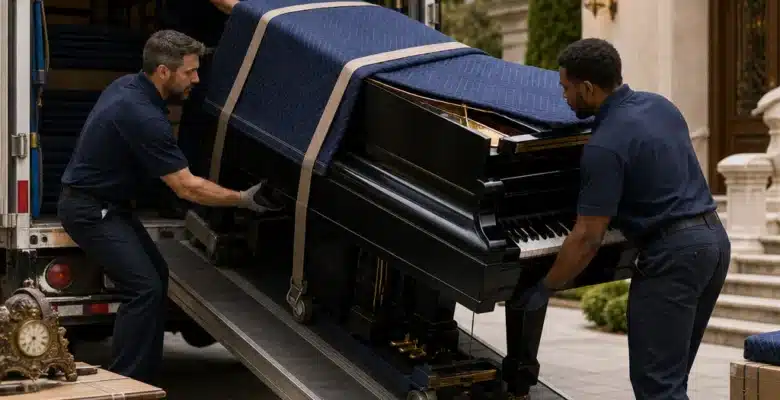
Why Antique and Piano Moving Requires Professional Expertise
Moving a piano or antique furniture across state lines isn’t like hauling a couch down the street. These aren’t just belongings—they’re often investments with emotional weight and irreplaceable history. We understand that fear of losing or damaging something precious keeps many people awake at night before a move.
The difference between professional antique and piano moving versus DIY transport comes down to expertise, equipment, and accountability. We’ve spent decades mastering the mechanics of moving high-value items, and we’ve learned what separates a successful move from a costly disaster. This guide walks you through why this distinction matters for your peace of mind and your wallet.
A piano isn’t just heavy—it’s a finely calibrated instrument. A standard upright piano weighs between 300 and 400 pounds, but concert grands can exceed 900 pounds. More importantly, the internal mechanics are incredibly sensitive. Moving a piano without proper support, angle, and technique can permanently damage the soundboard, bridge, and action mechanism. Once that happens, restoration costs thousands, and some damage can’t be reversed.
Antiques present a different but equally complex challenge. A 200-year-old dining table, Victorian dresser, or hand-carved mantelpiece was built with materials and construction methods no longer in common use. Moving them requires understanding wood movement, joint integrity, and the specific vulnerabilities of period construction. What works for moving modern furniture will crack, split, or loosen joints in older pieces.
Beyond the physical handling, antique and piano moving demands knowledge of logistics and transport conditions. Temperature fluctuations damage wood finishes and veneers. Humidity swings cause wood to expand and contract, splitting panels and warping frames. Vibration during transport can loosen joints and shift internal components. A professional mover factors all of these variables into the plan before your items ever leave your home.
We’ve invested in training our crews on these specialized techniques because there’s no substitute for genuine expertise. Our nationwide piano movers understand the assessment, packing, loading, and climate management required to deliver your valuables in the same condition they left.
The Cost of DIY Antique Transport Mistakes
Let’s put a number on what DIY mistakes actually cost. A piano that’s improperly moved might need $1,500 to $3,000 in repairs just to restore basic function. If the soundboard cracks, you’re looking at $5,000 to $10,000 in restoration work, and even then, the instrument may never sound the same. For a family heirloom piano passed down through generations, that loss is permanent.
Antique furniture damage follows a similar pattern. Moving a hand-carved Victorian dresser without proper support can split panels, crack joints, and damage veneers worth more than the cost of professional moving. We’ve seen clients spend $4,000 to $8,000 repairing damage that professional movers would have prevented for $800 to $1,200.
But the real cost isn’t just financial. When you damage something irreplaceable, money only partially restores what you’ve lost. The emotional toll of breaking an heirloom or watching a beloved family piano get scarred during transport weighs on people months or years after the move.
DIY transport also carries hidden liability risks. If you rent a truck, load items yourself, and something falls on a helper or bystander, you’re personally liable for injuries and property damage. Standard moving truck rentals don’t include liability coverage for that scenario. We carry comprehensive liability insurance that protects everyone involved.
Our Specialized Equipment and Techniques
We’ve purpose-built our approach around the specific needs of high-value items. Our air-ride moving trucks provide suspension that absorbs shock and vibration far better than standard commercial vehicles. This matters enormously when you’re transporting a piano or delicate antique across hundreds of miles of varying road conditions.
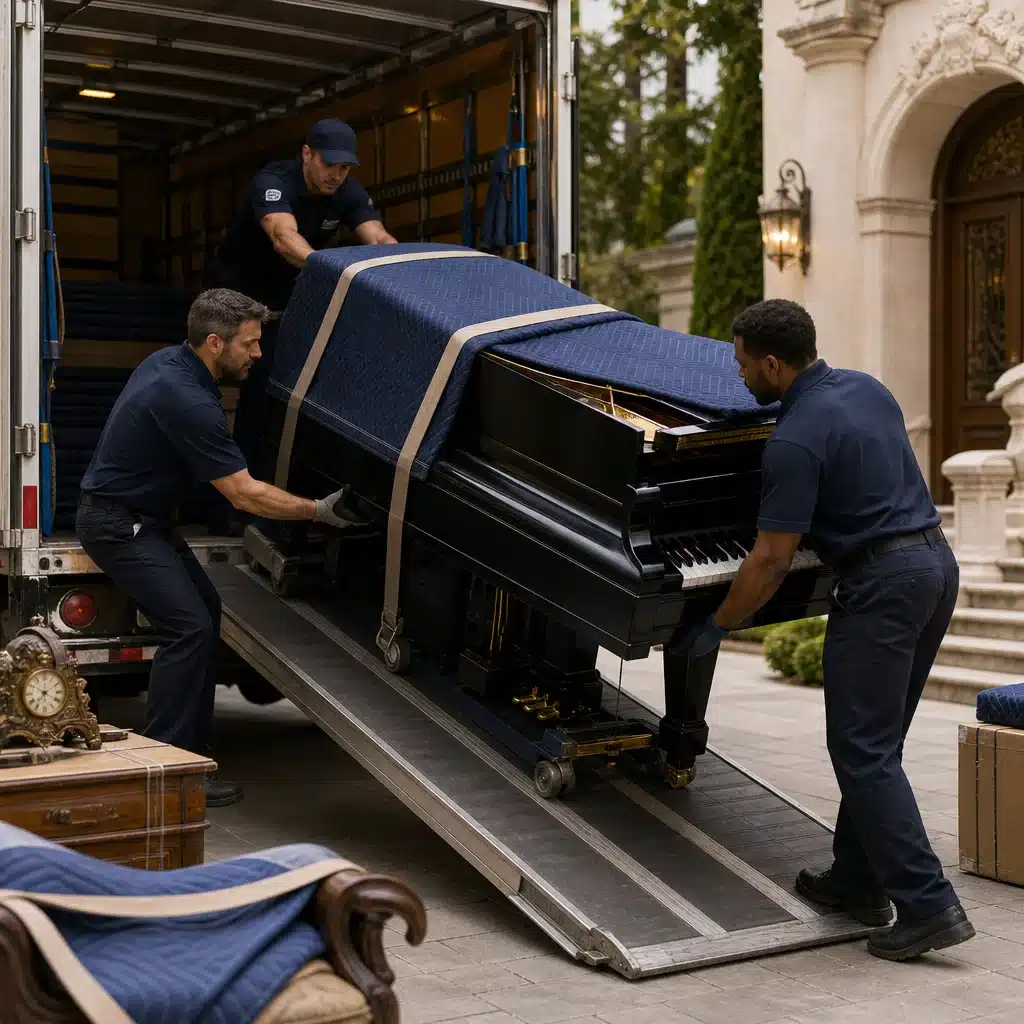
For piano moving specifically, we use specialized equipment designed exclusively for instruments: piano boards, heavy-duty dollies with air-ride wheels, adjustable skids, and custom crating materials. We angle pianos carefully to prevent stress on the frame, secure them with padded supports, and ensure nothing shifts during acceleration, braking, or turns.
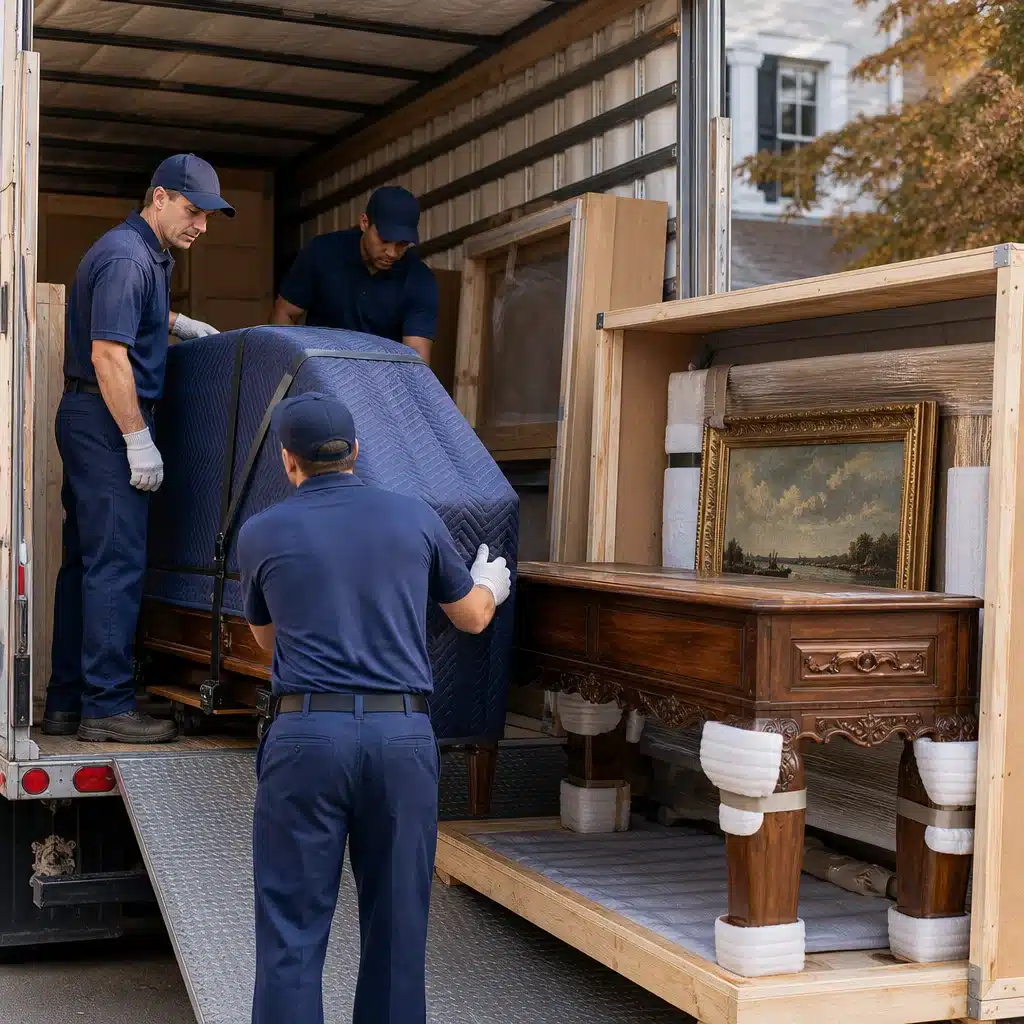
Antique furniture receives custom crating that’s tailored to each piece. We don’t use one-size-fits-all boxes. Instead, we design protective enclosures that support the furniture along stress points and prevent any movement inside the crate. This is particularly important for items with extending leaves, glass tops, or fragile hardware. Every piece gets individual assessment before we determine its specific crating and packing approach.
We also pad-wrap all furniture for free on every move we handle. This protective layer prevents scuffs, dust damage, and minor impacts during loading and transport. For antiques and pianos, we go further with additional blankets, foam padding, and strategic bracing.
Temperature and humidity management during transport matters tremendously. Our climate-controlled storage facilities maintain consistent temperature and humidity levels. If your timeline requires storage between pickup and delivery, your pieces remain in optimal conditions rather than sitting in a standard truck or uncontrolled warehouse.
Expert Handling of Fragile and Rare Items
Your trained crew from American Van Lines doesn’t just know how to move heavy items—we know how to move them without causing imperceptible damage that shows up months later. A small wood movement or barely-visible joint shift that seems harmless at delivery can become a major structural issue as temperature and humidity cycles continue.
Our movers receive specialized training on how to assess items before moving them. We look for existing weaknesses, previous repairs, and structural vulnerabilities. This assessment guides our packing and loading strategy. For instance, if a dresser has a veneer that’s already slightly lifted, we know to avoid pressure on that area and to control humidity exposure carefully.
For pianos, this training includes understanding the relationship between temperature changes and tuning stability. A piano moved in winter that’s suddenly exposed to warmer interior temperatures will go out of tune as the wood adjusts. We work with piano technicians who understand these dynamics and can advise clients on timing and climate acclimation.
Rare items like original paintings, first-edition books, or textile antiques require additional expertise. We consult with conservators when necessary to understand the specific protection these items require. This might mean custom-built crates with inert packing materials, UV-protective coverings, or specialized humidity control.
Climate-Controlled Protection During Transport
Standard moving trucks expose your items to whatever weather occurs during transport. That means a 30-degree temperature swing from a cold night to a warm day, or humidity spikes when it rains. For antiques and pianos, these swings are genuinely damaging.
Climate-controlled storage isn’t just a luxury—it’s a preservation tool. We maintain consistent temperature (typically 65-75 degrees Fahrenheit) and humidity levels (30-40% relative humidity) that match museum standards. This environment prevents the wood expansion and contraction that causes splits, warping, and joint separation.
When you choose full-service moving and storage, your high-value items transition from your current home into our climate-controlled environment and then into your new space. They never experience the temperature shock that causes damage.
This protection also extends to items like leather goods, paintings, and textiles that are sensitive to humidity. Leather cracks when humidity drops too low. Paintings can develop stress in their layers when humidity swings rapidly. Textiles fade with UV exposure and deteriorate in high humidity. Our facilities protect against all these risks.
If your new home isn’t ready immediately after your current home’s occupancy ends, climate-controlled storage bridges that gap seamlessly. Your items remain in perfect condition until they can be delivered to your new address.
Full Value Protection Coverage for Precious Belongings
We offer Full Value Protection on all moves, which means if an item is damaged, we don’t just reimburse depreciated value—we cover the cost to repair or replace it to its pre-move condition. This is fundamentally different from the standard $.60 per pound per article liability that comes free with every move.
For a piano worth $8,000 or an antique bedroom set worth $12,000, Full Value Protection means those items are truly protected financially. If damage occurs due to our negligence, we’re accountable for actual value, not a tiny fraction based on weight.
We’re transparent about what’s covered and what isn’t. Damage from your own negligence or failure to disclose existing damage isn’t covered—that’s standard and fair across the industry. But damage from our improper handling, transport accidents, or environmental conditions in our vehicles is our responsibility, and Full Value Protection makes us stand behind that.
Many clients who’ve invested significantly in antiques or own heirloom pianos find this coverage essential for peace of mind. It shifts the financial risk from your shoulders to ours, which creates the right incentive structure for us to handle your items with maximum care.
How Our Trained Crews Prevent Damage
Prevention is always better than protection, and our crews are trained relentlessly to prevent damage before it happens. Every team member we dispatch for specialized moves undergoes certification in antique and piano handling. This training covers assessment, packing, crating, loading, securing, and delivery techniques.
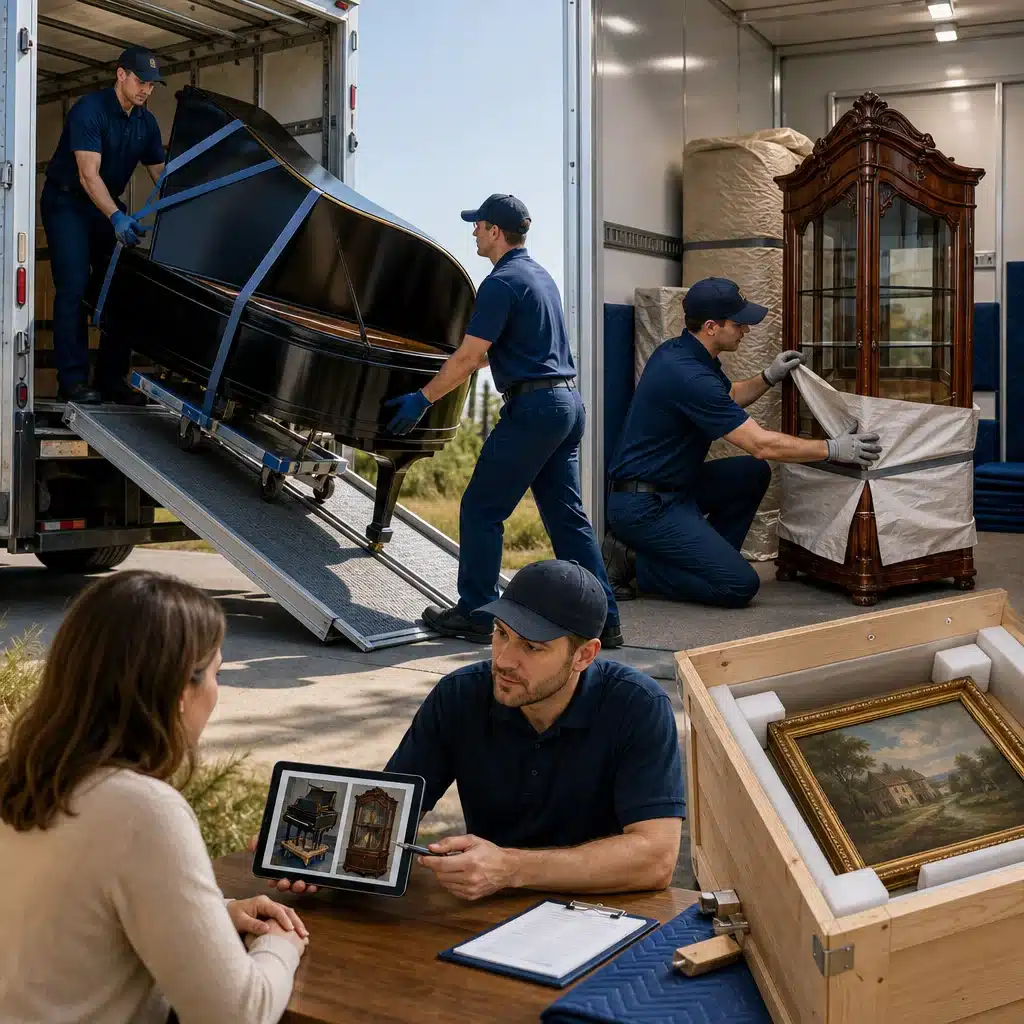
Our approach starts with a detailed walkthrough of your home where we inspect and photograph every item being moved. We note existing damage, structural quirks, and any vulnerabilities specific to the piece. This becomes a reference guide during packing and loading, ensuring we handle each item according to its needs.
We use systematic loading sequences that distribute weight evenly and position high-value items where they’re most protected. Pianos typically go in the front of the truck, secured to the frame with custom straps and supports. Antique furniture is positioned to avoid stacking pressure and is blocked from shifting.
Our movers also understand the connection between speed and safety. Rushing through loading and securing high-value items is the fastest way to damage them. We allocate time appropriately for careful handling, proper securing, and verification that everything is in place before we move the truck.
During transport, our drivers know to avoid sudden acceleration, hard braking, and aggressive turning. GPS tracking on all American Van Lines trucks means we maintain consistent routes and speeds appropriate for the cargo. Our drivers are also trained to spot potential road hazards and plan routes that minimize rough road surfaces when possible.
Real Examples of Successful High-Value Moves
We’ve relocated countless pianos across the country, from a 1925 Steinway grand from Manhattan to Savannah to a restored upright piano from a church in Texas to a collector’s home in North Carolina. Each of these moves required understanding the specific instrument’s value, condition, and vulnerabilities.
One client had a hand-carved Victorian bedroom set that had been in the family for four generations. The pieces included a canopy bed with intricate joinery, a dresser with a marble top, and multiple smaller pieces with veneer work. The family was terrified about damage during a long-distance move to Florida. Our team custom-built individual crates for each piece, maintained climate control throughout the process, and delivered everything in perfect condition. The family has since moved again and chose us without hesitation.
Another move involved a collection of 30 antique oil paintings and a 200-year-old library of first editions. These items required coordinated planning with an art conservator and special UV-protective crating for the paintings. The books were packed in custom boxes with inert packing material to prevent any contact that could damage bindings or pages. Delivery included careful climate acclimation in the new home before items were unpacked.
We’ve also handled several piano moves for concert musicians who needed their instruments in perfect condition for performances scheduled shortly after relocation. We coordinated timing carefully, ensured climate stability, and arranged for piano technician inspection and tuning immediately after delivery. Every instrument arrived performance-ready.
These successes aren’t luck—they’re the result of systematic expertise, appropriate equipment, and genuine care for items our clients value deeply.
Why Generic Moving Companies Fall Short
A standard moving company is equipped to move household goods efficiently and affordably. Their business model is built on volume: get items from point A to point B as quickly and cheaply as possible, following standard packing and loading procedures for typical furniture.
That model breaks down completely with antiques and pianos. Generic moving companies often lack specialized equipment, have crews without antique-handling training, and operate air-ride trucks that don’t maintain climate control. They apply the same techniques to a 1920s piano as they do to an IKEA bookshelf, which is like using the same approach for neurosurgery and yard work.
Many generic movers also underinsure specialty items. They might cover the truck and general liability but not provide adequate protection specifically for high-value goods. If damage occurs, the claim process is lengthy and often results in fighting over depreciation and repair costs.
Some generic moving companies will explicitly tell you they don’t move pianos or fine antiques. They know their systems aren’t designed for these items and they don’t want the liability. Others will attempt the move anyway but lack the expertise to execute it properly. You end up paying for a move that damages what you’re trying to protect.
The cost difference between generic moving and specialized antique and piano moving is often less than people expect—and dramatically less than the cost of repairing damage or replacing something irreplaceable.
American Van Lines as Your Clear Choice
We’ve been moving families and businesses since 1995, and we’ve built our reputation on handling high-value items with expertise and care. Being recognized as a top mover by Forbes, Move.org, Consumer Affairs, and Newsweek means we’ve proven ourselves across thousands of relocations, including many specialized moves involving antiques and pianos.
Our professional packing services are staffed by trained experts who understand how to protect fragile and valuable items. We don’t just wrap things and hope for the best—we actively engineer protection around the specific vulnerabilities of each piece.
Our commitment to transparent pricing means you know exactly what you’re paying and why. We provide detailed estimates that break down labor, specialized equipment, climate control services, and protection coverage. No surprises, no hidden fees, no pressure to rush through a process that demands care.
We’re also genuinely available when you need us. Our after-hours hotline handles emergency questions, and our personalized move coordinators work directly with you throughout the entire process. If a question or concern arises, you reach someone who knows your specific move and can address it immediately.
Our trained, dedicated crews are the people who actually handle your items. We don’t subcontract high-value moves to third parties or rotate crews randomly. The same team that assesses your items in your current home is the team that loads, transports, and delivers them to your new location.
The reality is straightforward: American Van Lines is equipped, trained, and accountable for protecting your most valuable possessions during relocation. That’s not just a claim we make—it’s what we’ve built our entire business around.
Getting Your Free Specialized Moving Estimate Today
The first step is reaching out with details about what you’re moving and your timeline. We offer free estimates, available both virtually and in-home. For items as specialized as pianos or rare antiques, an in-home estimate often provides better accuracy, but we can work with whatever is most convenient.
During the estimate process, our team assesses your items, discusses protection options, and explains the specific approach we’d take for your move. This is also when we review Full Value Protection coverage, climate-controlled storage options if needed, and answer any questions about our process.
Contact us today for your free estimate. Provide basic information about your move, the items being relocated, and whether you need packing or storage services. We’ll get back to you quickly with available times for an estimate conversation.
Your antiques and pianos deserve protection from someone who understands their value. Let’s make sure your next move is handled with the expertise and care these items require.
Frequently Asked Questions (FAQ)
What specialized equipment do we use for antique and piano moving?
We employ air-ride moving trucks with climate-controlled interiors to protect your valuables from temperature fluctuations and humidity damage. Our crews also use custom crating, padding systems, and specialized dollies designed specifically for pianos and delicate antiques, ensuring items remain secure throughout transit regardless of distance.
How does our Full Value Protection coverage work for high-value items?
We offer Full Value Protection on all moves, which means we’re liable for the replacement cost of any item damaged during relocation rather than just depreciated value. Our free basic coverage provides $.60 per pound per article up to $50,000, and we can discuss additional protection options based on your specific valuables and their appraised worth.
Why shouldn’t I attempt to move antiques or pianos myself?
DIY transport of these items risks thousands in damage because they require specialized knowledge about weight distribution, humidity control, and precise handling techniques that our trained crews have perfected over decades. One mistake like improper piano angle during loading or temperature shock to fine wood can result in repair costs far exceeding what professional moving would have cost.