
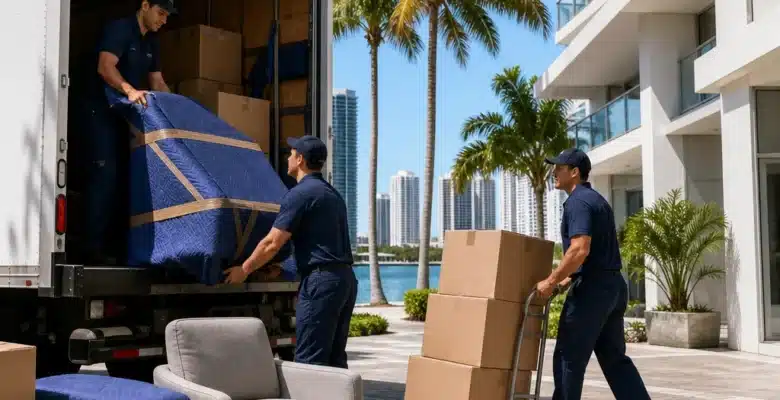
Why Choosing the Right Miami Movers Matters
Moving is one of those projects that looks simple on paper and quickly becomes complicated. Your furniture has to fit through doorways, your schedule has to line up with the truck, and your belongings need to arrive intact. The company you hire controls most of those outcomes.
In Miami, the stakes are higher. Traffic on I-95 and the Palmetto can turn a planned four-hour drive into an all-day affair. Heat and humidity affect packing materials and sensitive items. And many neighborhoods, from Brickell high-rises to Coral Gables single-family homes, come with parking restrictions and elevator reservations that an inexperienced crew may not anticipate.
A poor choice usually shows up in one of three ways: a quote that rises after the crew arrives, a delayed pickup that throws off your closing or lease date, or damage that the contract makes difficult to resolve. Choosing carefully at the start prevents most of these problems.
What to do next: Before you compare companies, write down your move date window, your home or office access details, and the rooms or items that matter most to you. Those notes will help you evaluate every quote on equal footing.
What Makes a Moving Company Truly Best Rated
Ratings are a useful starting point, but they only tell part of the story. A company can earn strong reviews for friendly crews and still struggle with on-time performance or billing clarity. Look for patterns rather than a single star score.
We suggest checking for consistency across several independent sources, such as Forbes, Move.org, Consumer Affairs, and Newsweek. Read reviews that mention specific details like pickup timing, how damage claims were handled, and whether the final invoice matched the estimate. Those comments reveal far more than a generic five-star rating.
Credentials matter too. Membership in the American Trucking Associations, proper licensing and insurance, and a physical local presence all signal a company that plans to be around for the long haul. Ask for the U.S. Department of Transportation number and verify it before you sign anything.
Finally, pay attention to communication. A mover who answers your questions clearly during the sales process is likely to keep that standard once your belongings are on the truck.
What to do next: Build a shortlist of three companies, then verify each one’s licensing and read at least five recent reviews that describe a move similar to yours.
Local Moves Within Miami and South Florida
Local moves, typically defined as relocations within roughly 50 miles, are priced differently than long-distance jobs. Most local movers charge by the hour, with crew size determining the rate. A two-person crew might handle a one-bedroom apartment, while a larger home could require four movers and a full day.
Miami-specific factors can change the timeline. Condo buildings often require certificates of insurance, reserved elevators, and loading windows that limit when a truck can unload. Moves across the causeways to Miami Beach or into downtown high-rises benefit from crews who already know these rules.
We recommend asking each company how they plan to handle access. A detailed answer about parking permits, elevator bookings, and building contacts signals experience with South Florida properties.
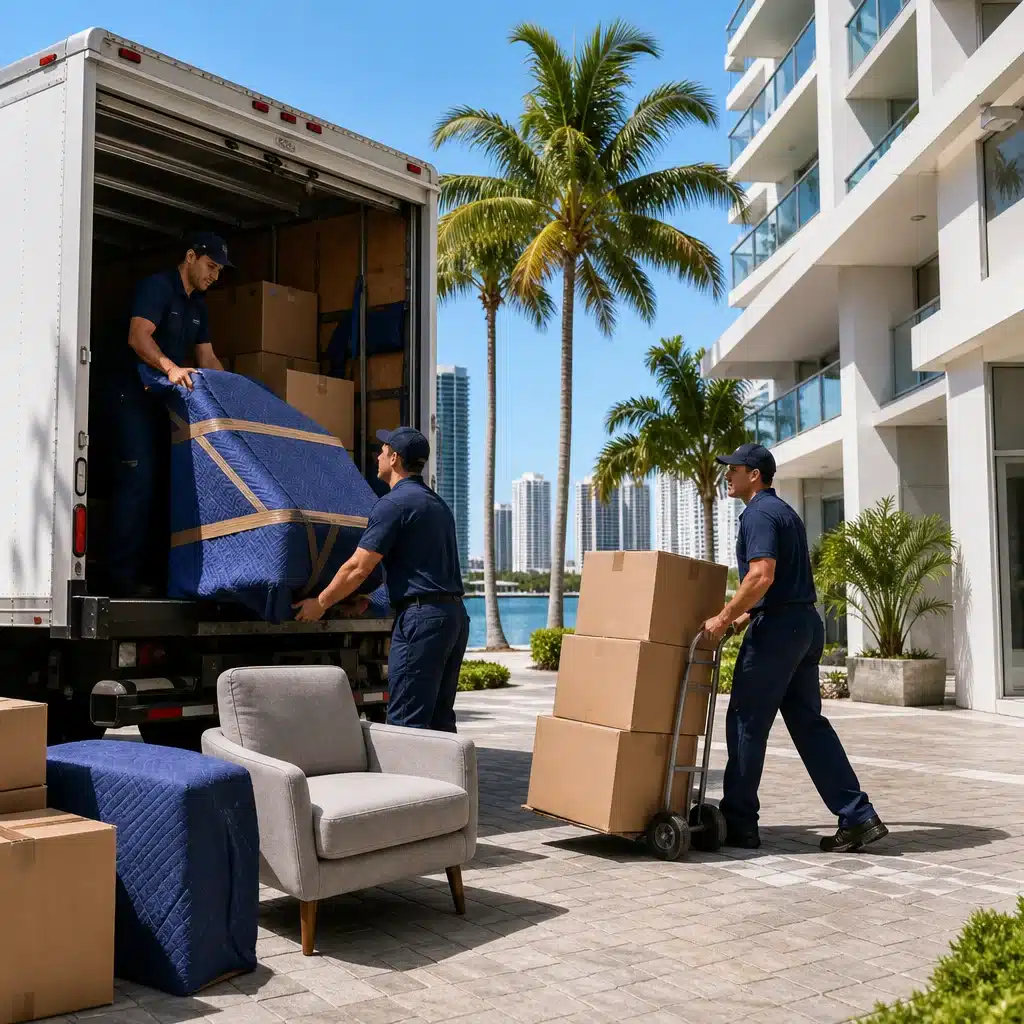
Quick scenario: A family moving from Kendall to a townhouse in Doral scheduled a Saturday move. Their building required a 48-hour notice for truck access. Because the mover asked about this during the estimate, the crew arrived on schedule and the move finished before lunch.
What to do next: Ask your moving company what paperwork or reservations your building requires, and confirm the loading window in writing.
Long Distance and Interstate Moves From Miami
Interstate moves follow a different set of rules. Pricing usually depends on weight and distance, and your belongings may travel on a shared truck that makes scheduled trips between regions. Many people are surprised by how much the delivery window can vary, so understanding the process ahead of time matters.
Our long-distance service includes weekly shuttles on major routes, which helps keep transit times predictable for customers relocating from Miami to the Northeast, Midwest, and Texas. GPS tracking on all our trucks lets you check your shipment’s location, so you are never left guessing where your household goods are.
When comparing interstate movers, ask whether they operate their own fleet or subcontract the transport. Ask how they communicate delays and who your point of contact will be. A dedicated move coordinator can make a long-distance relocation far less stressful.
If you want a deeper look at options for your route, our guides on top-rated Miami movers and Miami long-distance movers compare providers side by side.
What to do next: Request your delivery window in writing and ask how the company tracks your shipment in transit.
Flat Rate Pricing and Transparent Estimates
Few things frustrate movers’ customers more than a final bill that doesn’t match the quote. Hourly pricing can drift when a job takes longer than expected, and vague estimates leave room for surprise fees. Flat-rate pricing is designed to remove that uncertainty.
With a flat-rate quote, the price is set based on the inventory and services you agree to, not the clock. That makes budgeting easier, especially for long-distance moves where the cost of a delay can add up.
Transparent estimates should list everything included: labor, truck, fuel, basic protection, and any packing or stair charges. Be cautious of quotes that look dramatically lower than competitors. Ask what is excluded and how the company handles items added on moving day.
We provide free in-home and virtual estimates, and our flat-rate options are detailed in writing before your move. For more background, see our overview of Miami flat-rate interstate movers.
What to do next: Ask each company to put its estimate in writing, itemize what is included, and state what would change the final price.
Packing, Storage, and Specialty Item Services

Packing takes more time than most people expect, and a professional crew can save hours while reducing breakage. Full-service packing includes materials, labor, and labeling. Partial packing might cover fragile items or kitchens, leaving the rest to you.
Storage is another common need, particularly when a home sale closes before a new one is ready. Climate-controlled storage protects furniture, electronics, and artwork from Miami’s humidity, which can warp wood and promote mildew.
Specialty items require extra care. Antiques, pianos, artwork, and large fish tanks each call for specific crating, handling, and transport methods. A piano, for example, should be moved by technicians trained in its weight distribution and sensitivity to temperature changes.
We offer professional packing and crating, specialized antique and piano moving, and climate-controlled storage, so you can handle everything with one team.
What to do next: Make a list of items that need special handling and ask whether the company packs and crates them in-house or subcontracts the work.
Protection, Insurance, and Full Value Coverage
Understanding protection options is one of the most important parts of hiring a mover. Many customers assume that basic coverage will replace their belongings in full if something is damaged. In reality, basic coverage is often calculated by weight, not by the value of the item.
Released-value protection is typically included with interstate moves and is calculated at a set rate per pound. For example, the basic protection we include on every move is $0.60 per pound per article, up to $50,000 in coverage. This is a meaningful baseline, but it may not fully reflect the replacement cost of valuable items.
Full Value Protection goes further. With it, the mover is responsible for repairing, replacing, or paying the full replacement value of damaged items. We make Full Value Protection available on all moves, so you can choose the level of coverage that fits your belongings.
Before your move, take photos or video of valuable items, keep receipts for high-value pieces, and read the inventory carefully at delivery. Note any damage on the bill of lading before you sign.
What to do next: Compare the coverage options in writing, estimate the replacement value of your most valuable items, and choose the level of protection that matches it.
Why American Van Lines Is Miami’s Top Choice
Choosing a mover is a question of trust, and we work to earn it every day. We have been family owned and operated since 1995, and we bring that long-term perspective to every relocation, whether it is across town or across the country.
Our customers consistently recognize us for our reliability. We have been ranked among top movers by Forbes, Move.org, Consumer Affairs, and Newsweek, and our service has earned recognition from Newsweek and USA Today. We are also proud to be the Official Movers of the Florida Panthers.
Day to day, what matters most is how the move feels to you. Our trained, friendly crews arrive on time, handle your belongings with care, and use air-ride trucks for smoother transport. Each move is assigned a personalized move coordinator who stays in touch from estimate to delivery. You can manage details through our easy-to-use moving app, and an after-hours hotline is available for emergencies.

We also offer nationwide coverage, quick deliveries to major U.S. cities, free pad-wrapped furniture on every move, and discounts for qualifying customers. Our goal is simple: a move that is clear, predictable, and well handled from start to finish.
What to do next: Request a free estimate and ask your move coordinator to walk you through the coverage, timeline, and services included in your quote.
How to Book Your Miami Move With Us
Booking with us is straightforward. Start by requesting a free estimate, either in person, through a virtual walkthrough, or online. Have your inventory, move date range, and access details ready so we can give you an accurate quote.
Once you accept your estimate, your move coordinator will confirm the schedule, explain the protection options, and answer any questions about packing or storage. We recommend reviewing the contract carefully and asking about anything that is unclear before moving day.
In the weeks leading up to your move, use our app to track tasks, confirm building requirements, and stay in touch with your coordinator. On moving day, walk through the inventory with the crew, and keep your coordinator’s number handy.
We are here to make your Miami move smooth and transparent. Contact us today to schedule your free estimate and take the first step toward a stress-free relocation.
What to do next: Request your free estimate today and let us build a plan around your timeline, your belongings, and your budget.
Frequently Asked Questions (FAQ)
Do you offer flat rate pricing for Miami moves?
Yes. We provide flat rate estimates for local moves within Miami and South Florida, so you know the total cost before moving day. Our estimates are easy to read and include the services listed in your agreement. We can also provide a virtual or in-home estimate so the figure reflects your actual belongings.
How does your protection coverage work?
Every move we handle includes free basic coverage at $0.60 per pound per article, up to $50,000 in total coverage. If you want broader protection, we offer Full Value Protection on all moves. Our air-ride trucks, pad-wrapped furniture, and GPS-tracked vehicles add further care during transit.
Do you handle long distance moves from Miami?
Yes. We handle interstate and out-of-state relocations from Miami, with long-distance weekly shuttles that keep your move on schedule. Each move is assigned a dedicated crew and a personalized move coordinator who tracks your belongings from pickup to delivery. You can follow your shipment through GPS tracking and our mobile app.