
Why Storage Becomes Essential During Long Distance Relocations
When you’re orchestrating a long distance move, storage often feels like an afterthought. But the reality is simpler: most interstate relocations hit timing snags that make storage essential. Your belongings arrive before your new home is ready. Your old place closes before you can take possession of the next one. A job transition gives you two weeks instead of two months.
At American Van Lines, we’ve coordinated thousands of relocations across the country, and we’ve learned that the right storage solution doesn’t just solve logistics—it gives you peace of mind during one of life’s most stressful transitions.
Long distance moves rarely operate on a perfect timeline. You’re coordinating with sellers and buyers, movers and real estate closings, old leases and new employment start dates. When these moving parts don’t align, your household goods need a secure, climate-controlled place to wait.
Storage becomes non-negotiable in several common scenarios. Perhaps your closing date is three weeks away, but your movers are available next week. Maybe you’re relocating to a new city for work and need time to find a house before your furniture arrives. Or you’re downsizing and need temporary space while you decide what stays and what goes.
Without proper storage, you’re forced into expensive alternatives: paying for extended hotel stays while you wait for keys, paying storage fees at the last minute at inflated rates, or rushing into a home purchase decision you’re not comfortable with just to have somewhere for your belongings to go.
We’ve seen families struggle through these gaps, often paying premium prices for emergency solutions that could have been avoided. That’s why we built storage coordination directly into our moving process. When you work with us, we’re not just arranging a truck and crew—we’re thinking through the entire timeline and protecting your belongings every step of the way.
What to do next: Before booking your move, make a realistic timeline showing your move-out date and your move-in date. This gap is where storage planning begins.
How Timing Mismatches Create Storage Challenges
The gap between “truck arrives at your old home” and “you have keys to your new one” is where most moving headaches happen. Sometimes this gap is a few days. Sometimes it’s a few months.
Consider a typical long distance scenario: You’re transferring to a new job in Denver, closing on a home purchase in 60 days, but your company wants you there in 30 days. Your belongings can’t sit in a moving truck for a month. They need a climate-controlled facility where they’re protected from temperature swings, humidity, dust, and theft.
Or imagine the reverse: You’re selling your home and the closing happens fast—in three weeks. But you’ve accepted a new position that doesn’t start for six weeks. Your furniture has nowhere to go between closing day and your move-in date.
Military families face these challenges constantly. A PCS (Permanent Change of Station) notice might give you 30 days to vacate military housing, but your next duty station housing won’t be available for 60 days. That creates a mandatory storage window, and your family’s belongings can’t just sit in a non-climate-controlled unit while temperatures fluctuate and moisture builds up.
Businesses relocating offices deal with similar timing gaps. You’re breaking your current lease on the 30th, but your new office space doesn’t open until the 15th of next month. Your equipment, furniture, and archived files need protection during that transition.
These mismatches aren’t failures—they’re the normal friction of relocation logistics. The real failure is not planning for them. When you don’t account for timing gaps, you end up paying premium rates for emergency storage, or worse, you settle for inadequate facilities that expose your belongings to damage.
What to do next: Look at your specific timeline. Calculate the actual number of days between when you’ll have access to your belongings and when you’ll have your new home ready. That number tells you how much storage planning you need to do.
Our Climate-Controlled Storage Facilities Solve Your Timeline Problems
We operate climate-controlled storage facilities across the country specifically designed for long distance relocations. Unlike standard self-storage units that swing 30 degrees in temperature and gain 40% humidity in summer, our facilities maintain stable conditions year-round.
Our storage approach is different because it’s integrated with our moving operations. When your truck arrives at one of our facilities, your belongings go into the same protected environment we use during transit. The air-ride suspension technology that protects your furniture on the road continues protecting it in storage. We use the same pad-wrapping, careful handling, and inventory tracking that define our entire moving experience.
Temperature fluctuation is one of the biggest threats to household goods. Wood furniture expands and contracts with humidity changes, creating stress on joints and finishes. Electronics fail when exposed to temperature swings. Artwork, photographs, and documents deteriorate rapidly in variable humidity. Our climate-controlled spaces keep temperature and humidity consistent, preventing these slow-motion damage scenarios.
We also handle security differently than typical storage facilities. Your belongings aren’t in a self-access unit where you hold a key and open it whenever you want. Instead, our trained staff manages access, inventory, and retrieval. This means your furniture is protected against theft, tampering, and accidental damage from neighboring units.
For items requiring extra protection, like antique furniture or fine art, we offer specialized crating and storage conditions. These pieces are wrapped and stored using museum-quality standards, ensuring they emerge from storage in the same condition they entered.
Our storage facilities work seamlessly with our nationwide moving network. Whether you’re storing in Fort Lauderdale before a move to the Northeast, or we’re holding your belongings while you finalize your new home purchase, the experience is consistent. One coordinator manages your entire move, not separate companies juggling the handoff.
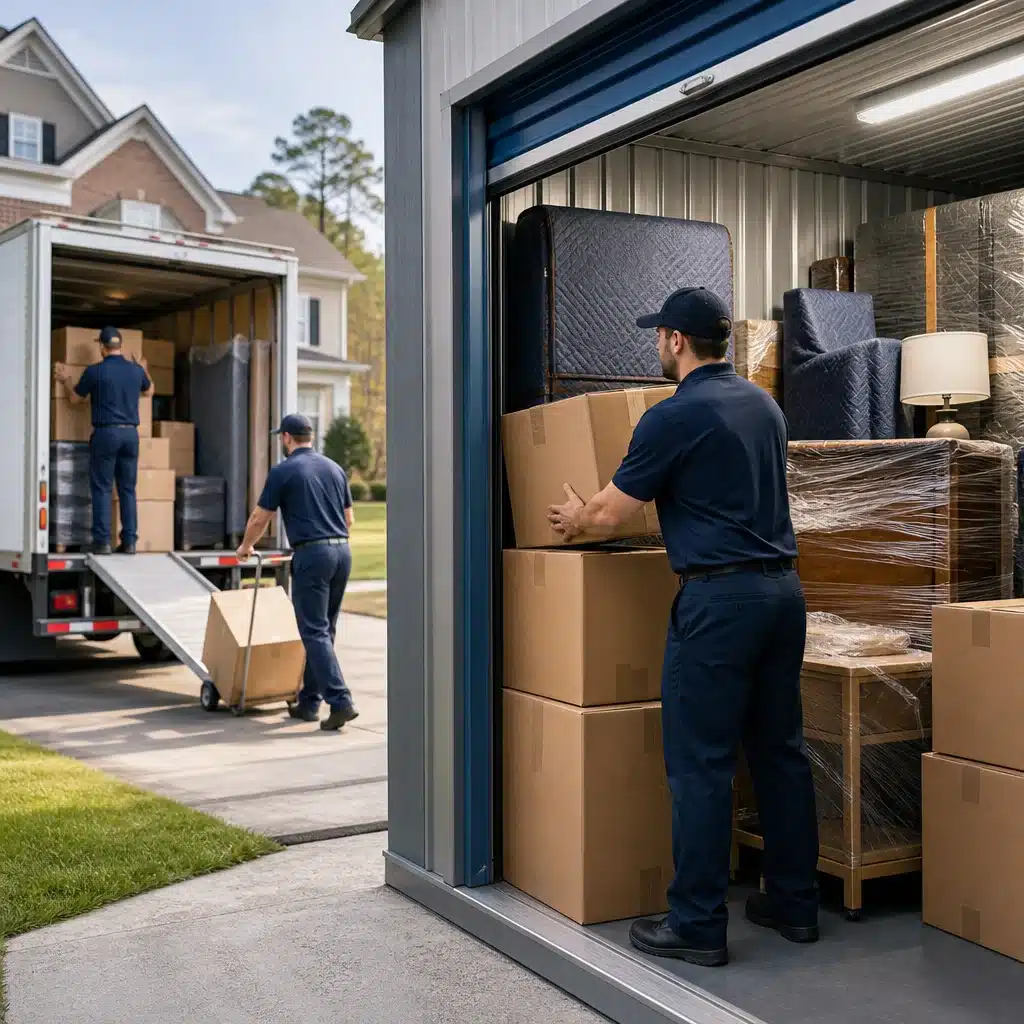
What to do next: Request a storage estimate that covers your specific timeline. We’ll show you the cost difference between climate-controlled and standard storage—and why the protection is worth it.
Short-Term Storage Solutions for Extended Transit Times
Some long distance moves take longer in transit than you’d expect. A cross-country shipment might involve two or three transfers between trucks, especially if we’re consolidating your shipment with other families heading in the same direction through our weekly shuttle service. We route these shuttles efficiently for cost savings, but that means your belongings might spend a few days in storage between truck transfers.
Short-term storage bridges these gaps. Your household goods arrive at one of our facilities while we prepare the next leg of your journey. This is routine for us—part of how we maintain our flat-rate pricing structure without cutting corners on care.
Extended transit also occurs when you’re moving during peak season (May through September). We handle hundreds of families every week during summer months, and to maintain quality, we sometimes create strategic holding periods. Your belongings spend a few days in our climate-controlled facility rather than sitting in a truck during that transition, which actually protects them better than rushing the next truck departure.
Military families frequently use our short-term storage for temporary holds during PCS moves. Your household goods arrive at your new duty station’s general area, go into storage, and we retrieve and deliver them once you’re ready. This timing flexibility is crucial when military housing availability is unpredictable.
For business relocations, short-term storage is essential when you’re moving office equipment during operating hours. Rather than disrupting your business for days, we store your furniture and equipment in our facility, then deliver it after business hours or on weekends when the disruption doesn’t cost you productivity.
The financial advantage of short-term storage is real. You avoid paying for extended truck time, you avoid hotel or temporary housing costs while you wait, and you protect your belongings in a climate-controlled environment rather than leaving them exposed.
What to do next: Ask your American Van Lines coordinator how many days your specific move might involve in transit storage. We’re transparent about these timelines so you’re never surprised.
Long-Term Storage When Your New Home Isn’t Ready
Long-term storage presents different challenges than a few days in transit. When you’re storing furniture for months while waiting for a home purchase to close, a new house to be built, or a rental to become available, you need a facility that treats your belongings with long-term care.
We’ve stored household goods for six months, a year, and occasionally longer. Families downsizing before moving often use long-term storage while deciding which furniture to keep. Business executives transferred to new cities use it while house hunting. Someone retiring to a new state might store their current home’s contents while living temporarily in an apartment.
Long-term storage requires careful inventory management. We document exactly what’s in storage, where it’s positioned, and what condition it arrived in. This protects both you and us—you have proof of what’s stored, and we have accountability for its condition throughout the storage period.
Our climate control becomes even more critical for long-term storage. Seasonal temperature swings would damage your furniture if stored in standard facilities. Our climate-controlled spaces prevent the wood movement, electronic component degradation, and moisture damage that plague long-term uncontrolled storage.
Insurance becomes more important in long-term scenarios. Our Full Value Protection covers your belongings throughout storage. If something is damaged or lost, we replace it at current replacement value, not depreciated value. This matters tremendously for long-term storage where you’re entrusting us with months of your family’s belongings.
We also charge long-term storage on a monthly basis with no surprise fees. You know exactly what you’re paying each month, and you can adjust your storage period as your timeline changes. If your home closes earlier than expected, we retrieve your belongings on your schedule, not ours.
The flexibility is important. Real estate timelines shift. Building schedules slip. Rental apartments have waiting lists. We account for these realities in how we structure long-term storage agreements.
What to do next: If you’re facing long-term storage, discuss with us whether your items require special handling (artwork, antiques, sensitive equipment). We’ll set up the appropriate storage conditions upfront.
Protecting Your Valuables in Our Secure Storage Environment
Your most valuable items—artwork, jewelry, documents, collectibles, electronics—require more than just climate control. They need security, careful positioning, and specialized handling.
We don’t store valuables like jewelry or cash. Insurance and liability make that impractical. But we absolutely protect high-value household items like artwork, antique furniture, electronics, and collections that have significant monetary or sentimental value.
Our storage facilities feature locked, alarmed environments with 24-hour monitoring. Unlike self-storage units where you control access, our staff manages all retrievals and access. This means a thief can’t simply cut a lock and walk away with your possessions. It means neighbors can’t damage your items. It means environmental controls stay optimized without interference.
For truly valuable pieces like fine art or antique furniture, we offer specialized crating and storage positioning. We’ve handled piano moves and fine art relocations long enough to know exactly how to protect these items. If you’re storing artwork, we maintain specific humidity and temperature parameters that museum curators recommend. Items are stored away from direct light, in stable positions that won’t cause stress to joints or frames.
Proper handling during storage prevents damage that might not appear until months later. We carefully pad and position all furniture to prevent wood stress. We store electronics upright when possible and keep them away from moisture sources. We position fragile items so they won’t shift or topple. This attention to detail separates real protection from just “having a place to put stuff.”
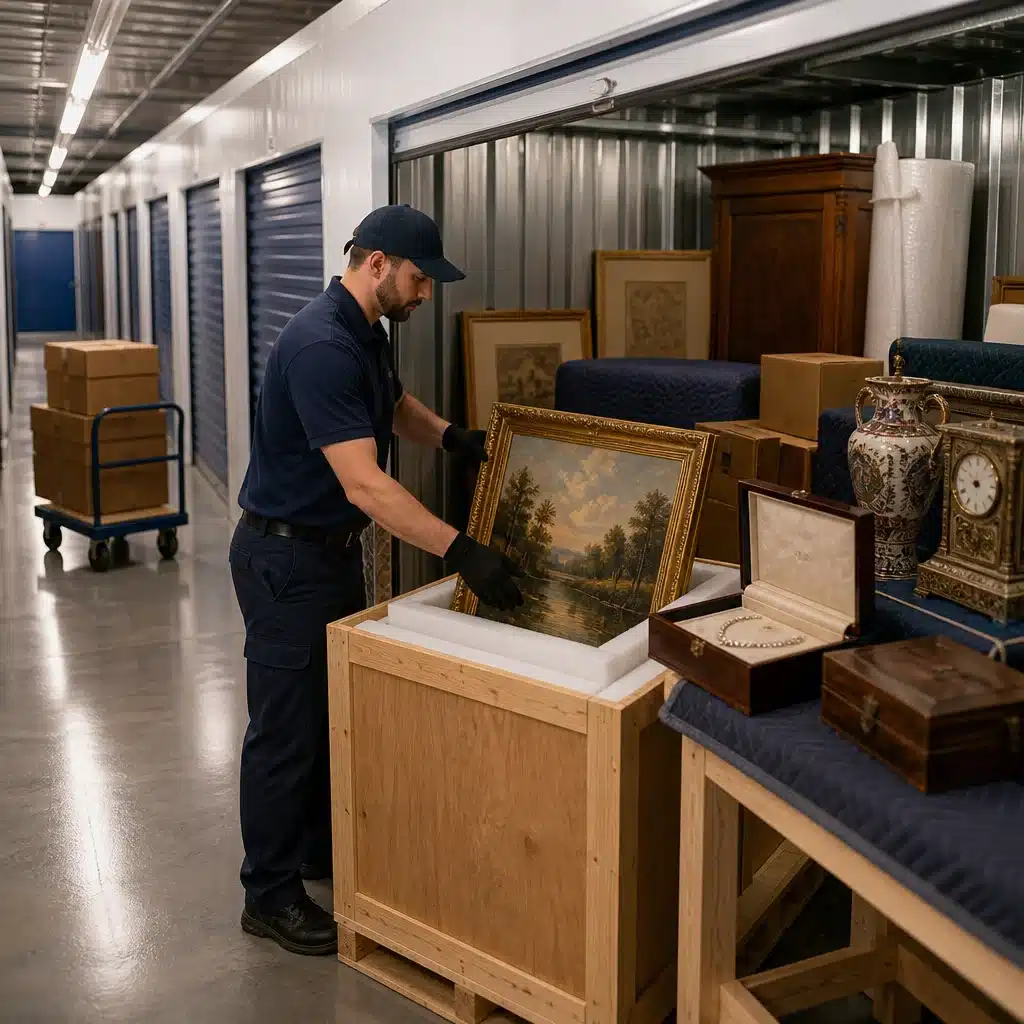
For clients with particularly valuable collections, we can provide detailed photography and documentation before items enter storage. This serves as proof for insurance purposes and gives you peace of mind that your belongings are exactly as described when we retrieve them.
We also coordinate with your insurance provider. Your homeowner’s or business policy might have storage coverage limits. We help ensure your stored items are properly documented and insured throughout their time with us.
What to do next: Document any high-value items going into storage. Photograph furniture, note any existing damage, and provide us with serial numbers for electronics. This documentation protects you if any issues arise.
How We Coordinate Storage with Your Complete Moving Plan
Storage isn’t a separate service in our operation—it’s integrated into your complete relocation. When you call American Van Lines, your dedicated move coordinator understands your full timeline, your destination, your timeline gaps, and your storage needs.
This integration matters because it prevents the common problem of fragmented moving experiences. Some companies move you, then hand you off to a storage operator, then a different company does your final delivery. You’re dealing with multiple customer service teams, multiple invoices, and multiple points of failure. If something goes wrong, nobody takes responsibility.
We own the entire experience. Your coordinator is on your side from first estimate through final delivery, including any storage period. If your timeline changes, we adjust the storage plan. If your belongings need to be retrieved early, we make that happen. If additional items need to go into storage, we accommodate that within your contract.
Our moving app and online tracking gives you visibility into every stage. You can see when your truck is loaded, when it arrives at storage, how long it’s being held, and when retrieval is scheduled. You’re not left wondering where your belongings are or when they’ll be delivered.
We also coordinate storage retrieval strategically. Rather than just dumping your belongings back on a truck when you request them, we prepare for delivery. Your items are organized in the truck in reverse delivery order—the last items off the truck are the first ones you need in your new home. Your furniture goes on first, boxes you’ll unpack immediately go on last.
This coordination extends to helping you arrange building access at your destination. We’re experienced navigating the logistics of restricted buildings, scheduled delivery windows, and protected areas. When storage is involved, we’ve already confirmed your new home’s elevator schedule, parking restrictions, and delivery timing before your truck leaves our facility.
For our complete guide to all-in-one moving and climate-controlled storage solutions, we walk through exactly how this coordination works in different scenarios.
What to do next: When you get your moving estimate, confirm that storage logistics are explicitly included in your coordinator’s plan. This should cover loading dates, storage duration, and delivery timing.
Affordable Storage Rates That Fit Your Relocation Budget
Long distance moving is already a significant expense. Storage shouldn’t break your budget. We’ve built our storage rates to be transparent and affordable, especially when compared to the alternative costs of emergency storage or rushed home purchases.
Our monthly storage rates vary based on the cubic footage of your shipment. A typical household’s furniture and boxes might occupy 400-600 cubic feet. We calculate your exact volume during the estimate phase, so there are no surprises when your bill arrives.
Climate-controlled storage costs more than standard storage—we won’t pretend otherwise. But when you compare it to hotel costs for displaced families, the math becomes clearer. Three weeks in temporary housing for a family of four can easily exceed what climate-controlled storage costs for three months. We’re often the more affordable solution by a significant margin.
We also offer discounts for longer-term storage and for customers who use both moving and storage services. Because we’re coordinating everything internally, we can pass savings to you. We’re not juggling payments between different companies—we’re managing your complete relocation, which creates efficiency.
Unlike some storage facilities that hit you with hidden fees—access fees, insurance fees, administrative fees—our pricing is comprehensive. You pay for the space you’re using and any specialized services you request (like crating for artwork). That’s it. No surprises.
If you’re uncertain about your timeline, we can structure a flexible agreement. You lock in a discounted rate for a specified period, with the option to extend month-to-month if your circumstances change. This removes the pressure of guessing your exact storage duration.
Financing options are available for larger moves with extended storage. We work with credit companies to make relocation more manageable when it’s a significant financial undertaking.
What to do next: Get a detailed quote that shows your storage costs broken down by month. This gives you a clear picture of total moving and storage expenses so you can budget accurately.
The American Van Lines Storage Advantage
We bring several unique advantages to long distance move storage that set us apart from typical storage companies or moving companies that outsource storage to third parties.
Our reputation matters. We’re ranked as a Top Mover on Forbes, Move.org, and Consumer Affairs. We’ve been family-owned and operated since 1995, which means we’re not a startup experimenting with your belongings—we’re an established company with decades of moving and storage experience. Our commitment to transparent pricing and accurate estimates applies to storage just as much as moving.
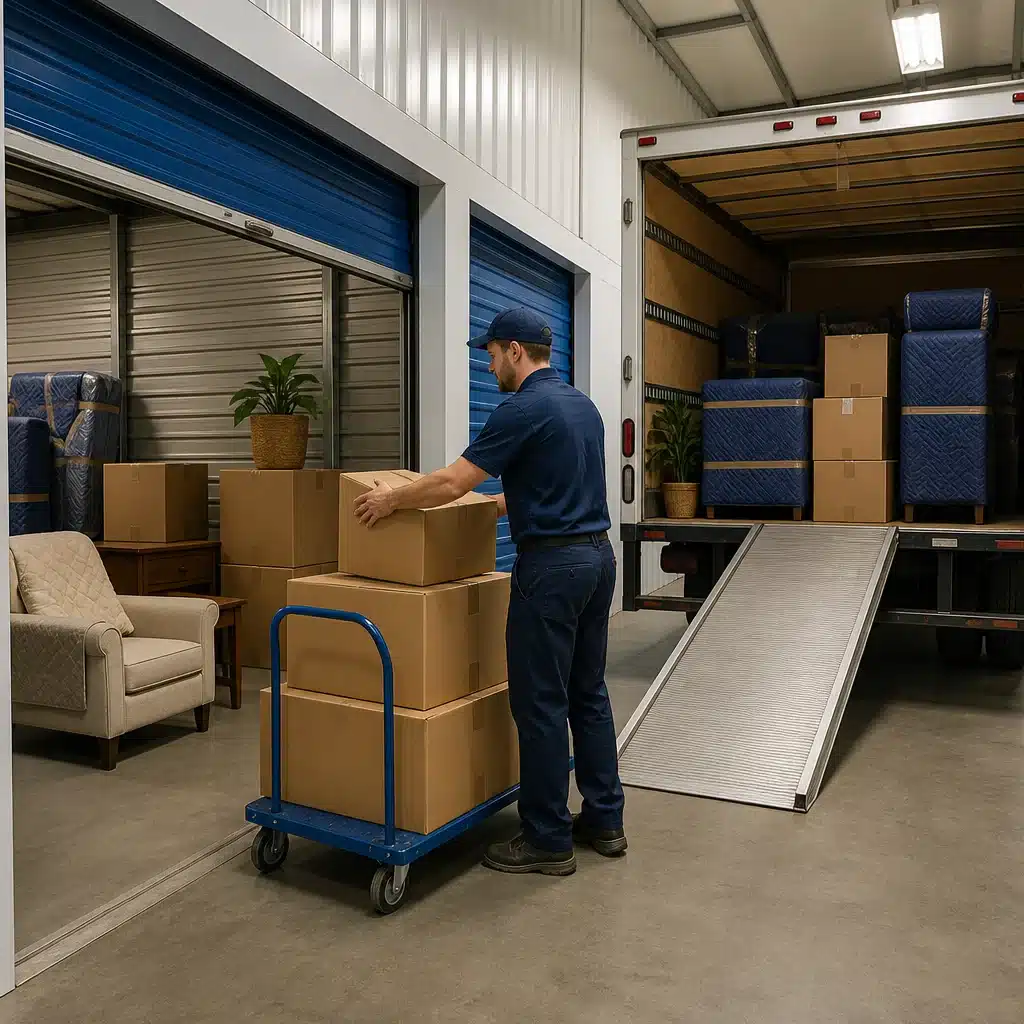
Our fleet of air-ride moving trucks and professional crews handle storage the same way they handle your move. Pad-wrapped furniture on our trucks stays pad-wrapped in our storage facilities. The same professionals who load your truck carefully also position your stored items carefully. There’s no transition point where quality drops.
We’re nationwide. Whether you’re relocating across the country or storing locally before a regional move, we have climate-controlled capacity. We’re also the Official Movers of the Florida Panthers and active members of the ATA (American Trucking Association), which means we’re connected to the professional moving industry in ways that matter for coordinating complex relocations.
Our after-hours hotline means if something urgent happens with your stored belongings, you can reach us. Need to retrieve items in an emergency? Need to add more items to storage? Need to change your delivery date? Our customer service team handles these situations without delays or penalties.
GPS tracking on all American Van Lines trucks gives you transparency from the moment your belongings leave your old home through storage and into your new one. You know exactly where your things are and when they’re arriving.
For specialized items like artwork, antiques, or pianos, our experience with specialized moving translates directly into specialized storage. We don’t treat a Steinway piano the same as a dresser. We don’t store fine art the same as kitchen boxes. Each category gets the specific conditions and handling it requires.
What to do next: Compare any storage quote you receive to ours. Ask the other companies if they own and operate their storage facilities (as we do) or if they outsource to third parties. Ownership matters for accountability.
Starting Your Storage Service Today
If you’re planning a long distance move and storage is part of your needs, getting started is straightforward.
Request a free estimate through our website or call our team. You’ll provide details about your current location, your destination, your timeline, and the volume of belongings you’re moving. Our estimators will ask about your storage needs upfront—how long you expect to need storage and what types of items require special handling.
We offer both virtual and in-home estimates, so you can choose what works for your schedule. An in-home estimate is particularly valuable if you have items requiring specialized handling or if you want our team to see exactly what you’re storing to ensure proper climate control settings.
Your dedicated move coordinator will build out your timeline, showing exactly when storage begins, how long your belongings will be held, and when delivery occurs. This becomes your moving agreement, with no hidden stages or surprise handoffs.
We’ll discuss insurance options, including Full Value Protection if you want replacement-value coverage for your stored items. We’ll also confirm building access, parking restrictions, and any special requirements at your destination so there are no surprises during final delivery.
Once everything is confirmed, your move follows our established process. We’re punctual on pickups and deliveries, we maintain clear communication about timing, and your coordinator is your single point of contact for any changes or questions.
For military families, we have additional support. We understand PCS timelines and the specific challenges of coordinated long distance relocation with storage holds. Our military moving experience helps ensure your move meets DOD requirements and your family’s needs.
If you’re in specific markets, we’ve detailed local expertise. We offer Fort Lauderdale long distance storage solutions and Greensboro climate-controlled storage and moving services, with the same integrated approach and transparent pricing available nationwide.
The difference between a smooth relocation and a stressful one often comes down to storage planning. When you know your belongings are safe in climate-controlled storage while you sort out your timeline, the entire moving experience becomes less overwhelming.
Contact us today for a free storage estimate. We’re here to handle the logistics so you can focus on the transition.
Frequently Asked Questions (FAQ)
What climate control features protect our belongings during long-distance storage?
We maintain our storage facilities at consistent temperatures between 65-75 degrees Fahrenheit with humidity levels controlled at 30-50%, which prevents warping, cracking, and mold growth on your furniture and belongings. Our climate-controlled units also include air filtration systems to keep dust and contaminants away from your items. Every storage space we offer uses these protections so your valuables stay in the same condition from pickup to delivery.
How quickly can we access our items if we need something from storage before our move is complete?
We provide you with direct access to your storage unit during our standard business hours, and we can arrange emergency after-hours access through our dedicated hotline if you need something urgently. Our personalized move coordinator will work with you to schedule convenient times to retrieve specific items without disrupting the organization of your stored belongings. We understand that your needs may change during a relocation, so flexibility in accessing your storage is part of our commitment to your move.
What is the difference between short-term and long-term storage options we offer?
We recommend short-term storage when your new home is ready for delivery but your current residence isn’t available yet, typically spanning a few days to a few weeks. Our long-term storage solutions work best when you’re relocating to a new area but construction, renovations, or other circumstances delay your move-in date by several months or more. Both options use our same climate-controlled facilities, and we’ll discuss your specific timeline with you to determine the most cost-effective storage plan for your situation.