
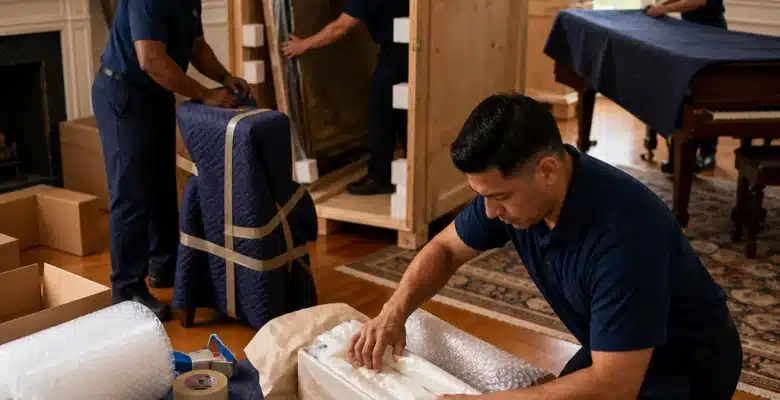
Why Professional Packing Matters for Your Move
Moving day brings a unique set of challenges. Whether you’re relocating your family across state lines or transporting valuable business assets, the way your belongings are packed and protected determines whether they arrive in perfect condition or sustain damage along the way. At American Van Lines, we’ve been helping people move since 1995, and we’ve learned that professional packing isn’t just a nice-to-have convenience—it’s the foundation of a successful relocation.
When you’re planning a move, it’s tempting to grab some boxes from the grocery store, wrap items in old newspaper, and call it done. But here’s what actually happens: items shift during transit, fragile goods crack under pressure, and what seemed like a cost-saving measure ends up costing you far more in replacement and repair expenses.
Professional packing protects your belongings from the physical stresses of transport. Your furniture faces vibration from the road, temperature fluctuations, and the weight of other items stacked on top. Dishes and glassware can shatter from improper cushioning. Electronics are vulnerable to static and moisture. A professional packer understands how to stabilize each item, distribute weight properly, and create a buffer system that absorbs shock.
Beyond damage prevention, professional packing also saves you time and mental energy. Packing an entire home typically takes 40 to 80 hours depending on size. That’s nearly two weeks of evenings and weekends if you’re doing it alone. Our trained teams can complete the same job in days, allowing you to focus on other moving logistics like arranging utilities, updating your address, and preparing your new space.
There’s also a psychological benefit that shouldn’t be underestimated. Moving is stressful. Handing off the packing responsibility to experienced professionals reduces decision fatigue and gives you peace of mind knowing your items are in capable hands.
Common Damage Issues When Moving Without Expert Packing
We’ve handled thousands of moves, and certain damage patterns emerge consistently when people pack themselves. Understanding these risks helps explain why our professional approach works.
Structural damage to furniture is one of the most common issues. Sofas, bed frames, and dressers are heavy and awkward. Without proper disassembly and padding, corners get dinged, wood veneers peel off, and drawers warp. What looked fine after loading often shows cosmetic damage once unloaded.
Broken dishes and stemware account for a significant portion of moving-related losses. Many people wrap dishes individually in newspaper, which provides almost no cushioning. A single hard bump can crack an entire stack. We’ve seen entire china sets ruined this way.
Electronics fail unexpectedly after unprofessional moves. Televisions, computers, and sound systems need specific packing protocols to prevent internal component damage and moisture infiltration. Plugging them in only to discover they don’t work is a frustrating and expensive surprise.
Water and moisture damage happens more often than people realize. Poor box construction, lack of moisture barriers, and improper stacking allow condensation and leaks to seep into boxes containing documents, books, clothing, and upholstered items. Climate-controlled storage can help, but the damage usually starts during packing.
Scratched and marred finishes on wood, glass, and polished surfaces are nearly inevitable without protective layering. Moving blankets and bubble wrap aren’t expensive, but they’re only effective when applied correctly with sufficient thickness.
Shifted loads during transit cause cascading damage. When boxes and furniture aren’t properly secured and positioned, they shift as the truck navigates curves and brakes. Heavy items can fall onto lighter ones, creating a domino effect of breakage.
Professional packers know how to prevent each of these scenarios through proper technique, appropriate materials, and strategic loading practices.
Our Professional Packing Approach and Standards
Our packing method is built on decades of experience and refined practices. We start by assessing your belongings and understanding what requires standard packing versus custom crating. This evaluation allows us to allocate resources efficiently and recommend the right protection level for each category of items.
We use high-quality materials throughout. Heavy-duty boxes with reinforced bottoms support weight without collapsing. Unprinted kraft paper prevents ink transfer to your items. Bubble wrap and foam provide cushioning in varying thicknesses depending on fragility. For furniture, we use premium moving blankets that protect without leaving residue or marks.
Our team follows a systematic packing sequence. We work room by room, clearly labeling boxes with room designation and contents. This organization makes unpacking infinitely easier and helps you locate items quickly in your new space. We use color-coded labels and numbering systems so you can track exactly what’s in each box.
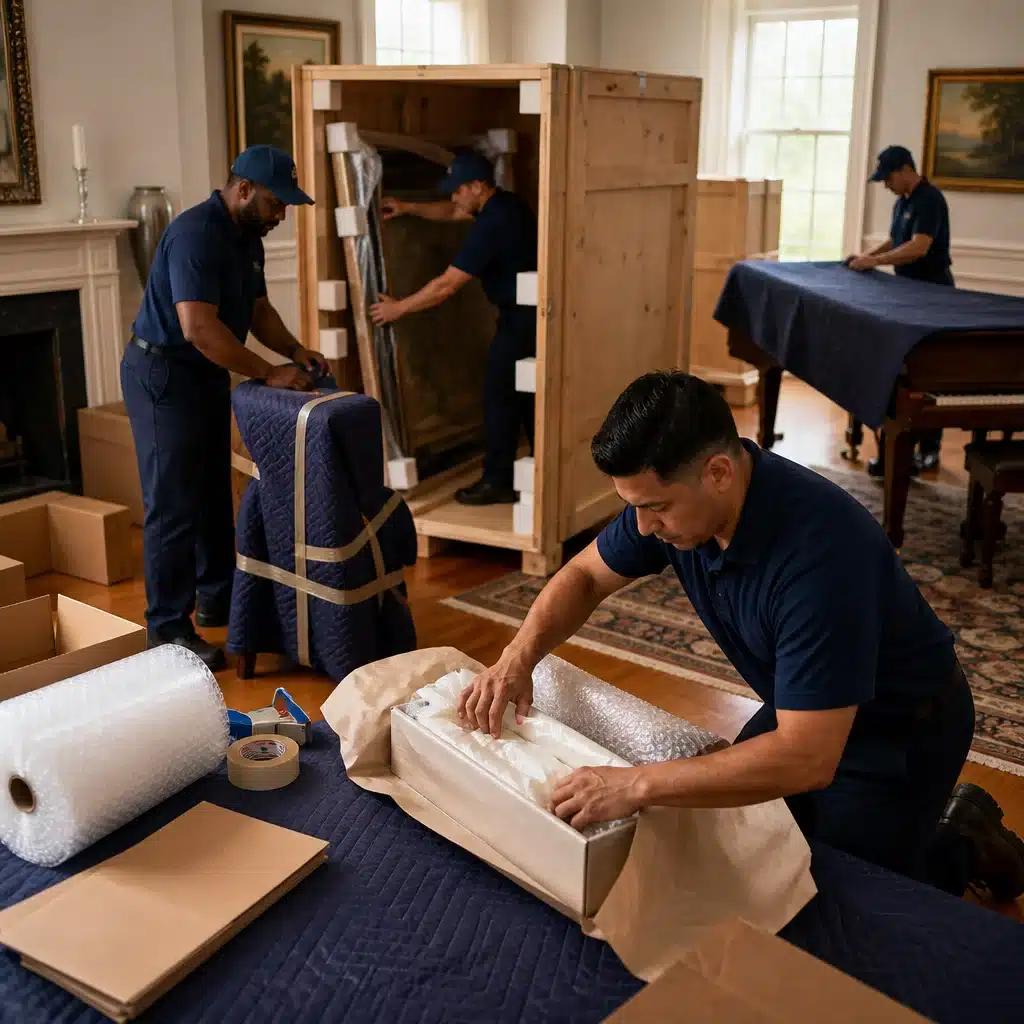
Proper box construction is fundamental to our approach. We don’t skimp on tape or corner reinforcement. Heavier items go into smaller, sturdier boxes to prevent overloading and breakage during handling. Lighter items like pillows and linens go into larger boxes. This distribution makes boxes easier to carry and reduces strain on the box itself.
We maximize space without compromising protection. Empty spaces inside boxes are filled with packing paper to prevent shifting. Dishes are layered with paper between each plate. Stemware is wrapped individually and cradled in boxes with dividers. Books are packed flat to distribute weight evenly. Each packing decision is intentional and rooted in protection principles.
Custom Crating Solutions for High-Value Items
Some items demand more than standard boxes. Antiques, artwork, valuable collectibles, and electronics sometimes require custom crating for complete security. This is where we bring specialized expertise.
Custom crating involves building a wooden frame around your item with internal cushioning systems designed specifically for that piece. A piano might need a crate with reinforced corners and internal support structures. A painting requires a crate with vibration-dampening materials and climate control consideration. Marble sculptures need structural support to prevent cracking.
The crating process begins with detailed measurements and photography. We document the item’s condition, noting any existing damage so that insurance and liability are clear. We then construct a crate that provides complete enclosure while allowing for minimal shifting during transport. Internal padding, air gaps, and support structures are tailored to the item’s weight, shape, and fragility.
Custom crating costs more than standard packing, but for items worth thousands of dollars, it’s genuine insurance against catastrophic loss. We’ve crated original artwork, high-end furniture, scientific equipment, and museum-quality collectibles. The investment typically ranges from $200 to $1,500 depending on item complexity, but it protects belongings worth far more.
Our crating materials include plywood, internal foam or paper cushioning, and strapping systems that distribute pressure evenly. We use moisture barriers to protect against humidity changes during storage or transport. We also design crates for easy uncrating without damage to the item itself.
How We Protect Antiques, Pianos, and Specialty Items
Antiques, pianos, and specialty items represent irreplaceable value, whether measured in dollars or sentimental attachment. These pieces require techniques that go beyond standard professional packing.
Antique furniture has different structural properties than modern pieces. Victorian pieces often have delicate joints held together without nails, relying on craftsmanship fit. We disassemble antique pieces carefully, supporting joints and documenting the process photographically so reassembly is accurate. We wrap each component in acid-free paper and cushioning materials that won’t degrade the piece.
Fine art and framed pieces need specialized handling. Paintings are crated to prevent pressure on the canvas. We ensure the crate has internal space around the frame to prevent contact during movement. Antique mirrors and valuable glass pieces receive individual crates with reinforced corners.
Our professional piano moving services represent some of our most specialized work. Pianos are exceptionally delicate despite their weight. We use specialized piano dollies, securing equipment, and cushioning systems designed specifically for these instruments. Our piano movers understand the internal mechanics and know how to prevent damage to strings, pedals, and the soundboard. A piano that arrives damaged or out of tune represents a loss of thousands of dollars and months of repair time.
Electronics and scientific equipment require anti-static protection and climate consideration. Sensitive instruments are packed in anti-static bags and cushioned to prevent vibration damage. We’re careful with cords, removing them safely and labeling them for reconnection.
Collectibles like collections of figurines, glass, or memorabilia deserve individual attention. We don’t assume all collectible items can be packed the same way. A rare baseball card collection needs moisture protection and archival materials. A vintage collectible vehicle requires different considerations than household goods.
For any of these specialty items, we recommend discussing your specific pieces with our move coordinator during the estimate process. This conversation allows us to recommend the exact level of protection needed.
Packing Services Available for All Move Types
We understand that not every customer needs full-service packing, and not every move involves items requiring custom crating. We offer flexible packing services tailored to your needs.
Full-service packing is our most comprehensive option. Our team arrives and packs everything in your home, from the kitchen to the garage. You essentially hand us the keys and we handle all the detail work. This option is ideal if you’re short on time, managing a complex move, or have numerous fragile items.
Partial packing is perfect if you want to handle some items yourself but need professional help with fragile goods, heavy furniture, or specific rooms. Many customers pack linens, clothing, and books themselves while we handle dishes, artwork, and electronics. This hybrid approach reduces costs while ensuring your valuables get expert treatment.
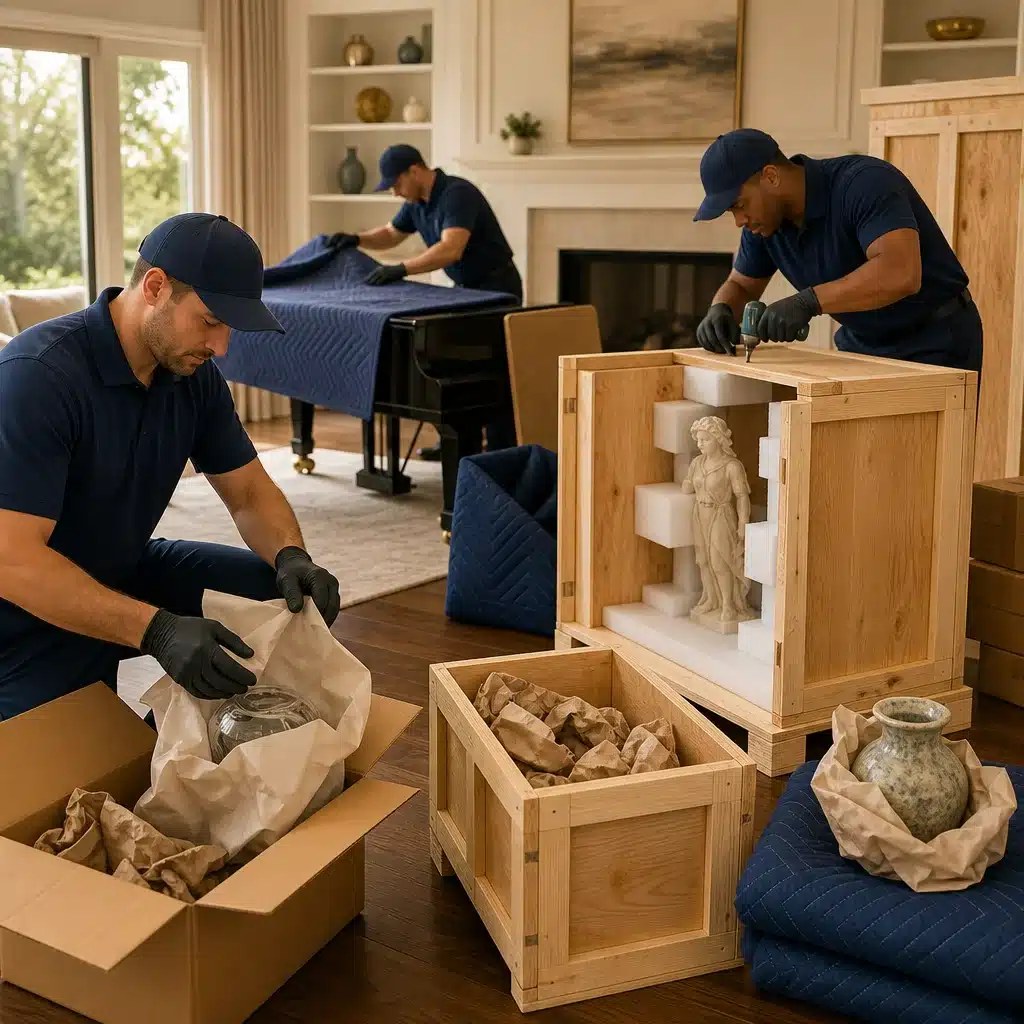
Specialty item packing focuses exclusively on high-value pieces. You pack the general items while we concentrate our expertise on antiques, pianos, artwork, and collectibles. This targeted approach is cost-effective for customers with a few valuable pieces mixed in with standard household goods.
Unpacking services at your destination take the stress out of arrival day. Our team can unpack everything, assemble furniture, and place items in designated rooms. Many customers find that having professionals unpack actually saves time and energy during the transition period.
For businesses relocating office equipment, we offer commercial packing services that handle everything from IT equipment to file storage to furniture. We understand the urgency of business moves and can work efficiently to minimize downtime.
Our Trained Packing Teams and Quality Assurance
The quality of professional packing depends entirely on the people doing the work. We invest significantly in training and screening our packing teams because we understand that your belongings matter.
Our packers undergo comprehensive training covering proper lifting techniques, material selection, fragile handling, and customer service. We emphasize safety because injuries to our team create delays and problems for your move. We teach specific techniques for each item type, from how to properly wrap stemware to the exact procedure for disassembling furniture safely.
We employ professional, dedicated crews rather than day laborers or temporary workers. This consistency means your team understands protocols and works efficiently. Our movers have relationships with customers and take pride in their work. When someone knows they might see a customer again or that customers appreciate their reputation, care increases.
Quality assurance happens at multiple stages. Our supervisors inspect boxes before they’re loaded to ensure proper construction and labeling. We verify that fragile items are appropriately cushioned. We check that boxes are stacked in a way that protects their contents during transport. We photograph documentation of high-value items before packing begins.
We track any damage reports and use that information to continuously improve our methods. If a particular type of item consistently shows issues, we adjust our protocol. This feedback loop has made us better over decades of moving.
Customer satisfaction is our ultimate quality measure. We maintain high ratings on Move.org, Consumer Affairs, and other review platforms because we deliver on our promises of protection and care.
The Cost Benefits of Professional Packing Services
The initial cost of professional packing seems significant until you factor in the financial reality of doing it yourself. Let’s break down the actual economics.
Replacement costs are the biggest hidden expense of DIY packing. If 5-10% of your belongings arrive damaged due to improper packing, you’re looking at replacement costs of $5,000 to $20,000 depending on your household value. A single damaged flat-screen television or antique dresser can cost more to replace than a professional packing service would have cost.
Your time has value. If packing your household takes 60 hours and you value your time at even $20 per hour (well below market rate for skilled professionals), that’s $1,200 in lost time. Professional packers complete the same work in 2-3 days because it’s what they do every day.
Stress and anxiety reduction isn’t quantifiable on an invoice, but it’s real. Moving is the third most stressful life event after death and divorce. Professional packing removes a major source of that stress. Many customers report that having professional packers was the best money they spent on their move.
Insurance protection matters when damage does occur. With professional packing and insured moving protection, you have recourse if an accident happens. DIY packing leaves you without protection or someone to hold accountable.
Efficient material use means professional packing often costs less than buying your own materials. We purchase boxes, tape, and padding in bulk at wholesale prices. We also don’t waste materials because we use exactly what’s needed. Customers buying retail materials often over-purchase and end up throwing away unused supplies.
For a typical household move of 10,000 pounds of goods, professional packing typically ranges from $1,500 to $4,000 depending on the complexity and custom crating needs. That might sound like a lot until you realize it protects $50,000 to $200,000 worth of belongings and saves you 60-100 hours of your time.
Free Padding and Protection on Every Move
Here’s what sets us apart: we provide free pad wrapping on all moves, regardless of whether you choose professional packing services. This means all your furniture arrives with protective cushioning at no additional cost.
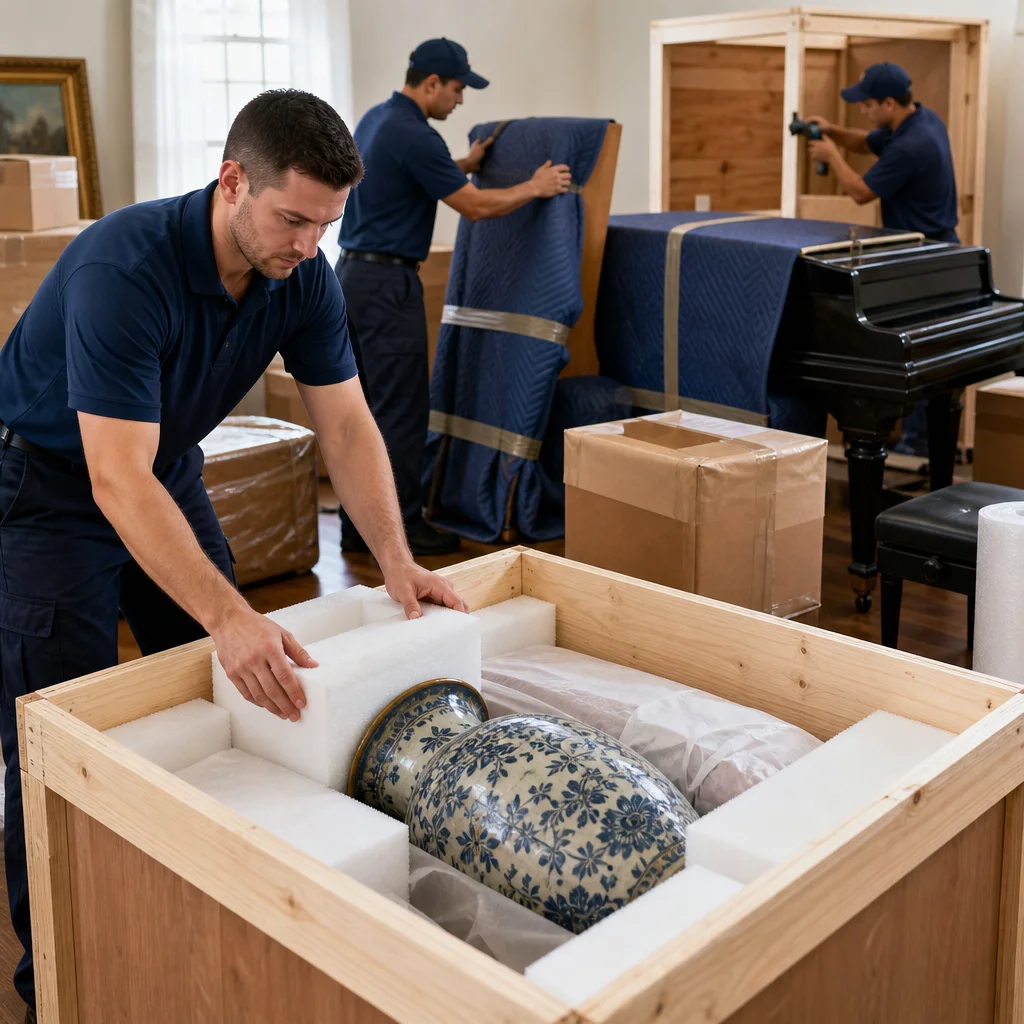
Our pad wrapping involves wrapping each furniture piece in premium moving blankets secured with tape. This simple step prevents countless scratches, dings, and cosmetic damage. Sofas, dressers, tables, and chairs all receive this protection automatically. There’s no negotiation or upgraded tier required—it’s included in every move.
Beyond pad wrapping, every move also includes free basic moving coverage protection valued at up to $50,000. This protection covers your belongings at 60 cents per pound per article. While this basic coverage is more limited than full-value protection, it’s genuine protection at no charge.
For customers wanting comprehensive coverage, we offer full-value protection options on all moves. This upgrades your protection to ensure complete replacement cost for any damaged items. The cost is reasonable and typically ranges from $300 to $1,000 depending on your total shipment value and the coverage level you select.
This layered approach to protection—free padding, included basic coverage, and optional comprehensive protection—means you’re never left vulnerable. You can choose the protection level that matches your comfort and the value of your belongings.
How to Get Started with Our Packing Services
Starting the professional packing process with us is straightforward. We want to understand your move fully so we can provide an accurate estimate and appropriate recommendations.
Step 1: Request an estimate. Contact us through our website or call our team. We offer both virtual and in-home estimates depending on your preference. Virtual estimates work well for many moves and can be completed quickly. In-home estimates allow our specialists to see your belongings directly and provide more precise recommendations, especially if you have specialty items or unusual requirements.
Step 2: Discuss your specific needs. During the estimate conversation, walk through your entire household or business. Mention any high-value items, antiques, electronics, or pieces requiring special care. If you have a piano, artwork, or collectibles, this is the time to discuss them. Our specialists will ask detailed questions about your belongings because the more we know, the better we can protect them.
Step 3: Choose your packing level. Decide whether you want full-service packing, partial packing, or specialty item packing. Be honest about what you’re comfortable doing yourself versus what you’d prefer to hand off to professionals. There’s no judgment here—we work with all approaches.
Step 4: Review your estimate. We provide transparent, easy-to-read estimates that show exactly what services are included and what optional services you might want. Our pricing is flat-rate on many services, meaning you won’t face surprise additions during or after your move. We also offer discounts for customers booking multiple services or moving during less-busy seasons.
Step 5: Schedule your packing date. Once you approve your estimate, we’ll schedule your packing and moving dates. Our team coordinates with you to ensure we arrive at convenient times and complete the work efficiently. We can handle moves starting next week or months from now depending on your timeline.
Throughout the process, you’ll have a dedicated move coordinator who answers questions, handles logistics, and ensures everything runs smoothly. We’re professional movers who’ve been doing this since 1995, and we’re here to make your relocation as stress-free as possible.
Professional packing and custom crating represent the difference between an arrival day filled with broken items and disappointment versus one where everything you own arrives exactly as it left. When you’re investing the time and money to move, protecting your belongings makes complete sense. We’re ready to help you move safely.
Frequently Asked Questions (FAQ)
What makes professional packing worth the investment?
We handle the packing process using industry-standard materials and techniques that significantly reduce damage risk compared to DIY packing. Our trained teams know how to protect fragile items, distribute weight properly, and secure everything for transit. Plus, we include free padding on all furniture as part of our service, so you’re getting protection built into your move.
Can we custom crate high-value items like antiques and pianos?
Yes, we specialize in custom crating solutions for antiques, pianos, and other irreplaceable items that demand extra security. Our crating approach involves specialized materials and construction methods tailored to each item’s specific needs. We’ve been protecting valuable pieces since 1995, and we stand behind our work with Full Value Protection available on all moves.
How do we ensure quality during the packing process?
Our packing teams undergo rigorous training and follow strict quality assurance standards on every job. We assign a dedicated move coordinator to oversee your entire relocation, and we use GPS tracking on all our trucks so you know exactly where your belongings are at all times. If you have questions during your move, we also maintain an after-hours hotline for any emergencies.