

Why Interstate Moves Demand Specialized Expertise
Moving across town and moving across the country are two very different jobs. A local move usually involves a few hours on familiar roads, a single state’s regulations, and a crew that can return to the warehouse by dinner. An interstate move stretches across multiple states, several days of driving, and a paperwork trail that touches federal rules, state tax considerations, and carrier liability terms.
That complexity is why we treat interstate relocations as a specialty rather than an add-on to our local work. Our teams plan routes, staff crews, and coordinate equipment with long-haul logistics in mind. The result is fewer surprises for you, especially when your household or business has to arrive on a specific date.
If you are weighing an out-of-state move, start by asking one question: who is responsible for your belongings for the full journey? Choosing a company that runs its own long-distance network, rather than handing your shipment off to multiple unfamiliar partners, is one of the simplest ways to reduce risk.
The Hidden Challenges of Moving Across State Lines
Most people underestimate the number of moving parts in a cross-state relocation. The obvious tasks are packing, loading, and driving. The less obvious ones tend to cause the most stress.
Here are the challenges we see most often:
- Timing gaps. Your old lease may end before your new home is ready, or your closing date may shift by a week.
- Weather and road conditions. Winter storms in the mountain passes or summer heat in the Southwest can delay a truck, which is why flexible scheduling matters.
- Inventory tracking. Items packed in different rooms can get separated if there is no clear system for labeling and documenting them.
- Access restrictions. Apartment buildings, HOA rules, and narrow streets can limit where a large truck can park.
- Hidden costs. Fuel surcharges, stair fees, and extra stops can turn a quoted price into a much larger bill if the estimate was incomplete.
Here is a quick scenario. A family moving from Ohio to Arizona schedules a pickup for Monday, but their new condo does not allow trucks to park in front of the building until a specific time. Without a coordinator who knows the building rules in advance, the crew loses half a day. Asking the building manager about parking and elevator reservations before move day can prevent that kind of delay.
What to do next: Make a list of every access constraint at both addresses, including parking, elevator bookings, and gate codes, and share it with your move coordinator early.
How Our Interstate Moving Specialists Plan Your Move
Planning begins with a conversation, not a truck. Our interstate specialists walk through your origin and destination, your inventory, your timeline, and any special requirements. We ask questions that many quick quote tools skip, such as whether you have a home office with sensitive equipment or a stored vehicle that needs transport.
Once we understand the job, we build a plan that typically includes:
- A detailed inventory. We document room-by-room contents so both you and our crew have a shared reference.
- Route and schedule design. We match your pickup and delivery windows with our long-distance routing, which is where our weekly shuttle network becomes valuable.
- Crew assignment. We staff dedicated crews familiar with your move type, whether that is residential, commercial, or military.
- A personalized move coordinator. One point of contact handles questions from booking through delivery, so you are never bounced between departments.
We find that the planning stage is where most problems are prevented. A move that feels chaotic from the outside often has a clear plan behind the scenes, and that plan is what keeps your schedule on track.

What to do next: Set up your first call with a move coordinator at least six to eight weeks before your move date if possible. Earlier planning gives us more options for scheduling and routing.
Flat-Rate Pricing With No Surprise Charges
Pricing is where trust is either built or broken. Many customers have heard stories of an estimate that doubled once the truck was loaded. We designed our approach to avoid that outcome.
Our flat-rate interstate pricing gives you a clear, all-inclusive estimate based on the scope of your move. That estimate is easy to read, and it reflects the services you have agreed to rather than shifting charges later. You can compare flat-rate interstate moving options to see how this structure works across different move sizes, and our guide to flat-rate long-distance movers explains what to look for in a quote.
When reviewing any estimate, including ours, check these details:
- Whether pad-wrapped furniture is included, which it is on all of our moves at no added cost
- What level of liability coverage applies by default
- Whether stairs, shuttles, or long carries are factored in
- How and when final payment is due
Discounts may also be available depending on timing, move size, and other factors, so ask your coordinator what applies to your situation.
What to do next: Request an all-inclusive written estimate and compare it line by line against any other quote. If a number seems too low, ask what it excludes.
Protecting Your Belongings With Full Value Protection and Air-Ride Trucks
Even the most careful crew cannot eliminate every risk on a 1,500-mile trip. That is why protection matters as much as the move itself. Every American Van Lines move includes basic coverage at no additional charge, and Full Value Protection is available when you want a higher level of security.
Basic coverage is calculated at $0.60 per pound per article, up to $50,000 in total coverage. Full Value Protection allows you to choose a valuation that reflects the replacement cost of your items, which can make a meaningful difference for antiques, electronics, or high-value household goods.
We also invest in equipment that reduces risk on the road. Our air-ride moving trucks absorb road vibration more smoothly than standard suspensions, which helps protect fragile items during long hauls. Combined with pad-wrapped furniture and secure loading, this approach keeps your belongings safer from door to door.
Here is a practical example. A homeowner moving a grandfather clock across three states should ask whether the item is covered at its appraised value. Documenting that value before the move and selecting the right coverage level can save significant frustration if something goes wrong.
What to do next: Inventory high-value items with photos and receipts or appraisals, then talk with your coordinator about whether Full Value Protection makes sense for your shipment.
Professional Packing, Crating, and Specialty Item Handling
Packing is one of the most time-consuming parts of any move, and it is also where many avoidable damages begin. Our professional packing services handle everything from standard household goods to complex items that need custom protection.
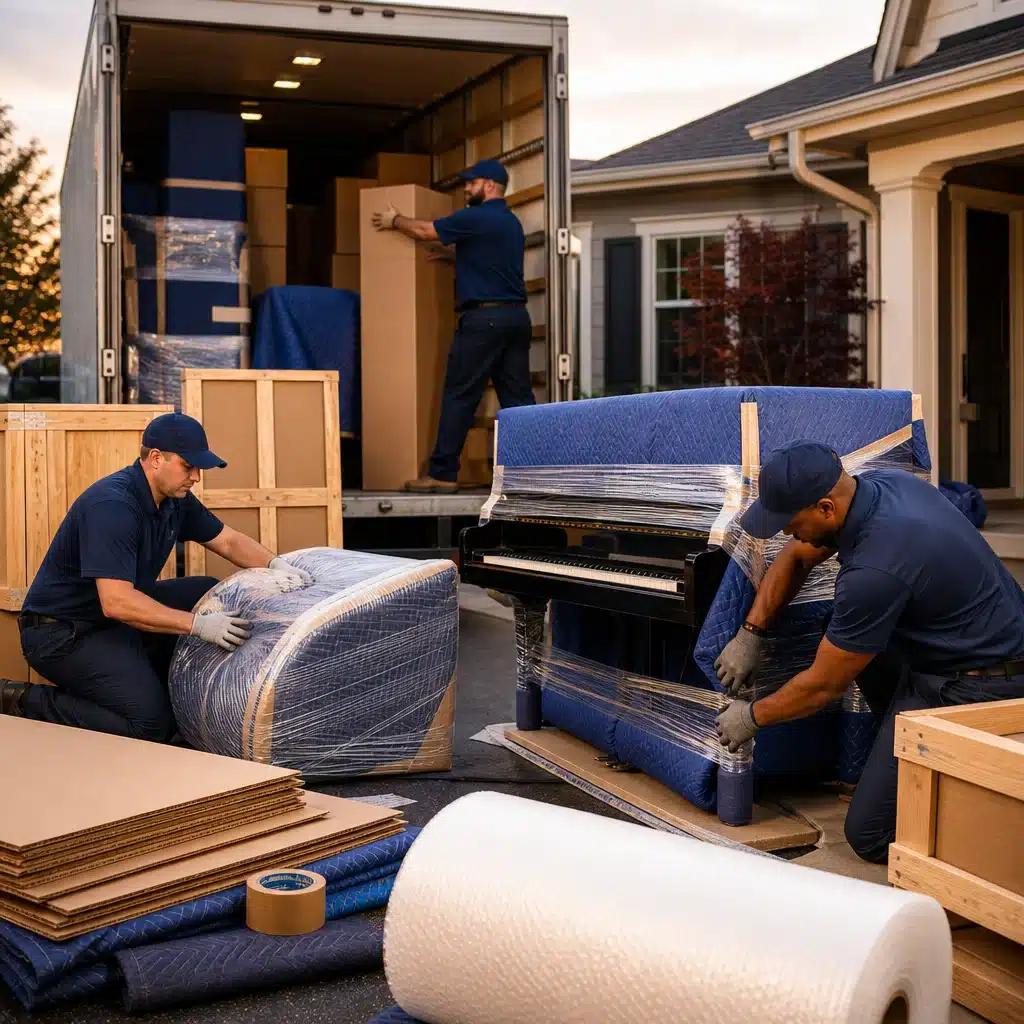
For specialty items, we offer dedicated handling. Antiques, artwork, and musical instruments require a different approach than a box of kitchen dishes. Our crews are trained to crate fragile pieces properly, and we have experience moving antique furniture and pianos, where a few inches of misalignment during loading can cause structural problems.
If you plan to pack yourself for part of your move, a few habits make a real difference:
- Use sturdy boxes sized to the weight of the contents, not just the space available.
- Fill empty space inside boxes so items cannot shift during transit.
- Label each box with its room and a short description of contents.
- Keep important documents, medications, and valuables with you rather than on the truck.
We recommend letting professionals handle anything irreplaceable. The cost of crating a piano or a family heirloom is usually small compared with the cost of repairing or replacing it.
What to do next: Walk through your home and mark items that need specialty handling. Share that list with your coordinator so the right crew and materials are assigned.
Real-Time Tracking, Weekly Shuttles, and On-Time Delivery
Knowing where your belongings are at every stage is one of the most common concerns we hear. Every American Van Lines truck is equipped with GPS tracking, and our moving app lets you follow progress without repeatedly calling the office.
Our long-distance weekly shuttles add another layer of reliability. These scheduled routes move household goods between major cities on a set rhythm, which gives us predictable transit times and helps us keep promised delivery windows. You can learn more about how these routes work in our overview of weekly long-distance shuttle routes, and our piece on interstate moving services that guarantee on-time delivery covers how we measure and communicate timing.
Our team also knows that schedules change. If a delay occurs, your coordinator contacts you promptly with an updated timeline. For urgent situations outside business hours, our after-hours emergency hotline is available.
What to do next: Download the moving app before pickup day, confirm your contact information, and set your preferred notification method so you receive updates automatically.
Storage Solutions When Your New Home Is Not Ready
Timing mismatches are common in interstate moves. Closing dates slip, lease start dates do not line up, and sometimes a home sells faster than expected. Our climate-controlled storage gives you a secure place to hold your belongings until you are ready to receive them.
Climate-controlled storage protects furniture, wood, electronics, and documents from humidity and temperature swings, which can damage items in standard units over time. It is especially useful for long-term gaps, seasonal transitions, or situations where your belongings need to wait while you find housing.
A helpful way to think about storage is as a bridge. You can move your household out of your old home on schedule, hold it securely, and deliver it once your new address is ready. This avoids paying for temporary housing and moving twice.
What to do next: If you expect a gap of more than a few days between move-out and move-in, ask your coordinator about storage options and how they fit into your overall schedule.

Why Families and Businesses Trust Our Team Since 1995
American Van Lines has been family owned and operated since 1995, and that history shapes how we work. Our reputation rests on repeat customers, referrals from friends and colleagues, and recognition from independent reviewers and industry observers. We have been ranked as a top mover by Forbes, Move.org, Consumer Affairs, and Newsweek, and we are proud of the awards we have received from Newsweek and USA Today.
We are also members of the American Trucking Associations and serve as the official movers of the Florida Panthers. These affiliations reflect the standards we hold ourselves to, but the real test is how a move feels from the customer’s side. We aim for clear communication, respectful crews, and follow-through on every commitment.
Businesses benefit from this consistency too. Commercial relocations require dependable scheduling, minimal downtime, and careful handling of equipment and records. Our dedicated crews and personalized coordinators help keep operations moving while you transition.
What to do next: Ask prospective movers for references, review independent ratings, and confirm how they handle claims. A company that answers these questions openly is usually one you can rely on.
Getting Started With a Free Estimate From Our Team
Starting your interstate move is simpler than most people expect. We offer free estimates, and you can choose the format that fits your schedule. In-home estimates give us a complete view of your belongings, while virtual estimates let you walk us through your home from your phone or computer.
To make your estimate as accurate as possible, prepare the following:
- Your origin and destination addresses, including building access details
- A rough inventory of rooms, furniture, and specialty items
- Your preferred move dates and any flexibility you have
- Any storage needs or additional services you are considering
Once we have this information, your move coordinator will review your options, explain the all-inclusive pricing, and answer your questions. There is no obligation to book until you are comfortable with the plan.
If you are ready to take the next step, contact American Van Lines to request your free estimate. We will help you map out a move that is clear, protected, and built around your timeline.
What to do next: Gather your address details and a basic inventory this week, then schedule a free estimate so your coordinator can start building your plan.
Frequently Asked Questions (FAQ)
How does your flat-rate pricing work for interstate moves?
We provide a flat-rate estimate based on the items in your home, the distance of the move, and any services you request, such as packing or storage. The price we quote is the price you pay, so there are no hidden fees added at delivery. If your inventory changes before move day, we will review the updated details with you so you know exactly how the estimate is affected.
What protection do we include when we move your belongings?
Every move includes free basic coverage at $0.60 per pound per article, up to $50,000. We also offer Full Value Protection on all of our moves, which means we will repair, replace, or pay for items that are lost or damaged in our care. Our air-ride trucks and pad-wrapped furniture help reduce the risk of damage during transit.
How can I track my belongings during a long-distance move?
Every American Van Lines truck is equipped with GPS tracking, so you can follow your shipment throughout its journey. Your dedicated Personalized Move Coordinator will also keep you updated on pickup and delivery timing. If an emergency arises, our after-hours hotline is available for immediate assistance.