
1. Understanding Long Distance Moving Rates and Pricing Models
The first shock most people face is the moving quote. Prices vary wildly, and understanding why separates informed decisions from costly mistakes.
Long distance moves aren’t priced like local hauling jobs. Most interstate movers use weight-based pricing or distance-based calculations, and the variables matter enormously. Your shipment weight, the distance traveled, the time of year (summer is peak season), and whether you need specialized services all factor into the final cost. Some companies quote low to lure you in, then hit you with surprise charges when the truck arrives.
We operate differently. Our flat-rate pricing model eliminates guessing games entirely. You get one transparent estimate that includes all labor, fuel, and basic services. No hidden charges appear at delivery. What you’re quoted is what you pay, period.
Here’s how the math works in practice. A 2,000-pound household shipment from Dallas to Denver typically runs between $4,500 and $6,500 depending on the season and specific services. But that price means everything is included: professional movers, equipment, pads and wrapping for your furniture, and basic coverage protection. You’re not discovering after signing that wrapping costs extra or that you need to pay for equipment rental.
We also offer discounts throughout the year for flexible timing. If you can move during off-peak periods (fall and winter), you save significantly. Military families receive dedicated discounts. Corporate relocations benefit from volume pricing. The key is asking directly what savings apply to your situation, and we provide that transparency upfront.
Compare this to companies that quote by weight or distance alone. You might get a $3,000 estimate, but once the scales tick toward your actual shipment weight or the mileage gets calculated precisely, the final invoice climbs to $5,200. That bait-and-switch approach explains why so many people feel burned by moving companies.
Action item: Request estimates from multiple companies, but ask specifically what’s included in each quote and what could increase the price. Make sure the estimate covers labor, equipment, basic protection, and fuel as one complete package.
2. Climate-Controlled Storage Solutions for Extended Transitions
Moving timelines don’t always align perfectly. You might need to vacate your Dallas home two weeks before your new place is ready. Or you’re downsizing and need temporary storage for items that won’t fit immediately. Standard storage units expose your belongings to temperature swings, humidity spikes, and dust. That’s where climate-controlled solutions become essential, not optional.
Climate control maintains stable temperatures (typically 65-75 degrees) and humidity levels (30-50%) throughout the year. This matters more than people realize. Wood furniture warps in humidity. Electronics develop condensation problems. Artwork fades under temperature fluctuations. Appliances can malfunction. What seems like “safe storage” in a basic unit often means damaged goods by move-in day.
Our climate-controlled storage solutions integrate seamlessly with your move. We can hold your belongings in secure, monitored facilities for days, weeks, or months while you settle into your new location. If you’re relocating valuable artwork or collectibles, our specialized climate-controlled storage for artwork provides museum-quality conditions.
The cost difference between standard and climate-controlled storage is often smaller than people expect. A month of climate-controlled storage might run $150-300 depending on volume, compared to $80-150 for basic storage. That small premium protects thousands of dollars in furniture and goods. The math is simple: pay a bit more for protection or gamble with belongings that might need replacement.
Some companies treat storage as an afterthought, outsourcing it to third parties. We manage our own facilities, which means you deal with one company throughout the entire process. Questions about pickup timing, delivery coordination, or access to stored items go to the same team handling your move. That integration eliminates coordination headaches and miscommunication.

Action item: If your move involves any gap between vacating your current home and occupying your new one, budget for climate-controlled storage. Ask whether your moving company manages storage directly or outsources it; direct management means better coordination and accountability.
3. Full Value Protection Coverage You Can Trust
Here’s where many people make costly assumptions. They assume the moving company’s insurance automatically covers their belongings. It doesn’t. Standard moving coverage offers just 60 cents per pound per article. For a dining table weighing 80 pounds, that’s $48 total coverage, regardless of the table’s actual value.
Full Value Protection changes this entirely. It guarantees replacement cost or repair cost for any item damaged or lost during the move. Your $2,000 sofa arriving with a torn panel? The company replaces it or pays the full repair cost, not some fraction based on weight calculations.
We offer Full Value Protection on all our moves at competitive rates. The cost typically runs 1-3% of your declared shipment value, which amounts to roughly $300-600 for a $15,000 household move. That’s actual peace of mind, not a gamble.
The difference between standard and full coverage often gets discovered when damage occurs. You call the moving company to report a scratched antique dresser. They assess the damage, note that the item weighed 120 pounds, do the math (120 x $0.60 = $72), and that’s your payout. The dresser’s replacement cost is $1,200. Standard coverage leaves you absorbing that $1,128 gap out of pocket.
Every move carries some risk. Accidents happen despite best efforts. Ramps slip, furniture catches doorframes, items shift inside the truck despite careful packing. Full Value Protection means you’re protected regardless. We take it seriously enough to make it available on every move, and we encourage customers to use it. Companies that discourage full coverage protection are inadvertently signaling they expect things might go wrong.
Action item: Always purchase Full Value Protection for interstate moves. Calculate the replacement cost of your belongings and confirm that coverage amount in writing before the truck arrives.
4. Specialized Moving for Antiques, Pianos, and Valuables
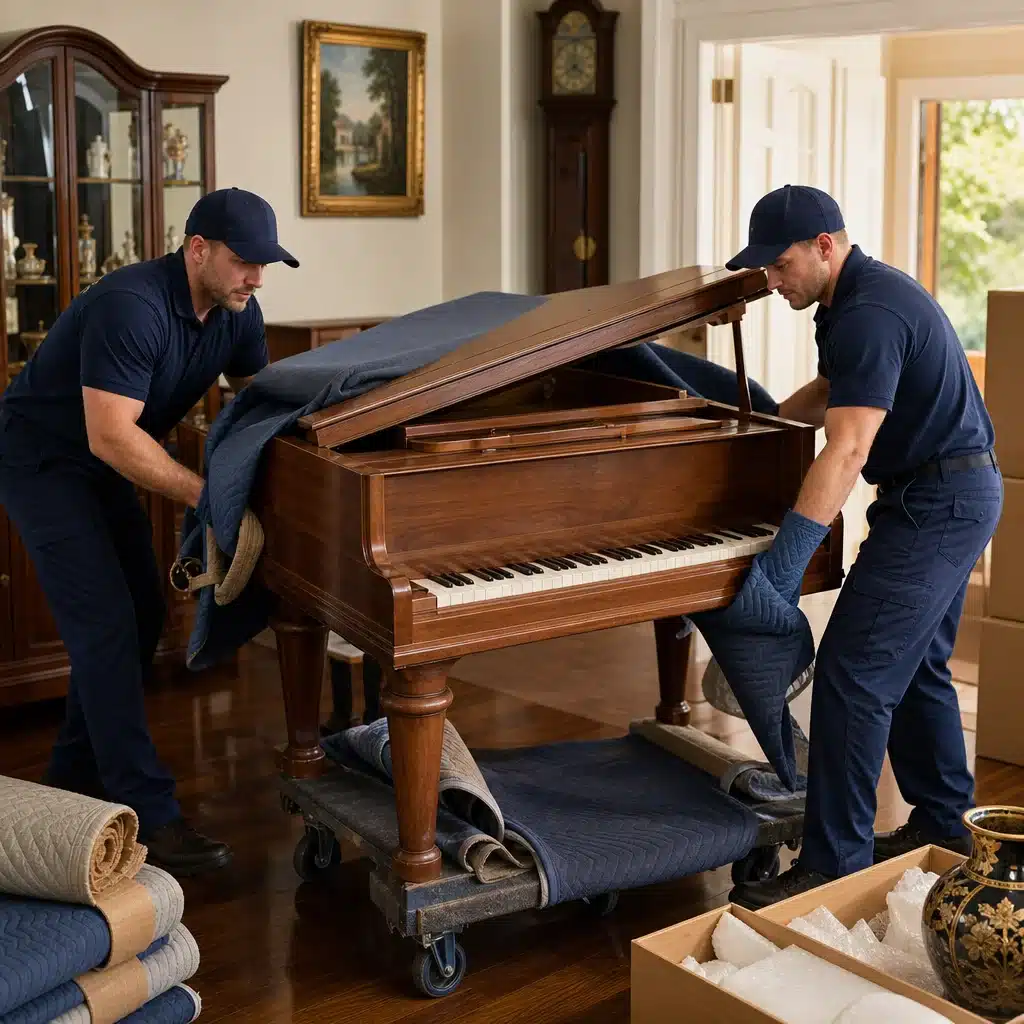
Standard moving equipment and techniques work fine for standard furniture. But antiques, pianos, artwork, and other valuables require entirely different expertise. A piano isn’t just a heavy box. Its internal mechanisms are precision-engineered, and improper handling creates thousands of dollars in damage instantly. Antiques have irregular shapes, delicate veneers, and historical construction methods that modern movers might not understand.
This is where most general moving companies fall short. They have movers trained for typical household goods, but they lack the specialized knowledge for high-value items. They’ll accept the job anyway, and then disaster strikes mid-move.
We employ specialists in antique and piano moving. Our teams understand how to properly stabilize a piano for transport, protect veneered surfaces on 18th-century furniture, and handle artwork with museum-quality protocols. We’ve invested in specialized equipment: climate-controlled crates for temperature-sensitive items, custom bracing systems for pianos, and padding materials rated for delicate finishes.
Consider a scenario: you own a Steinway grand piano worth $45,000 and three museum-quality paintings you’re moving from Dallas to Seattle. A standard mover quotes you $8,000 to handle everything. We quote $12,000 because we’re using custom crating, climate-controlled transport, and specialized handling. When your piano arrives perfectly tuned and your paintings look untouched, the $4,000 difference becomes the best money you’ve ever spent. If that general mover’s team tips the piano or bumps a painting frame, you’re facing $15,000+ in damage claims.
Valuables demand expertise. We don’t just move these items; we protect them as though they’re our own.
Action item: If your move includes pianos, fine art, antiques, or other high-value items, specifically ask moving companies about their specialized services and get references from previous clients who moved similar items.
5. Professional Packing Services That Protect Your Belongings
Packing is where most damage actually originates. Boxes packed haphazardly get crushed by other boxes. Fragile items without proper cushioning break during transport. Dishes wrapped in newspaper tear and chip against each other. Heavy items packed in small boxes crush the contents as boxes stack during delivery.
Professional packing follows engineering principles. Heavy items go in smaller boxes; light items in larger boxes. Fragile goods get wrapped individually, then cushioned with air space. Box weight is distributed for stackability. Dishes get inserted vertically like files rather than stacked flat. Artwork gets suspended in custom crates to prevent any movement.
We handle professional packing on every move. All furniture gets pad wrapped for free. Fragile items receive box-specific wrapping protocols. Electronics are photographed before packing, cables labeled, and items transported in original boxes when available. Nothing gets tossed into a box without purpose.
The difference is visible immediately when unpacking. Professional packing arrives with minimal breakage. Items look exactly like they did when they left Dallas. Compare that to DIY packing, where you discover broken glassware, crushed boxes, and belongings that shifted during transport.
Some companies charge à la carte for packing services: $15 per box, $25 per item for special handling, $200 for fragile-goods packing. That nickel-and-diming approach incentivizes skipping protection you actually need. We include basic packing protection in our service, meaning we’re not profiting when we skip wrapping or when corners get cut.
Action item: If you’re considering DIY packing for an interstate move, be realistic about the time involved. A typical 3-bedroom house requires 40-60 hours of careful packing. Most people benefit from professional packing for at least fragile goods, valuable items, and anything they can’t afford to replace.
6. GPS Tracking Technology for Complete Peace of Mind
Picture this: your move begins on a Friday. The truck departs Dallas with your belongings. You’re settling into your new place, and 11 p.m. rolls around. You haven’t heard from the moving company all day. Is the truck still on the road? Did it break down? Is it in a secure parking lot? You have no idea.
GPS tracking eliminates that anxiety entirely. You log into our app and see exactly where your truck is in real time. You get arrival notifications as the truck approaches major stops. You can message your dedicated move coordinator if timing questions arise, and they can confirm your truck’s location and expected delivery window based on actual GPS data, not estimates.
This matters more than convenience. Real-time tracking means we can reroute if unexpected traffic hits Dallas-to-Colorado drives. It means you know if a truck stops for a breakdown and when it resumes. It means you’re not sitting home on delivery day wondering if the movers forgot about you entirely.
We use GPS tracking on every truck in our fleet. It’s a commitment to transparency and accountability. You’re not trusting us on faith; you’re watching the process unfold.
Some moving companies resist GPS tracking, claiming it invades driver privacy. In reality, it protects both customers and movers. If a driver gets accused of taking an unauthorized detour, GPS proves otherwise. If a customer claims a truck was late, GPS shows exactly when it arrived. Transparency benefits everyone.
Action item: Before booking any long distance moving company, confirm they offer real-time GPS tracking on all trucks and that you’ll have app access to monitor your shipment’s location throughout transport.
7. Award-Winning Moving Teams with Proven Track Records

Credentials matter. Moving companies make promises all day, but achievements get verified through external recognition.
We’ve been ranked as a Top Mover on Forbes, Move.org, Consumer Affairs, and Newsweek. USA Today and Newsweek have recognized our teams as award-winning. We’re the Official Movers of the Florida Panthers. We’re members of the American Trucking Association. These aren’t marketing claims; they’re verified achievements from reputable third-party organizations.
More importantly, these recognitions come from our actual performance. Movers earn rankings through on-time deliveries, damage-free moves, and customer satisfaction. Companies that consistently cut corners, arrive late, or damage goods get called out by review platforms and lose rankings quickly.
Our award-winning interstate moving services guarantee on-time delivery because we’ve built systems and trained teams specifically to achieve it. We employ professional, dedicated crews that undergo ongoing training. Your move gets assigned a personalized move coordinator who manages every detail from estimate to final delivery.
Beyond credentials, look at customer reviews on independent platforms. Read what actual Dallas families say about their experience. How quickly did the company respond to inquiries? Did they show up on time? Did belongings arrive in good condition? Did the final bill match the initial estimate? These details reveal what a company is really like.
We encourage reading our reviews because they reflect our commitment to transparency, reliability, and professional service. When 95% of customers rate you 4 or 5 stars across multiple platforms, that’s not marketing. That’s proof.
Action item: Before finalizing your choice, verify independent rankings and read recent customer reviews specifically about on-time performance, damage rates, and billing accuracy. Third-party verification provides far more insight than any company’s own marketing claims.
For further reading: Long distance moving guide, Climate-controlled storage solutions.
Frequently Asked Questions (FAQ)
How do we calculate long distance moving costs from Dallas?
We use a transparent, flat-rate pricing model based on the weight of your belongings and the distance traveled. Our easy to read all-inclusive estimates account for labor, fuel, and equipment with no hidden fees. We offer both virtual and in-home estimates so you can get an accurate quote before committing to your move.
What protection does our company provide for my belongings during transit?
We include free basic moving coverage on every move at $0.60 per pound per article, up to $50,000 total coverage. For customers wanting additional peace of mind, we offer Full Value Protection on all moves. Our air-ride moving trucks, professionally trained crews, and pad-wrapped furniture on all shipments work together to ensure your items arrive safely.
Can we track our shipment in real time during the move?
Yes, we equip all our trucks with GPS tracking technology so you can monitor your belongings throughout the journey. Our moving app provides you with real-time updates and direct communication with your dedicated move coordinator. We also maintain an after-hours hotline for any emergency questions that arise during your relocation.