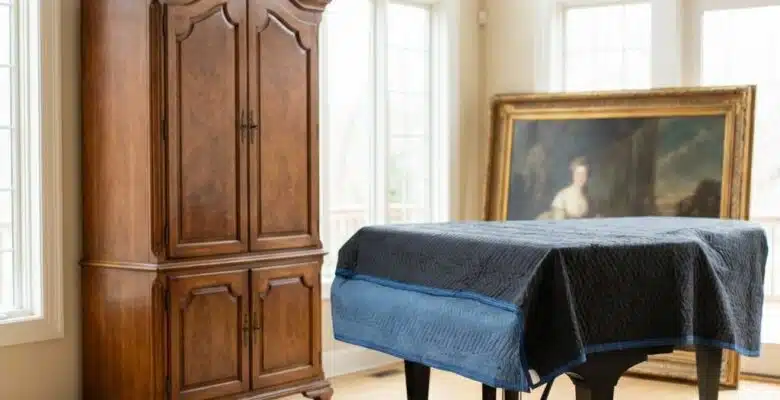
Introduction: Why Specialty Items Require Professional Moving Services
The risk profile of a 500-pound baby grand or a 19th‑century armoire is nothing like a box of linens. Weight, center of gravity, delicate finishes, and environmental sensitivity all demand techniques and equipment beyond a typical DIY or standard move. That’s where specialty item moving services come in—combining advanced packing, precise handling, and controlled transport to prevent cracks, warping, or finish damage.
Consider the differences among antiques, pianos, and fine art. Antique moving and packing must account for fragile joinery, brittle veneers, and hand-carved ornamentation that can’t withstand ordinary strapping or blanket wraps. True piano relocation services require skid boards, keyboard protection, string and pinblock safeguards, and precise disassembly/reassembly—especially for uprights, baby grands, and concert grands. Fine art transportation adds climate considerations for oil paintings and canvases, rigid crates for sculpture, and vibration mitigation for framed glass and gilded pieces.
Professionals reduce risk with proven methods and purpose-built gear:
- Specialty crating and handling tailored to each item’s dimensions, weight, and fragility
- White glove moving service with floor, door-jamb, and banister protection
- Air-ride moving trucks to soften road vibration and jolts
- Piano boards, stair crawlers, and hoisting plans for tight turns or upper floors
- Pad-wrapped furniture at no extra cost, plus custom cushioning for frames and finishes
- Detailed condition reports, chain-of-custody, and GPS tracking throughout transit
- Coverage options, including Full Value Protection and free basic coverage ($0.60/lb per article)
- Climate-controlled storage for staging, renovations, or weather holds
If you want a single team that can manage all three categories seamlessly, American Van Lines brings trained, dedicated crews, professional packing and crating, and nationwide reach. Ranked by independent outlets like Forbes, Newsweek, and Consumer Affairs, AVL delivers transparent, flat-rate estimates and a personalized move coordinator to keep complex projects on track. From piano relocation services to fine art and heirlooms, the company’s climate-controlled storage, air-ride fleets, and Full Value Protection help safeguard what matters most.
Understanding the Risks of Moving Delicate and Valuable Items
High-value pieces fail for very specific reasons, which is why specialty item moving services focus on risk reduction, not speed. Delicate woods, lacquer, ivory, strings, and aged adhesives react poorly to shock and pressure, and once a joint lets go or a finish crazes, restoration can be costly. The goal is to control motion, load paths, and environment from pickup to placement.
Mechanical forces are the first threat. A baby grand can suffer soundboard cracks or shifted plates from vibration and torsion on stairs, while a tall-case clock’s weights and pendulum can shatter glass if not secured. Marble tabletops split along veins when lifted unevenly; veneer lifts when straps bear on edges rather than frames.
Environment is the silent culprit. Humidity swings can loosen canvas and warp gilded frames; oil paintings can stick to plastic wrap in heat. For fine art transportation, climate control and staged acclimation protect finishes, adhesives, and wooden substrates during long hauls or storage.
Packing materials and methods matter as much as muscle. Acidic papers, aggressive tapes on gilding, and direct bubble wrap contact can imprint or pull leafing. Effective antique moving and packing relies on specialty crating and handling: custom, foam-lined crates that “float” items, corner protection for frames, keyboard locks and skid boards for pianos, and barrier wraps that won’t abrade finishes.
Site logistics add another layer of risk. Tight turns, low ceilings, and elevator limits can force unsafe angles unless surveyed in advance. Piano relocation services often require partial disassembly, stair protection, landing pads, and coordinated building access to avoid rush-job mistakes.
Mitigate exposure with a disciplined plan:
- Photograph and document condition and provenance before packing
- Obtain appraisals and align valuation with your carrier’s coverage
- Specify custom crates and climate requirements in writing
- Reserve loading zones and elevators; confirm COI needs
- Choose a true white glove moving team trained for specialty items
American Van Lines reduces these risks with professional packing and crating, specialized antique and piano crews, and air-ride trucks that dampen vibration. Climate-controlled storage and pad-wrapping help safeguard finishes, while GPS tracking adds shipment visibility. Full Value Protection is available, and transparent, flat-rate estimates make planning straightforward for even the most delicate collections.
Antique Furniture Moving: Techniques and Best Practices
Moving antique furniture starts with a thorough assessment. Note loose joints, delicate inlays, veneer lifting, and prior repairs, then photograph each piece from multiple angles to create a condition baseline. Measure doorways, stairwells, and elevators, and plan a clear path that avoids tight turns or uneven thresholds. For humidity‑sensitive woods, minimize exposure to extreme temperatures and schedule moves during stable weather when possible.

Select materials that protect without harming finishes. Avoid plastic directly against shellac or lacquer; wrap first in breathable padding or acid‑free paper, then add moving blankets and corner protectors. Use specialty crating and handling for marble tops, glass doors, and mirrors; for example, crate a marble‑top commode separately and ship the stone upright with foam blocking.
- Remove drawers, shelves, and finials; bag hardware and label by piece.
- Stabilize doors with cotton twill tape, not adhesive on finished surfaces.
- Float bases in crates with high‑density foam so legs don’t bear weight.
- Lift from structural points (apron, stretcher), never from arms or cornices.
- Use soft‑tread dollies and floor runners; pad railings and door jambs.
- Mark orientation (“this side up,” “do not stack”) and record crate numbers.
Safe loading is about control and vibration reduction. Use a liftgate and team carries, then secure pieces with soft straps at the frame, not across carvings. Air‑ride trucks reduce shock during transit, and pad‑wrapped furniture should be kept off-stack and isolated from items with protrusions. If delays are expected, opt for climate‑controlled storage rather than garages or non‑conditioned warehouses.
Document provenance and condition reports, and align valuation with coverage. Full Value Protection safeguards high‑value pieces, while basic coverage may be insufficient for antiques. If your collection includes instruments or artwork, coordinate piano relocation services and fine art transportation under one plan to maintain chain of custody and white glove moving service standards.
American Van Lines provides specialty item moving services with trained crews, professional packing and crating, and pad wrapping included. Their air‑ride fleet, GPS tracking, climate‑controlled storage, and transparent, flat‑rate estimates support meticulous antique moving and packing—alongside dedicated teams for pianos and fine art when needed.
Piano Moving: The Specialized Equipment and Expertise Required
Moving a piano is both a physics and preservation challenge. Weights can range from 300 to 1,200+ pounds, with a delicate action, soundboard, and high‑gloss finishes that demand precision. That’s why piano relocation services are best handled by specialty item moving services that combine purpose-built gear with trained crews and careful planning.
Essential equipment used by professional movers includes:
- Piano board (skid) sized for baby grands and concert grands to keep the instrument stable and secure
- Heavy-duty ratchet straps and hump straps to control the center of gravity, especially on stairs
- Thick moving blankets and pad wrap, plus stretch wrap and corner protectors to shield finishes
- Four-wheel dollies with soft, non-marking wheels to protect floors
- Stair-climbing aids and synchronized team lifts for tight, multi-flight stairwells
- Door jamb, banister, and floor protection (ram board, neoprene runners) to prevent property damage
- Ramps and liftgates for safe loading, with curb plates for thresholds
- Toolkits for careful disassembly of lids, legs, lyres, and pedals on grand pianos
- Custom crates for fragile components—an example of specialty crating and handling
- Air-ride suspension trucks to reduce vibration in transit
- Climate-controlled storage if staging is required before delivery
Expertise matters as much as gear. Pros begin with a site survey to measure doorways, turns, and elevator clearances, and to map a safe path. For a grand, they’ll remove the lid and legs, pad and wrap components, secure the body to a skid on its side, then navigate exits with coordinated commands to maintain balance. After delivery and reassembly, most technicians recommend waiting a couple of weeks before tuning as the instrument acclimates to new humidity.
American Van Lines provides specialized antique moving and packing, dedicated piano relocation services, and fine art transportation under one roof. Trained, friendly movers use pad-wrapping (included), professional packing and crating, and air-ride moving trucks to protect your investment—aligned with white glove moving service standards. With transparent, flat-rate pricing, GPS-tracked trucks, and Full Value Protection available (plus free basic coverage on every move), AVL is a reliable partner for nationwide specialty item moving services.
Fine Art and Collectibles: Climate Control and Protection Strategies
Temperature and humidity swings are the top threat to paintings, photographs, works on paper, and rare collectibles in transit. Aim to keep items between 68–72°F with relative humidity near 45–55% to prevent warping, cracking, and mold. For long routes or seasonal extremes, microclimate crating with desiccants and RH cards helps stabilize the interior of the crate during fine art transportation.
Choose inert, archival materials. Wrap canvases in acid-free tissue and glassine, then soft foam, and float them inside a rigid crate so no pressure rests on the canvas surface. For framed art under glass, add corner protectors and an “X” of painter’s tape on the glazing to minimize shatter risk. Sculptures and ceramics require double-walled cartons or custom crates with EPE foam, blocking, and bracing to isolate protrusions and distribute load.
- Create a detailed condition report with photos before packing and upon delivery.
- Commission custom, museum-grade crates with foam density tailored to the object’s weight and fragility.
- Use silica gel (pre-conditioned) and humidity indicator cards for moisture control inside crates.
- Add shock and tilt indicators, and consider data loggers for high-value shipments.
- Ride on air-ride trucks to reduce vibration; stabilize crates with load bars and decking.
- Avoid plastic directly on varnishes or gilding; use glassine or Tyvek as the contact layer.
- Acclimate items 12–24 hours before uncrating in a climate-controlled space.
American Van Lines provides specialty item moving services that combine climate-aware logistics with specialty crating and handling for art, antiques, and rare collections. Their teams offer antique moving and packing, pad-wrapped protection, air-ride trucks, GPS-tracked routes, and climate-controlled storage when timing or weather demands it. Customers can choose Full Value Protection or rely on free basic coverage, and a dedicated move coordinator manages white-glove handling standards from pickup to placement. If your collection also includes instruments, their piano relocation services ensure consistent care across your entire move.
Commercial Equipment Moving: Industrial-Grade Handling Solutions

Heavy, sensitive, and compliance-bound equipment demands more than a standard move. American Van Lines provides specialty item moving services built for labs, healthcare, manufacturing, data centers, and hospitality, minimizing downtime and risk. Crews conduct detailed site surveys, confirm dock and elevator capacities, and coordinate COIs and building protection before a single bolt is turned.
A dedicated move coordinator manages inventory, labeling, and chain-of-custody from origin to placement. White glove moving service protocols include antistatic wraps, foam-in-place cushioning, shock/tilt indicators, and temperature considerations for devices vulnerable to vibration or heat. Air-ride trucks, lift gates, and trained rigging teams ensure safe loading, transport, and final positioning.
- Healthcare and labs: Centrifuges, biosafety cabinets, analyzers, and imaging subassemblies are stabilized per OEM guidelines, with floor protection, doorway clearance checks, and vibration-dampened dollies for transit.
- Data centers: Server racks, UPS units, and battery cabinets are de-racked and mapped, cables bagged and labeled, and components packed with antistatic materials in climate-controlled, GPS-tracked, air-ride trailers.
- Manufacturing and print: CNC machines, lathes, and large-format printers are powered down, drained, and secured with custom skids, blocking/bracing, and, when needed, forklifts, gantries, or external cranes.
- Foodservice and retail: Refrigeration lines, bakery ovens, and display fixtures are palletized or crated, with disconnect/reconnect coordination, dock scheduling, and staging to match store re-open timelines.
- Corporate assets: Lobby sculptures and conference-room grand pianos move under fine art transportation standards and piano relocation services, leveraging specialty crating and handling drawn from our antique moving and packing expertise.
Coverage and communication match the stakes. American Van Lines offers Full Value Protection on request, plus free basic coverage at $.60 per pound per article (up to $50,000). Flat-rate estimates, GPS tracking on every truck, and an after-hours hotline keep stakeholders informed. Need temporary overflow? Climate-controlled storage and phased delivery ensure a clean handoff when construction schedules shift.
Professional Packing and Crating Methods for Maximum Protection
Protecting fragile, high‑value pieces starts with engineered packing that controls shock, vibration, and moisture. Specialty item moving services rely on the right materials and sequence, not just extra bubble wrap. American Van Lines uses professional packing and crating tailored to antique moving and packing, piano relocation services, and fine art transportation to keep items stable from pickup to placement.
For antiques, trained crews assess construction, joinery, veneers, and protrusions before any wrap goes on. Pieces are soft‑wrapped with microfoam or acid‑free tissue, edges are guarded, and hardware is bagged and labeled; then a custom crate with foam blocking and a “floating” base isolates the item from road vibration. Examples include removing and crating a marble top separate from its dresser, or immobilizing a grandfather clock by removing the pendulum and weights and securing the movement before crating.
Artwork benefits from a layered approach: glassine or acid‑free tissue to protect finishes, polyethylene foam for cushioning, and rigid corner protectors to prevent frame stress. Paintings travel in double‑wall picture cartons, travel frames, or custom slat‑crates with cross‑bracing and vibration‑dampening foam; sculptures are cradled and blocked to prevent any point load. If delivery dates change, American Van Lines can place pieces in climate‑controlled storage to avoid temperature and humidity swings.
Pianos demand purpose‑built methods. Grands are partially disassembled—lid, legs, and lyre removed—then wrapped, strapped to a piano board, and moved with heavy‑duty dollies or stair climbers; uprights are immobilized and protected at key contact points. For long hauls, air‑ride trucks reduce vibration, and pad‑wrapped protection is included on every move, with specialty crating and handling added as needed.
Best‑practice crating details typically include:
- 1/2″ plywood or triple‑wall corrugate shells with internal 2–4 lb density foam
- Floating decks, blocking/bracing, and orientation labels with tilt/shock indicators
- Vapor barriers or desiccants for moisture‑sensitive finishes, plus photo‑documented condition reports
American Van Lines pairs these methods with transparent, flat‑rate estimates, GPS‑tracked fleets, and a dedicated move coordinator—delivering white glove moving service standards without surprises. Full Value Protection is available on all moves, and free basic moving coverage is included.
White Glove Moving Services: What to Expect

Expect a concierge approach from a white glove moving service designed for delicate, high‑value pieces. Your crew should start with a pre‑move survey to assess access, document conditions, and map building requirements like COIs, elevator reservations, and parking. For specialty item moving services, this plan translates into precise timelines, labeled inventories, and a single point of contact who coordinates every detail.
Packing is where antique moving and packing differs from standard moves. Technicians use museum‑grade materials, acid‑free wraps, corner protectors, and custom crates engineered with foam densities matched to each item. Fine art transportation may include travel frames, vapor‑barrier lining, and shock/tilt indicators; chandeliers and marble tabletops typically receive specialty crating and handling to control vibration and pressure points.
Piano relocation services focus on protecting the instrument’s structure and finish. Movers secure the action, remove and wrap the lyre and pedals when appropriate, and mount baby grands to a skid board with heavy‑duty strapping. Crews employ stair climbers, lift gates, and air‑ride trucks to minimize jarring, and they’ll advise on humidity stabilization and post‑move tuning after the piano acclimates.
On move day, expect rigorous protection of your property and clear chain of custody. Floors and banisters are shielded, furniture is pad wrapped, and items are barcoded or photo‑logged. If there’s a delay, climate‑controlled storage keeps artwork and instruments stable, and GPS tracking keeps you informed in transit.
Typical white‑glove steps include:
- Pre‑move condition reporting and photography
- Custom on‑site crating and labeled inventories
- Dedicated load space and air‑ride transportation
- Real‑time tracking and proactive status updates
- White‑glove delivery, placement, and debris removal
American Van Lines combines these specialty item moving services with flat‑rate pricing, professional packing and crating, and trained, friendly movers experienced in antiques, pianos, and fine art. With options like Full Value Protection, free basic coverage, GPS‑equipped fleets, and a personalized move coordinator, they provide a transparent, nationwide solution that meets true white glove standards.
Choosing a Moving Company with Specialty Item Experience
When your inventory includes a 7-foot concert grand, a gallery-grade oil painting, or a hand-carved armoire, experience is everything. The right specialty item moving services pair trained crews with the correct equipment and documented handling plans to control risk from home to truck to destination. Seek movers who treat chain of custody, climate sensitivity, and vibration control as non-negotiable.
Look for proven piano relocation services that can disassemble, pad-wrap, board, and secure instruments without torque, even on stairs. For antique moving and packing, expect corner protection, custom fit padding, and no-stack policies that prevent pressure damage, plus specialty crating and handling for fragile veneers and glass. Fine art transportation should include museum-grade materials, condition reporting, and climate-aware routing to avoid heat or humidity spikes; climate-controlled storage is a plus when dates shift.
Before booking, vet a company with targeted questions:
- What specialty training do crews have, and can you share similar project references?
- Which tools and trucks are used (air-ride suspension, liftgates, piano boards, climate monitoring)?
- How will you pack and crate—materials, ISPM-15 crate specs, and use of shock/tilt indicators?
- What valuation coverage is available (including Full Value Protection) and claim timelines?
- How transparent is pricing—flat-rate quote, itemized services, and confirmed schedule?
American Van Lines checks these boxes with specialized antique and piano moving, professional packing and crating, and air-ride moving trucks that minimize vibration. Pad-wrapped furniture is included at no extra cost, GPS tracking is standard on all trucks, and you can choose Full Value Protection or rely on free basic coverage (.60 per pound per article, up to $50k). Recognized by top industry reviewers like Forbes, Move.org, Newsweek, and USA Today, AVL offers flat-rate pricing, nationwide coverage, and a personalized move coordinator—delivering a white glove moving service for complex items without surprises.
Conclusion: Ensuring Your Valuables Arrive Safely
Safely relocating heirlooms, instruments, and artwork comes down to disciplined planning, the right materials, and expert hands. Specialty item moving services combine precise measurements, engineered packing, and controlled transport to reduce shock, vibration, and climate risks. For example, a baby grand requires a mapped path, padded railings, and a piano board, while an oil painting benefits from glassine, corner protectors, and a custom crate with a vapor barrier.
Use this quick, final checklist as you prepare:
- Photograph each piece from multiple angles, noting serial numbers, maker’s marks, and existing wear.
- Secure building requirements early: certificates of insurance, elevator reservations, and loading dock windows.
- Specify specialty crating and handling: custom wood crates, museum-grade cushioning, edge guards, and vapor barriers for artwork.
- Choose coverage wisely: free basic moving coverage protection ($.60 per pound per article, up to $50,000) or upgrade to Full Value Protection.
- Map doorways and stair turns; protect floors and banisters; stabilize temperature and humidity on both ends.
- For pianos, lock the keyboard, remove legs and pedals, and mount to a piano board; for antiques, avoid tape on finishes; for fine art, use glassine—never plastic—directly on varnish or canvas.
- Mark orientation and handling: “Top Load Only,” “Do Not Stack,” and clear up/down arrows.
- Stage these items for last-on/first-off loading to minimize handling and avoid transloading.
American Van Lines offers end-to-end specialty item moving services, including antique moving and packing, piano relocation services, and fine art transportation. Trained crews deliver white glove moving service with pad-wrapped furniture at no charge, specialty crating and handling, and air-ride trucks with GPS tracking for smoother, safer transport. Need storage between closings or exhibits? Climate-controlled facilities are available, backed by transparent flat-rate pricing and a dedicated move coordinator. The company is ranked a Top Mover by Forbes, Move.org, Consumer Affairs, and Newsweek, with award-winning service recognized by Newsweek and USA Today.
If you want certainty on moving day, partner with a team that does this every week, nationwide. Request a free estimate from American Van Lines to plan the right crate designs, transit timing, and protection options for your collection. Whether it’s a concert grand, a Regency secretary, or a large-format canvas, your valuables will be prepared, protected, and delivered with care.